Summary
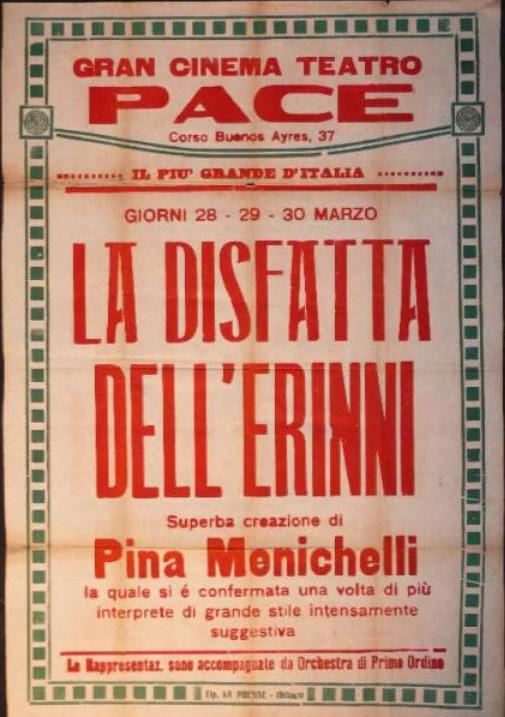
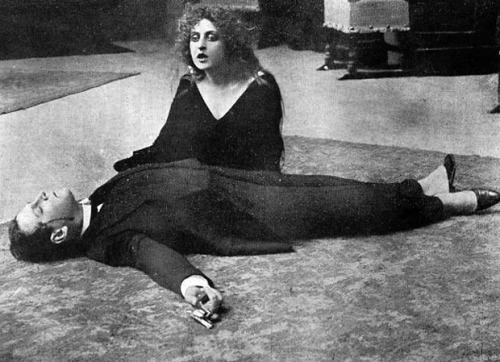
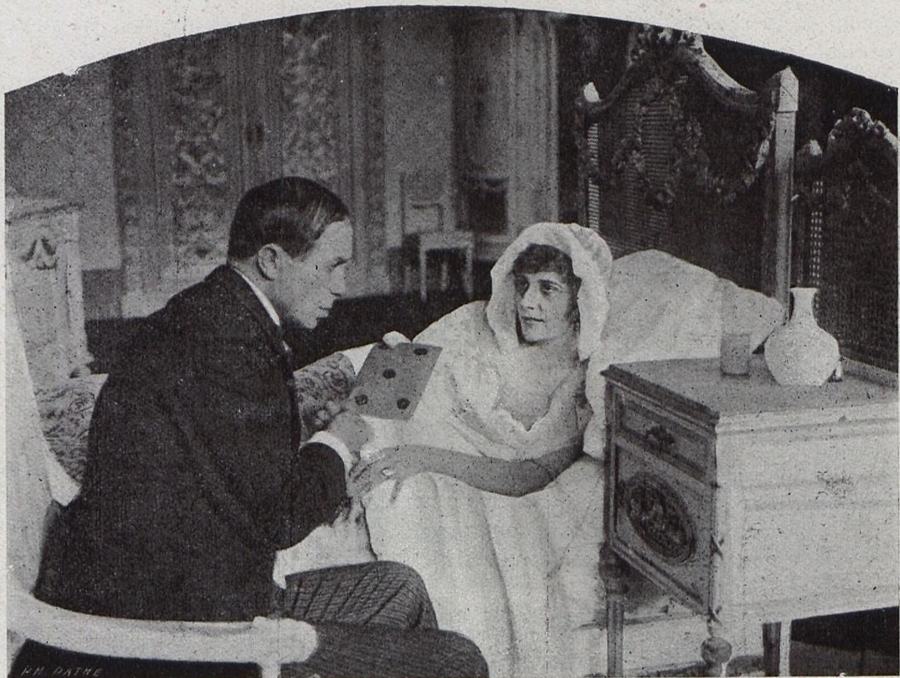
A trembling Sicilian village, still smelling of sulfur and votive wax, becomes the stage where the Erinyes—those primordial avengers older than any cathedral—descend not as winged horrors but as gossip, embroidery, and the hush that falls when the priest forgets the Kyrie. Bastiano, a charcoal burner whose lungs already carry the dusk of Mount Etna, returns from the Great War clutching a medal he never earned; inside the ribbon he has hidden the address of a Neapolitan actress who once kissed him beneath a papier-mâché moon. His wife, Agata, counts the days by the diminishing olive oil, her belly rounding with a child she is no longer certain bears her husband’s brow. Their daughter, Nunziata, eleven and already fluent in silence, spies on the baroness who hosts Thursday salons where the gramophone exhales forbidden tangos and where Pina Menichelli—clad in jet velvet—performs tragedies without opening her mouth. Into this crucible comes Don Vincenzo, a priest whose faith is a cracked reliquary; he carries a letter sealed in black wax that commands him to build a shrine to the fallen, but the only stone available is the tombstone meant for Agata’s stillborn sister, whose name no one utters. The villagers, fearing the Erinyes more than the carabinieri, begin to enact micro-vengeances: a rooster’s throat slit on a doorstep, a lace shroud dipped in brine, a child’s marbles scattered like hailstones across the piazza. Each act summons a deeper shiver in the air, until even the bells rust overnight. Nicola Pescatori plays Bastiano like a man who has swallowed a live ember—his pupils glow with unspoken pleas for absolution, yet every gesture scorches. Luigi Serventi’s Don Vincenzo walks as though his cassock were lined with thorns; when he lifts the host at Mass the wafer trembles like a tiny moon about to implode. Myriam De Gaudi’s Agata circles her kitchen like a moth around a candle that refuses to die, her face a palimpsest of desires crossed out in red. Lilla Pescatori, as Nunziata, has the translucent skin of someone who has never been touched by daylight; her eyes record every sin in miniature, the way amber traps prehistoric wings. And Menichelli—magnetic, feral—drifts through candle-lit corridors as though she has stepped out of an earlier century that never existed, whispering lines from Aeschylus in a dialect no one admits to understanding. The film fractures chronology: a shot of Bastiano’s war trench dissolves into Agata’s bridal veil floating in a basin of rainwater; the baroness’s salon folds into the village cemetery where tombs yawn open to reveal not corpses but theater footlights. By the time the shrine is erected—an unadorned slab that looks suspiciously like a stage—the Erinyes have already moved into the women’s bodies: Agata’s hands smell of iron, Nunziata’s braids hiss like serpents, the baroness’s laughter ricochets like grapeshot. The final reel is a single dusk that refuses to ripen into night; villagers gather around the slab, now streaked with candle grease and pigeon droppings, and begin to confess—not to the priest but to the stone itself. The camera, dizzy with heat, spirals upward until the village becomes a scorched amphitheater, the crater of Etna glowing like a third eye. When the screen cuts to black, the only sound is a distant olive branch snapping under the weight of fruit no one will harvest.
Review Excerpt
"
The first time I encountered La disfatta dell’Erinni it was a 9.5 mm fragment auctioned inside a Neapolitan cigar box—nitrate curls that smelled of almond and cordite. One frame showed Pina Menichelli’s iris reflecting a miniature village on fire; another revealed a child’s marble cracking open to expose a human eye. That was enough to hook me for a decade. Now, thanks to Cineteca di Bologna’s 4K restoration from the original camera negative discovered inside a monastery wall, the film can fina..."