DbcultAccessing Vault...
6.5/10
Senior Film Conservator
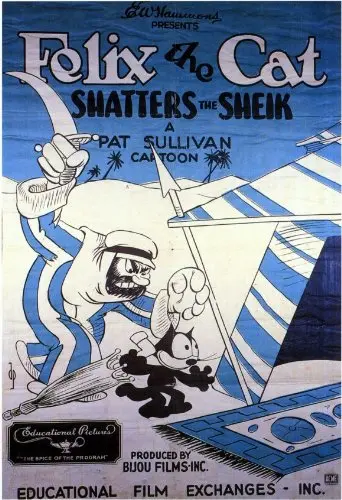
A definitive 6.5/10 rating for a film that redefined the boundaries of cult cinema. Felix the Cat Shatters the Sheik remains a cornerstone of transgressive art.
Should you invest your time in a seven-minute silent cartoon from 1926? Short answer: yes, but only if you appreciate the foundational DNA of modern animation and can tolerate the cultural tropes of the roaring twenties.
This film is for the animation historian and the fan of 'rubber hose' logic who finds joy in the impossible; it is definitely not for those who require a linear narrative or modern political correctness. While it lacks the narrative complexity of contemporary features, it offers a raw look at the ingenuity of Otto Messmer before the industry became sanitized.
Yes. It represents a pivotal moment where character animation began to prioritize personality over simple movement. The gags are built on a logic that feels remarkably fresh even a century later.
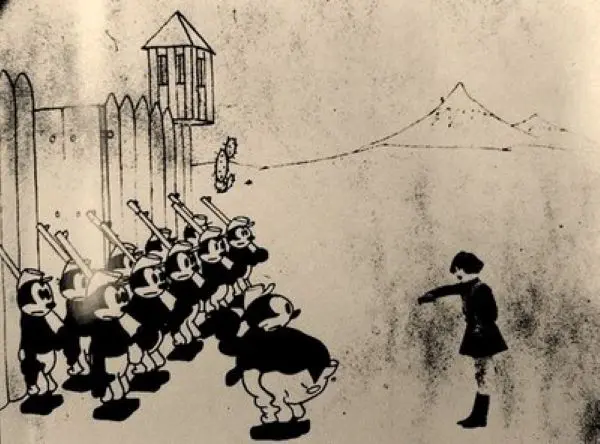
The premise of Felix the Cat Shatters the Sheik is a masterclass in irony. Placing an umbrella salesman in the Sahara is a trope that predates the talkies, but Messmer elevates it by making Felix the catalyst for the salesman's success. The cat isn't just a pet; he's a marketing consultant with the power of a demigod.
The sequence where Felix negotiates with a bird to influence a cloud is the highlight. It’s a transaction that feels almost bureaucratic in its execution, yet visually absurd. This isn't the high-octane chaos of a later Bugs Bunny short; it’s a methodical, quiet brand of weirdness that defines the 1920s.
When the rain finally hits the sheiks, the transition from arid heat to sudden monsoon is handled with a starkness that only black-and-white ink can provide. The umbrellas, previously useless props, suddenly become the most valuable commodities in the desert. It is a cynical, yet hilarious, commentary on supply and demand.
While Pat Sullivan’s name usually took the credit, this is clearly Messmer’s playground. The way Felix’s tail detaches or transforms to solve a problem is a signature move that feels more creative than the literalism found in The Mystery of No. 47 or the grounded drama of Captain Swift.
Messmer understood that in a silent medium, the character's silhouette and movement are the dialogue. Felix’s signature 'pacing walk'—hands behind back, head down—tells us more about his thought process than a speech bubble ever could. It’s a rhythmic, meditative movement that anchors the film’s more chaotic elements.
The cinematography, if you can call it that in hand-drawn frames, utilizes the emptiness of the desert to emphasize the isolation of the characters. Unlike the busy backgrounds of Shoe Palace Pinkus, the minimalism here works in the film's favor. It forces the eye to focus entirely on the feline protagonist.
In 1926, animation was competing directly with live-action shorts like Mighty Like a Moose. While the latter relied on facial contortions and situational irony, Felix offered something the camera couldn't: the complete subversion of reality. Charley Chase could look ridiculous, but he couldn't turn his tail into a question mark.
This film occupies a strange middle ground. It has the commercial drive found in films like Shoe Palace Pinkus, where the protagonist is just trying to make a buck, but it wraps that mundane goal in a layer of hallucinogenic visuals. It’s a fascinating contrast.
The 'Sheik' in the title is a clear nod to the cultural obsession with the Middle East following Rudolph Valentino’s fame. However, Felix doesn't play it for romance; he plays it for a punchline. The sheiks here are not sultry lovers but a group of irritated businessmen who just want to stay dry. It’s a refreshing take for the era.
The pacing of this short is deliberate. It doesn't rush to the climax. There is a long stretch of simply 'being' in the desert that might bore modern audiences raised on TikTok-speed editing. But for the patient viewer, this build-up makes the eventual payoff with the rain cloud much more satisfying.
The animation is fluid for the mid-20s. You can see the care in the bird's flight patterns and the way the cloud reacts to Felix's requests. There is a weight to the ink that modern digital animation often lacks. It feels tactile. It feels like someone actually sat at a desk and bled for these frames.
One specific scene involves Felix using his own ears as tools. It’s a brief moment, but it highlights the 'utility of the body' that became a staple of early animation. It’s a brutal simplicity. It works. But it’s flawed by the standards of today's hyper-complex character arcs.
If you are looking for a deep emotional journey, look elsewhere. If you want to see where the rules of visual comedy were written, this is essential viewing. It’s a historical document that happens to be funny.
The film’s ability to conjure a story out of a cat, a bird, and a cloud is a testament to the power of simple ideas. It doesn't need the melodrama of The Star of Bethlehem or the grit of The Border Legion. It just needs a clever cat and a problem to solve.
Felix the Cat Shatters the Sheik is a lean, mean piece of silent animation. It lacks the polish of Disney’s later work, but it possesses a weird, anarchic energy that Disney would eventually spend decades trying to suppress. It’s a film about a cat who fixes the weather to sell umbrellas. In its own bizarre way, it’s the most honest film about capitalism ever made in 1926. It is a minor classic that deserves its place in the pantheon of early cinema.
IMDb 5.7
1928
Community
Log in to comment.