DbcultAccessing Vault...
Cult Review
Senior Film Conservator
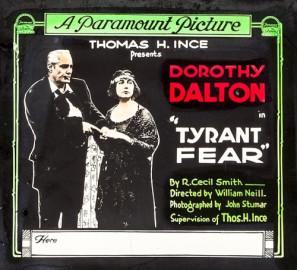
The flickering shadows of early cinema often hold within them narratives of surprising depth and enduring power, and R. Cecil Smith's Tyrant Fear (1918) is undoubtedly one such gem. This silent drama, a visceral journey through the untamed American frontier, transcends its era to deliver a potent message about female agency, the insidious nature of oppression, and the profound liberation found in self-possession. It’s a film that, even a century later, speaks volumes about the human spirit's capacity for endurance and transformation, particularly when confronted with the most brutal of circumstances.
From its opening frames, Tyrant Fear plunges us into a world defined by stark realities. The barren land of the north isn't merely a geographical setting; it’s a character in itself, mirroring the desolate existence of women within its patriarchal confines. Here, human life, especially female life, is depicted as a commodity, a chattel to be bartered and exchanged. This harsh premise immediately establishes the formidable odds facing our protagonist, Allaine Grandet, brought to life with compelling emotionality by Carmen Phillips.
Allaine's journey begins with the most fundamental betrayal: her own father's decision to sell her into the crude hands of Jules Latour. Latour, a trapper whose very essence seems to embody the primitive brutality of the wilderness, represents the most overt form of subjugation. His ownership of Allaine is absolute, reducing her to little more than property. This initial encounter with unvarnished, primal male dominance sets the stage for a series of encounters that will test Allaine’s spirit to its breaking point. The narrative, penned by R. Cecil Smith, doesn't shy away from the harsh realities of this existence, depicting a world where a woman's worth is dictated by men's whims and desires.
Yet, the cycle of commodification doesn't end there. Latour, in a moment of reckless abandon and perhaps a perverse display of his own power, gambles Allaine away. Her new proprietor is James Dermot, the keeper of a notorious den in a bustling gold settlement. This transition, while moving her from one form of captivity to another, shifts the nature of her oppression. Dermot, portrayed by Melbourne MacDowell, is not the crude brute of Latour; he is a more insidious, calculating tormentor. He seeks not just physical possession, but psychological dominion, aiming to bend Allaine's will, to break her spirit until she willingly submits to his authority. The environment of the gambling hall, with its cacophony and moral ambiguity, becomes a gilded cage, a stark contrast to the open, if harsh, wilderness, yet equally suffocating.
It is within this den of iniquity that Allaine finds an unexpected ally, a beacon of faded humanity amidst the moral decay: a besotted pianist. This character, whose name isn't explicitly given in the plot summary but whose presence is pivotal, is played by Thurston Hall, who masterfully conveys a man past his prime, whose spirit has been dulled by life's disappointments. His initial state of despondency, his 'manhood' seemingly lost or dormant, creates a fascinating parallel with Allaine's own subjugation. However, in Allaine’s presence, something stirs within him. Her inherent vulnerability, coupled with her unwavering, if nascent, resistance, acts as a catalyst for his own dormant vitality. His protective instincts, his empathy, and perhaps his own longing for redemption, begin to revive. This symbiotic relationship, where one's struggle ignites the other's dormant strength, is a beautiful and often understated element of the narrative.
Allaine’s resistance to Dermot is fueled by a 'nameless fear'. This isn't merely a fear of physical harm, but a deeper, existential dread—the fear of losing herself entirely, of becoming utterly devoid of agency. It’s a primal fear that resonates with anyone who has felt their identity threatened by external forces. This internal struggle is a testament to R. Cecil Smith's nuanced writing, presenting Allaine not as a caricature of a victim, but as a woman grappling with profound psychological torment. Carmen Phillips, through the expressive language of silent film acting, must have conveyed this internal battle with remarkable intensity, relying on gesture, facial expression, and the sheer force of her presence.
The narrative’s crescendo arrives when Dermot, in his relentless pursuit of control, attempts to enforce his will upon Allaine. Driven to the absolute brink, she commits an act of desperate, raw defiance: she shoots and wounds him. This single, violent act is the turning point, the moment of ultimate rupture with her past. It's not merely self-defense; it's an assertion of self, a declaration of independence that shatters the chains of her 'nameless fear.' In that instant, her fear vanishes, replaced by an empowering self-possession. She becomes, truly and irrevocably, 'mistress of herself.' This scene, undoubtedly a powerful visual in its silent presentation, would have resonated deeply with audiences, particularly women, offering a fantasy of liberation in an era still grappling with nascent feminist movements.
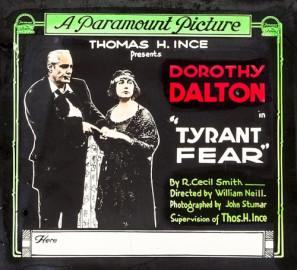
With her newfound freedom, Allaine embarks on a journey into the snows with the pianist. This escape into the vast, white wilderness is deeply symbolic. The snow-laden landscape, once a symbol of the harshness she endured, now represents a blank canvas, a fresh start, a purification. It is a journey of healing and mutual discovery. The ensemble cast, including Dorothy Dalton, Lou Salter, and William Conklin, would have contributed to the texture of this world, even if their roles were secondary to the central drama. The narrative’s focus, however, remains steadfastly on Allaine and her protector.
During their arduous trek, a poignant and symbolic event unfolds: their faithful dog unearths the frozen body of Jules Latour. This discovery is far more than a mere plot device; it is a profound act of closure. Latour, the embodiment of her initial, brutal subjugation, is literally buried by the forces of nature, severing Allaine’s last physical ties to a past of trauma and commodification. His death, discovered in the desolate snows, signifies the definitive end of that chapter in her life, allowing her to truly move forward, unburdened by the specter of her former oppressors.
In the quietude of the wilderness, Allaine finds profound happiness in the love of her protector. This isn't a return to dependence, but a blossoming of a genuine partnership, built on mutual respect and shared experience. The pianist's 'manhood' is not merely 'restored' in a traditional sense of dominance, but redefined as a protective, loving strength that complements Allaine’s own fierce independence. His transformation from a broken man to a steadfast companion underscores the film's nuanced understanding of masculinity, suggesting that true strength lies not in control, but in compassion and unwavering support. Allaine's 'restored faith in him' speaks to a trust earned through shared adversity and genuine affection, a far cry from the transactional relationships that defined her past.
What makes Tyrant Fear such a compelling watch, even today, is its prescient exploration of themes that continue to resonate. The struggle for female autonomy, the fight against patriarchal oppression, and the journey of self-discovery are timeless. Carmen Phillips’ performance, relying solely on physical expression and the power of her gaze, must have been nothing short of captivating, conveying Allaine’s evolution from terrified chattel to self-assured woman with remarkable clarity. R. Cecil Smith’s narrative is tightly woven, ensuring that every plot point contributes to Allaine’s transformative arc.
In the broader tapestry of silent cinema, Tyrant Fear stands out for its bold depiction of a woman seizing control of her destiny. While many films of the era, such as Forbidden Fruit (1919), explored societal constraints on women, Tyrant Fear grounds its narrative in a visceral, frontier setting, emphasizing raw survival alongside psychological liberation. The journey of the pianist, finding renewed purpose through his connection with Allaine, also echoes the redemptive arcs found in films like He Who Gets Slapped (1924), where a man’s broken spirit is mended through an unlikely relationship, albeit with vastly different circumstances. These thematic connections highlight the universal appeal of stories about personal rebirth and the search for authentic human connection.
The film, a product of its time, skillfully used intertitles to convey dialogue and internal monologues, guiding the audience through Allaine's psychological landscape. The cinematography, though perhaps not groundbreaking by modern standards, would have focused on stark contrasts – the vastness of the wilderness against the cramped confines of the den, the expressions of fear versus the triumph of resolve – to heighten the emotional impact. It’s a powerful reminder of how effectively silent films could communicate complex narratives and deep emotional truths without a single spoken word.
Ultimately, Tyrant Fear is more than just a historical artifact; it’s a timeless narrative of courage. It speaks to the inherent human desire for freedom, the strength required to confront one's deepest fears, and the transformative power of love and self-acceptance. Allaine Grandet's journey from a life of imposed servitude to one of self-determination is a potent allegory for anyone striving to break free from the tyrannies, both external and internal, that seek to diminish the human spirit. It’s a silent film that roars with an enduring message, cementing its place as a significant, if unsung, work in the annals of cinematic history. For those who appreciate the profound artistry and narrative ambition of early cinema, Tyrant Fear offers a rewarding and thought-provoking experience, a testament to the power of a woman finding her voice, even in silence.
IMDb —
1923
Community
Log in to comment.