DbcultAccessing Vault...
6.6/10
Senior Film Conservator
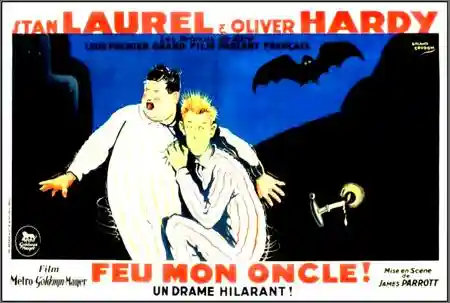
A definitive 6.6/10 rating for a film that redefined the boundaries of cult cinema. Feu mon oncle remains a cornerstone of transgressive art.
Feu mon oncle is a peculiar little silent film. If you're someone who loves digging into the very early days of cinema, especially those awkward, charming bits from a century ago, then yeah, give it a look. It’s got a certain creaky charm. For folks who need dialogue, color, or, you know, a plot that makes perfect sense, you'll probably find it a bit of a slog. This one's for the film history buffs, or maybe just the curious. 🧐
The premise, as far as I could piece it together through the flickering frames, centers on a will. Some dear, departed uncle has left someone (Clara Guiol, I think) a fortune. Of course, this means some nefarious character shows up to make things complicated. Jean De Briac plays the kind of villain who practically twirls his mustache through the entire film. It’s all very *on the nose* in the best possible silent era way. 🎩
There's this moment, early on, where Guiol's character gets the news of her uncle's passing. Her reaction is just *perfectly* over-the-top, a real testament to silent acting. She clutches her chest, her eyes go wide, and then she does this little collapse into a chair. You really feel the drama, even if it is a bit much. 😂
Then things get really silly. A lot of the movie feels like a protracted chase. Someone's always running after someone else, usually over a misunderstanding about a document. I counted at least three different scenes involving characters hiding under furniture. One fellow even gets stuck in a grandfather clock, which, honestly, felt like a callback to a hundred other films I’ve seen from this period.
Now, about the cast. Seeing Stan Laurel and Oliver Hardy listed here is a trip. They don't appear *together* as a duo, obviously, this is too early for that. But you can spot their individual energies. Laurel, even in a small role as maybe a bumbling messenger or a cook, has that signature fidgety awkwardness. He just *moves* funny. It’s not quite the Stan we know, but the seeds are there. 🌱
Hardy, on the other hand, shows up as a stern-looking police officer or perhaps a butler, someone with authority. He’s got that imposing presence, even without the full 'Ollie' persona. One scene has him trying to direct traffic, and it’s just a masterclass in frustrated indignation. He doesn’t even need to speak, his eyebrows do all the work. It’s *quite* something to watch. 👮♂️
The pacing is… interesting. Sometimes it rushes through a scene, then it lingers on a close-up of a crumpled letter for what feels like an eternity. It's almost as if they weren't sure what to focus on. That's part of its charm, though. It feels less like a polished product and more like an experiment unfolding right before your eyes.
The film's strongest points are definitely these little character beats. Like, there’s a scene where the villain, De Briac, is trying to sneak a peek at the will. He keeps almost getting caught by a maid, and each near-miss is played for maximum slapstick. He tries to look casual, leaning against a doorframe, but his whole body is screaming 'guilty!' It’s a riot. 🤣
And the resolution? Oh boy. It’s as sudden as it is silly. Everything just *stops*. All the confusion and chasing just sort of… resolves. It leaves you with a smile, but also a shrug. Was it ever really about the plot? Probably not. It was about the ride.
If you're into the history of silent film, or just curious about what the early days of comedy looked like before sound, then give Feu mon oncle a shot. Don't expect a masterpiece, but do expect some genuine laughs and a peek at cinematic history. It’s a good little time capsule, for sure. 🕰️
IMDb 6.1
1930
Community
Log in to comment.