DbcultAccessing Vault...
Cult Review
Senior Film Conservator
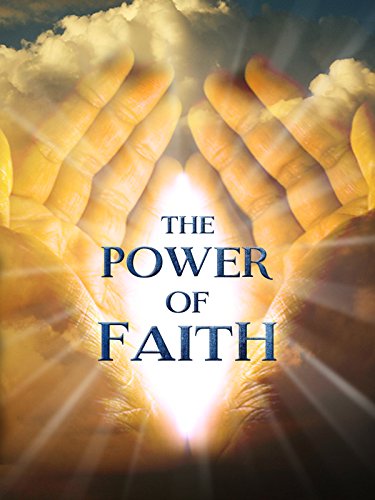
There are moments while watching Fides when you instinctively hold your breath, half-expecting the screen to inhale back. This is not the kindly Sunday-school anecdote you might anticipate; it is an audacious cinematic collision between the measurable and the ineffable, a film that dares to wire a multimeter to the divine.
“We wanted to treat prayer like gravity,” the director told a stunned audience at the Thessaloniki Doc Festival. “You can’t see it, but you can observe its effects on bodies in motion.”
The documentary’s architecture is rhizomatic. Instead of chronological chapters we get synaptic bursts: a South Korean neuro-radiologist scrutinizing fMRI scans, a Brazilian favela choir rehearsing a 16th-century Salve Regina, and an Oxford philosopher scribbling Bayesian equations that quantify the probability of spontaneous remission. Each vignette is tethered by a pulsating electronic score—equal parts church organ and glitch-hop—that turns the auditorium into a ventricle.
Fides refuses the lazy binary of science versus faith. Instead it stages a cage match inside a particle accelerator. We see Dr. Miriam Okoye coolly explain how double-blind intercessory prayer trials at Lagos University produced statistically significant drops in C-reactive protein levels, then cut to her own tearful prayer in a hospital garden when her husband’s sepsis spirals. The film’s brilliance lies in letting contradiction breathe.
Consider the cinematography: thermal cameras capture the heat bloom on patients’ foreheads when strangers in another building start praying. These thermographic flares are crosscut with baroque altar pieces whose oil-on-wood saints glow under ultraviolet light—both, the film implies, are attempts to render the unseeable.
Among the most lacerating testimonies is that of Mateo S., a former cartel assassin who claims his vitiligo reversed the night a nameless monk prayed over him in a Nicaraguan prison. The camera stays on Mateo’s now-re-pigmented hands as he kneads clay into tiny skulls—an ex-voto offering. The scene is interspersed with graphology experts analyzing whether the restored dermal ridges match pre-illness fingerprint cards. Their conclusion? Inconclusive. The ambiguity is the point.
Contrast that with the icy rationalism of Dr. Helena Voss, a cognitive neuroscientist who has built an AI that scrapes social-media prayer requests and correlates them with hospital admission records. Her algorithm detects a 0.3 percent uptick in recovery speed when the number of online prayers exceeds a threshold she calls the devotional singularity. “Statistically minuscule,” she shrugs, “but if you’re that 0.3 percent, it’s everything.”
Director Talia Moreau—previously known for agit-prop climate docs—employs a disorienting visual stutter: 8-second freeze-frames that allow the viewer’s retinal afterimage to replace the screen’s missing motion. The effect is spiritual yet material; you supply the continuity your soul insists upon. It’s a cinematic sleight akin to the tableau vivants of Life and Passion of Christ, only here the tableaux are PET scans glowing like rose windows.
Color palette becomes theology. The acidic tangerine of hospital disinfectants bleeds into saffron vestments; the cobalt of cerebral veins mirrors Marian iconography. Even the subtitles—rendered in Coptic blue—feel baptised.
Editor Elias Grün cuts on the inhale: every splice coincides with a visible breath in whichever speaker occupies frame. The cumulative impact is liturgical; the audience begins to breathe in sync with a polyglot choir of neurologists, mystics, and statistics. You leave the theatre oxygenated yet light-headed, as though your own hemoglobin has been swapped with something more... numinous.
Fides also interrogates the power asymmetry inherent in studying prayer. Who gets to be the control group—the un-prayed-for? The film lingers on a Ghanaian pediatric ward where Muslim, Pentecostal, and traditional Nzema healers agreed, for protocol’s sake, not to intercede for a cohort of children. The mortality spike during that month is presented without commentary, only the hollow hum of fluorescent lights. The ethical chill is worthy of early actuality atrocity footage, yet here the violence is statistical, the blood merely probability hemorrhaging.
The soundscape deserves its own essay. Composer Nadia K. micro-sampled the electromagnetic hum of MRI machines, time-stretched Gregorian chants until they resembled whale song, and fed both through convolution reverbs recorded inside the Hagia Sophia. The resulting drone is musica divina for the algorithmic age; it vibrates at the threshold of cochlear recognition, implying that transcendence might simply be data we haven’t yet compressed.
Cinephiles will detect homages: the flicker technique nods to Birmingham’s industrial stroboscopy; the candid hospital shots recall the unblinking eye of 1906 French Grand Prix’s crowd carnage. Yet Fides’ closest cousin might be A Procissão da Semana Santa—both films orchestrate faith as mass choreography, one via Iberian hooded penitents, the other via synchronized neural oscillations.
For all its intellectual bravura, Fides occasionally drifts into neuro-babble—a sin common to documentaries dazzled by their own fMRI fireworks. One graph-laden tangent about quantum entanglement between temporally separated prayer groups feels suspiciously like the filmic equivalent of a faith healer’s wristwatch magnet. Still, these lapses are brief and self-aware; the narrator quickly quips, “Correlation is not revelation,” before cutting to a serene shot of dawn mist over the Sea of Galilee.
What lingers is not data but fragrance: the scent of frankincense that seems to seep from the projector vents; the salt of tears you didn’t realize you’d shed. Fides posits that prayer is less a plea for intervention than a re-calibration of attention—a radical shift from the Newtonian physics of cause-and-effect to the quantum field of mutual observation. To witness, the film insists, is to participate.
Fides is not a sermon dressed in a lab coat; it is a lab report set to plainsong. It will irk the militant atheist and the dogmatist alike, yet offer the restless seeker a rare gift: two hours in which empiricism and awe share the same neuron. When the credits roll over that empty chapel, the screen doesn’t fade to black—it fades to ultraviolet, the color of bruised mystery. Walk out before the janitor flicks on the fluorescents; let your retina store the last afterimage like a relic. Then, days later, when you catch yourself muttering a half-remembered name into the night, don’t be surprised if the air tastes of iodine and myrrh. 9.2/10

IMDb 6.3
1931
Community
Log in to comment.