DbcultAccessing Vault...
7/10
Senior Film Conservator
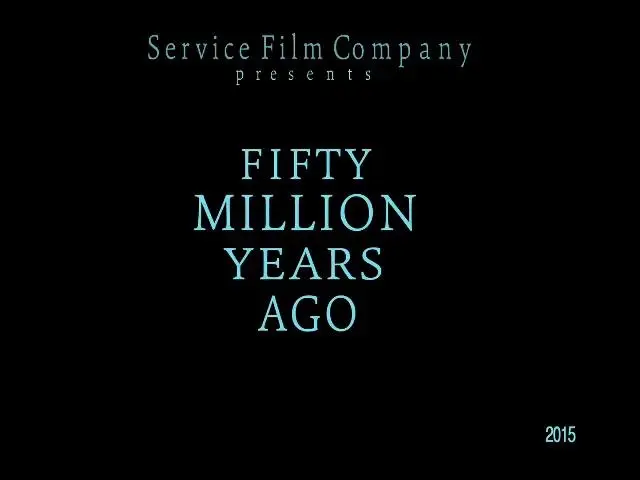
A definitive 7/10 rating for a film that redefined the boundaries of cult cinema. Fifty Million Years Ago remains a cornerstone of transgressive art.
Short answer: Yes, but only if you view it as a piece of living history. This film is for the visual archaeologist and the animation student who wants to see the blueprint of modern special effects. It is absolutely not for the casual viewer seeking high-octane action or modern scientific accuracy.
Watching Fifty Million Years Ago in the modern era is akin to reading a dusty, leather-bound encyclopedia. You don't do it for the latest data; you do it to understand how we once perceived the world. This 1925 short serves as a bridge between the whimsical animation of Col. Heeza Liar, Detective and the sophisticated stop-motion that would eventually give us King Kong.
Fifty Million Years Ago is worth watching if you have fifteen minutes and a deep appreciation for the origins of cinema. It provides a rare glimpse into how early filmmakers used animation to explain complex scientific concepts to a general public. However, if you are looking for a narrative-driven experience like M'Liss, you will be disappointed by its clinical, educational tone.
1) This film works because its tactile stop-motion creates a sense of physical weight that modern CGI often lacks.
2) This film fails because its scientific understanding of dinosaurs is nearly a century out of date.
3) You should watch it if you want to see the literal evolution of the animation medium.
In 1925, the world was caught in the grip of the Scopes Monkey Trial. The theory of evolution was not just a scientific topic; it was a cultural flashpoint. Fifty Million Years Ago entered this arena not with a shout, but with a series of meticulously crafted frames. The film begins with a surprisingly atmospheric depiction of the Earth's cooling. The use of lighting here is stark, reminiscent of the shadows found in The Secret of the Moor, creating a sense of dread and wonder.
The animation of the primordial soup is where the film first shows its hand. While it lacks the fluid character movement seen in Mother Gooseland, it possesses a rhythmic quality. The way the early life forms jitter across the screen feels honest. It is the sound of a medium learning to speak. There is a specific scene where a lizard-like creature crawls from the water to the land. The frame rate is low, making the movement stutter, yet this adds a strange, alien realism to the creature's struggle.
The centerpiece of the film is, predictably, the dinosaurs. By modern standards, these creatures are laughable. They are slow, tail-dragging beasts that look more like clay toys than apex predators. But compare this to the linear storytelling of The Bruce Partington Plans, and you see a different kind of ambition. The filmmakers weren't just trying to tell a mystery; they were trying to rebuild a lost world from scratch.
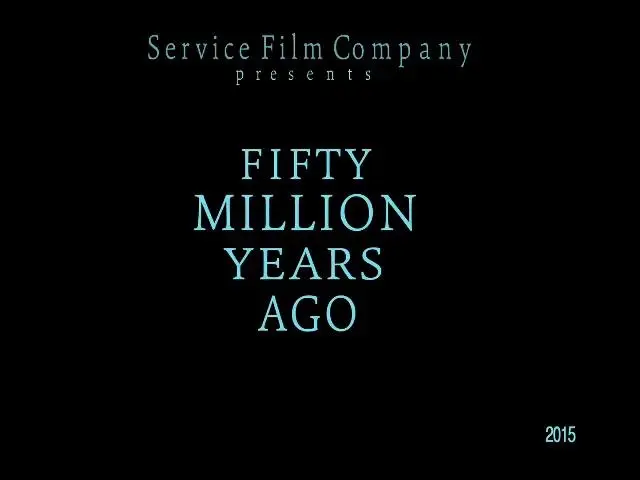
The stop-motion is surprisingly ambitious for 1925. In one particular sequence, a Brontosaurus (now known as Apatosaurus) lifts its neck to reach a tree. You can see the slight thumbprints of the animator on the clay model. To some, this is a flaw. To me, it is a badge of honor. It reminds the viewer that every second of footage was a manual labor of love. It has a grit that you won't find in the polished frames of The Charm School.
The pacing of Fifty Million Years Ago is remarkably brisk. Unlike the sprawling narratives of The Bull's Eye, which relied on cliffhangers to keep the audience engaged, this film relies on pure curiosity. It moves from the prehistoric ocean to the age of man with a clinical efficiency. This is a double-edged sword. While it never overstays its welcome, it lacks the emotional core found in works like Trilby (1923).
I argue that this film is actually a precursor to the modern documentary. It uses the visual language of cinema to replace the dry text of a textbook. While it may not have the comedic timing of Meyer from Berlin, it possesses a quiet dignity. It is a film that respects its audience's intelligence, even if its own data is now obsolete. The silence of the film—standard for the era—actually works in its favor here, allowing the viewer to marvel at the visuals without a distracting, overly-dramatic narrator.
The film offers a fascinating look at 1920s scientific thought. The animation, while primitive, has a charm and "physicality" that is missing from modern digital effects. It is a perfect example of how cinema was used as a tool for public education early on.
The science is wildly inaccurate (dinosaurs and humans are implied to be closer in time than they were). The visual quality can be poor depending on the restoration. It lacks a narrative hook for those not already interested in the subject matter.
Fifty Million Years Ago is a relic, but it is a shining one. It is better than many of its contemporaries because it reaches for something larger than simple entertainment. It attempts to explain existence itself. It is flawed. It is dated. But it is vital cinema. If you can appreciate the work that went into every single frame of that clay Brontosaurus, you will find much to love here. It is a fifteen-minute masterclass in the power of the moving image to make the impossible visible.
IMDb —
1916
Community
Log in to comment.