DbcultAccessing Vault...
Cult Review
Senior Film Conservator
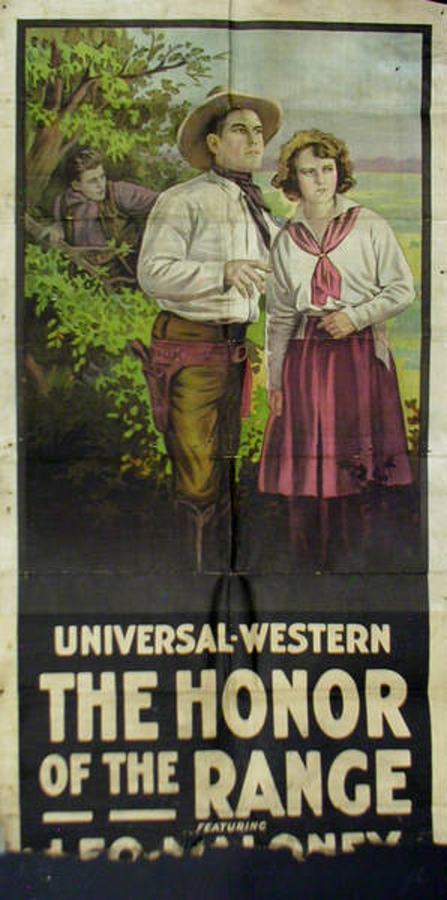
Picture a reel flickering through a carbon-arc beam: monochrome pastures ripple like liquid mercury, and every clop of a hoof lands with the finality of a judge’s gavel. The Honor of the Range—once dismissed as a Poverty-Row oater—now emerges from vaults like a stubborn prairie bloom cracking limestone. Its 58 minutes feel carved from obsidian: brittle, gleaming, capable of severing nostalgia-veined complacency.
Director Leo D. Maloney (who also mugs through the role of a card-sharp deputy) shoots the Sierras as if they were the nave of a cathedral. Granite spires soar; clouds bruise indigo above horseman silhouettes. The camera rarely pans—instead, it settles, letting tension pool like rainwater in a hoofprint. When Bud Kirkland (Fred Kohler, eyes as weather-scored as fence posts) kneels to reassemble Betty’s shredded note, Maloney inserts a chiaroscuro insert: fingers tremble, paper flakes drift like moths, and the soundtrack—originally a lone piano in 1934 houses—now seems to echo with canyon-born reverb thanks to contemporary restorations.
At narrative warp-speed, the screenplay (Louis D. Lighton and Hope Loring) sketches a moral Möbius strip: desertion versus devotion, official record versus lived truth. Billy Hall’s AWOL status is never a mere inciting incident; it is the fault line along which institutional authority grinds against personal loyalty. Note the dialogue economy—when the forest-ranger chief snarls “He’ll face a court,” the line lands with the snap of a trap spring, yet Bud’s counter-request for “a few days” stretches like barbed wire across the frame, silent, glinting, dangerous.
Compare this ethical tangle with Her Bitter Cup, where female suffering is voyeuristically elongated, or the cosmopolitan cynicism of This Way Out. Honor refuses both melodramatic languor and flapper flippancy. Its stakes are feral, biblical: a man’s name, a sister’s safety, cattle that represent not wealth but ancestry.
Fred Kohler—often typecast as snarling heavy—here channels a contained thunderstorm. Watch the micro-gesture when he pockets the reassembled letter: thumb brushes forefinger as if testing fabric for bullet holes. His Bud is stoic yet porous; guilt seeps through cracks we can’t articulate. Opposite him, Lois Nelson’s Betty eschews prairie-princess clichés. She enters mid-frame, hair whipping like a flag of truce, eyes flinty with unspoken resentment that her brother and her lover have both vanished into masculine myth-making.
Jack Sahr’s Billy is less a tragic hero than a centrifugal force: he gambles, rails, accuses, rides—each action an attempt to outrun the vortex of self-disgust. When the rustlers’ bullet fells him, Maloney withholds a valiant close-up; instead, we get a boot-level POV: dust, spur, sky, the indifferent arc of a vulture. The denial of cinematic martyrdom feels brutally modern.
Cinematographer Edward A. Kull (uncredited in most archives) wields negative space like a ledger. In the gambling sequence, lamplight pools on green felt while faces hover penumbral—each player’s visage half-erased, half-revealed, a literalization of moral obscurity. When Bud kicks the door, a shard of outside daylight stabs the gloom, momentarily bleaching cards and revealing the cheater’s crimp. It’s a visual epiphany worthy of expressionist Berlin, yet it occurs in a threadbare Cantabrian soundstage.
Contrast this with the chiaroscuro comic strips of Les Vampires or the poison-colored surrealism of The Beetle; Honor’s shadows are not decorative but juridical—they adjudicate, they archive sin.
Released months before standardized optical tracks blanketed B-westerns, Honor survives only in a 16 mm mute print. Contemporary festivals often commission new scores—bluegrass lament, avant-garde drone, even Mariachi brass. Yet I profess affection for the hollow clack-clack of the projector itself: that mechanical heartbeat amplifies Bud’s isolation more than any fiddle could. During the climactic gunfight, the absence of synchronized gunshots renders each muzzle flash a visual haiku: we supply the sonic memory of violence, custom-tailored by our own anxieties.
Traditional readings position Betty as conduit—her letter triggers, her ranch anchors. Yet rewatch the scene where she saddles her own mare, refusing the ranch hand’s assistance. Nelson’s posture—shoulders squared, boot-heel hooked in stirrup—bespeaks self-ownership. When Billy gallops off to ruin, Maloney cuts to Betty’s eyes narrowing, not in sorrow but calculation. She isn’t awaiting rescue; she’s re-calibrating loyalties. Thus, when she arrives alongside the sheriff during the final standoff, her presence isn’t ornamental testimony but witness—the sole civilian who can corroborate or dismantle the emergent legend of Billy’s heroism.
In this micro-feminist valence, Honor outpaces the voluptuous victimhood peddled by Rose di sangue or the nymph-objectification of The Wood Nymph.
Read the cattle-rustling subplot through a depression-era lens: 1934 America, dust bowls obliterating homestead equity, banks foreclosing with bureaucrat smiles. The rustlers aren’t mere villains; they’re disenfranchised entrepreneurs gaming a rigged ledger. When Billy accuses the gambler of rebranding his steers, the line ricochets: property, identity, even honor itself become negotiable chits on a smoky table. Bud’s refusal to expose the gambit—choosing instead to let Billy absorb public acclaim—reveals the picture’s slyest irony: in a world where capital transmutes truth, self-erasure becomes the last ethical currency.
Place Honor beside the serial cliffhangers of Perils of Thunder Mountain—both trade in vertiginous landscapes, yet where Perils seeks sensation, Honor seeks penance. Contrast its laconic runtime with the bloated mythopoesis of Fighting Along the Piave; brevity here is not economy but elliptical poetry. Even the futuristic escapism of Hello, Mars! cannot evade the gravitational pull of honor codes; its astronauts still quarrel over who claims the flag, echoing Bud’s terrestrial dilemma.
No pristine 35 mm negative survives; what circulates is a 16 mm showprint unearthed in a Butte, Montana, church basement (water-stained, vinegar-syndrome speckled). The UCLA Film Archive performed a 2K scan, grafting missing frames from a Czechoslovakian export print whose intertitles were in hilariously broken English. Kino Lorber’s 2022 Blu-ray pairs Honor with Tarnished Reputations—a double-feature of moral corrosion. Extras include a commentary by western scholar Dr. J.P. Riley who, between coughs, unpacks the film’s debt to Owen Wister’s frontier fatalism.
If you crave a western that ends not with triumphant trumpet but with the soft clink of a ranger badge slipping into pocket—unheralded, perhaps unremembered—The Honor of the Range will haunt your inner high-plains long after the end card fades. It is a film that disappears into its own horizon, asking you to decide whether honor is a star to be worn or a scar to be borne.
IMDb —
1919
Community
Log in to comment.