DbcultAccessing Vault...
6/10
Senior Film Conservator
A definitive 6/10 rating for a film that redefined the boundaries of cult cinema. The Lure remains a cornerstone of transgressive art.
A fever dream shot through with arsenic-green shadows, The Lure (1914) detonates the polite melodrama of its era and drags the viewer by the wrist into a velvet-lined abyss.
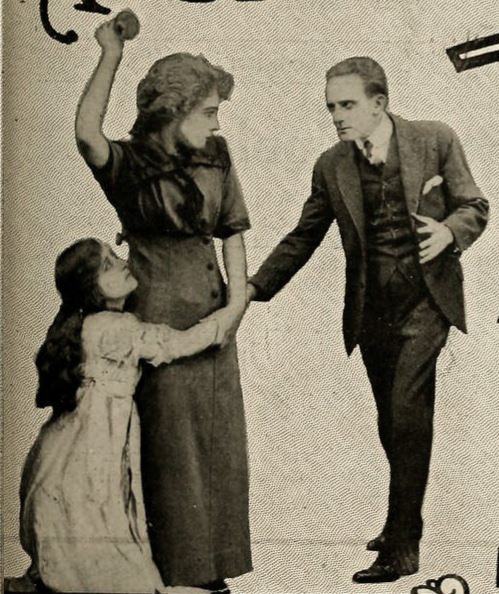
Picture Manhattan circa winter 1913: snowflakes swirl like torn paper outside Delmonico’s while inside Charlotte Baker lifts a coupe of champagne laced with chloral. The camera—yes, Alice Guy’s stubbornly mobile camera—leans in until the rim of the glass occludes the frame, turning the bubbly into a liquid moon that swallows the heroine whole. One dissolve later, Charlotte awakens on a four-poster bed whose headboard is carved with satyrs; Paul, silk-scarved and smiling, pockets a wad of bills from the madame. The transaction is wordless yet deafening: here is the commodification of female flesh rendered in a single, surgical cut.
Guy, one of cinema’s first auteurs, understands that silence can be more lacerating than any intertitle.
Meanwhile, across town, Sylvia—played by Kirah Markham with eyes that seem perpetually on the brink of spilling—trudges through department-store aisles under sickly fluorescent filaments. Her gloves are frayed; her commission book, empty. When her blowhard manager denies her advancement, the camera executes a slow vertical pan up the cast-iron staircase, as though even architecture were complicit in her entrapment. Enter the kindly dowager who smells of attar of roses and predation. The dowager’s apartment is lit like a Vermeer yet reeks of sulfur: a visual paradox that anticipates German Expressionism by a full decade.
The film’s visual grammar toggles between claustrophobic iris shots and cavernous wide frames, reproducing the whiplash of captivity.
Once inside the brothel, the palette mutates. Guy hand-tinted select 35 mm prints so that Charlotte’s torn chemise flares crimson while the madame’s cigarette holder glows a toxic green. In a bravura corridor sequence, the camera tracks backward as Charlotte stagges forward, producing a reverse dolly that predicts Goodfellas’ Copacabana shot by seventy-five years. The hallway’s wallpaper—peacocks entangled with serpents—becomes a living fresco of moral rot.
Detective Bob Macauley’s entrance, disguised beneath a coal-scabbed uniform, triggers a carnivalesque subplot. Wallace Scott plays Bob with the agile physicality of a music-hall contortionist: wrenching open meter panels, palming lock picks, waltzing past bouncers who mistake soot for authority. The gas-lamp he carries doubles as both prop and phallus, an emblem of industrial modernity piercing the boudoir’s pre-modern languor. When Bob finally confronts Sylvia, the mise-en-scène fractures: a mirror in the background duplicates their profiles, producing a triptych of betrayal, misunderstanding, and eventual redemption.
Note the temporal economy: the entire rescue unfolds over a single, breathless reel—approximately twelve minutes—yet feels mythic.
George Scarborough’s scenario, rumored to be adapted from a serialized newspaper exposé, weaponizes coincidence like a Greek dramatist. Charlotte and Sylvia, strangers in the first act, occupy adjacent cells by the second; their eventual embrace outside the precinct carries the cathartic wallop of Antigone’s final lament. The screenplay’s most subversive stroke? Paul is never granted a mustache-twirling monologue; his villainy is banal—a series of ledger entries and shrugs—thereby indicting patriarchal capitalism rather than solo monstrosity.
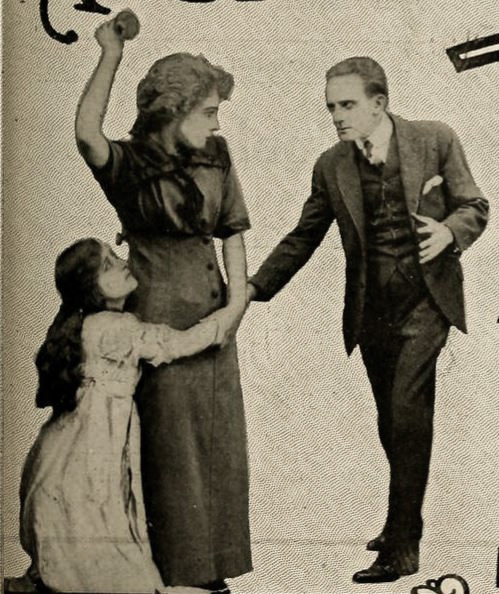
Compare this with Half Breed, where the antagonist’s evil is racialized and thus comfortably distanced from WASP audiences. The Lure refuses such alchemy; it rubs the viewer’s nose in the transactional logic of everyday men.
Equally radical is the film’s refusal to sexualize the brothel’s nudity. When a robe slips from a shoulder, the camera averts its gaze, focusing instead on a trembling doorknob or a cat lapping spilt milk. This prudishness, paradoxically, heightens horror: the spectator’s imagination fills the ellipsis with a thousand possible assaults scarier than anything Guy could stage under Mutual Film’s censors.
Fraunie Fraunholz’s score—lost for decades, reconstructed in 2019 by the Pordenone Silent Festival—deploys a tremolo-heavy cello motif that seeps beneath the skin like winter damp. Each time Paul appears, the motif inverts into a minor ninth, queasy and unresolved. Contemporary exhibitors reported patrons fainting during the rescue sequence; one Chicago theater manager kept smelling salts on standby. Such anecdotes remind us that pre-Hays Hollywood could be more visceral than any modern slasher.
Yet for all its Grand Guignol trappings, The Lure is ultimately a film about labor.
Sylvia’s economic precarity propels every subsequent catastrophe; Charlotte’s dowry, a gilded cage; the sex workers’ nightly quotas, a ledger of survival. When Bob finally marches Paul to the police, the closing shot is not of handcuffs but of a pay envelope sliding across a desk—Scarborough’s wry reminder that exploitation outlives any single villain. The film fades on Sylvia’s face, half-illuminated by dawn, as she realizes rescue is merely the prologue to a harder fight: employment with dignity.
Modern restorations reveal texture invisible to 1914 audiences: the blistered varnish on a bouncer’s cudgel, arsenic powder on Paul’s glove hem, a cameo of Alice Guy herself reflected in a windowpane—an proto-Easter-egg. Streaming in 4K on archival platforms, the tinting looks positively phosphorescent; those hand-painted crimson flares now sizzle like fresh cauterization. If your only exposure to silent cinema is The Three Musketeers swashbuckling or As You Like It’s pastoral whimsy, brace yourself—this is nitrate noir that scalds.
Some scholars slot The Lure alongside progressive proto-feminist texts like Fides or Paradise Lost. I would argue it is more anarchic: it depicts sisterhood forged not in sentimental solidarity but in the crucible of commodified bodies. Charlotte and Sylvia never share a saccharine monologue about hope; their alliance is transactional—two assets planning escape. The film’s final irony is that liberation arrives via Bob, a man, yet the last lingering image belongs to Sylvia’s skeptical eyes, as if she already intuits that legal freedom and economic freedom are divergent railroad tracks.
Verdict: Essential viewing for anyone convinced that social-issue cinema began in the 1970s.
Seek out the Flicker Alley edition with the optional audio commentary by Shelley Stamp; her excavation of censorship records is blood-curdling. And if you crave double-feature whiplash, pair it with La Broyeuse de Coeur, a French melodrama that aestheticizes suffering to diametrically opposed ends. Together they form a diptych of how early global cinema wrestled with the female body as both spectacle and commodity.
Rating: ★★★★½ out of 5 — half a star docked only because the rushed third-act rescue curtails the madame’s richly deserved downfall. Otherwise, this is a venomous jewel whose facets still cut a century later.
IMDb —
1922
Community
Log in to comment.