DbcultAccessing Vault...
Cult Review
Senior Film Conservator
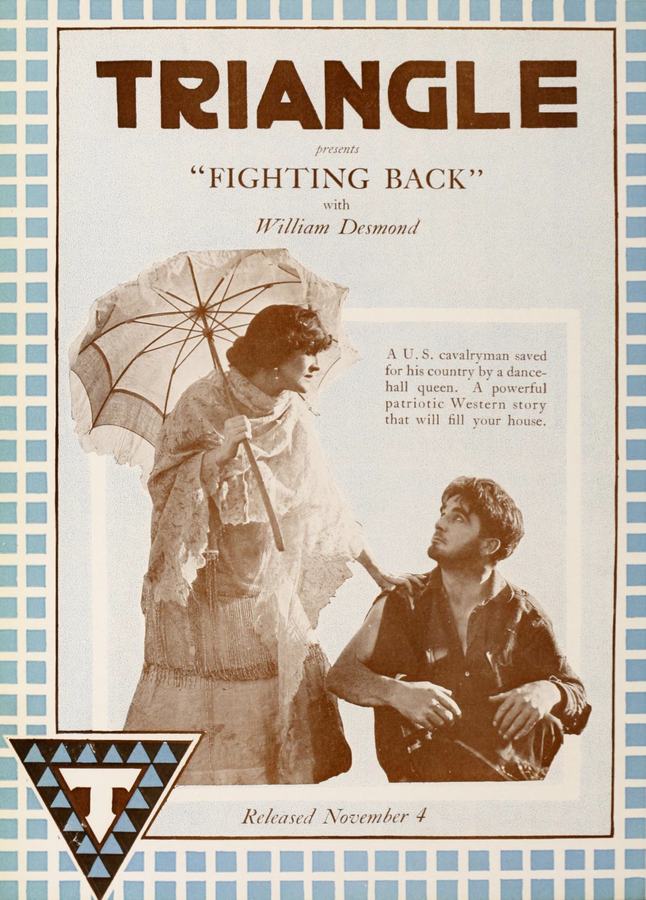
In the vast, often overlooked archives of early cinema, certain films emerge not just as historical artifacts, but as poignant narratives that resonate with timeless human struggles. Fighting Back, a compelling drama from 1917, stands as one such testament to the enduring power of the human spirit against overwhelming odds. This isn't merely a silent film; it's a profound exploration of injustice, the search for redemption, and the unexpected ways in which fate can intervene to mend a broken life. It's a journey from the desolate depths of despair to the hopeful horizons of a second chance, painted with the broad, emotive strokes characteristic of its era, yet possessing a nuanced depth that belies its age.
Our narrative commences with a figure shrouded in ignominy, known only as 'The Weakling.' This moniker itself speaks volumes, hinting at a man whose very identity has been eroded by circumstance. Cashiered from the army through what he perceives as a deeply unjust court-martial, he is a man stripped not only of his uniform but of his honor and purpose. The film opens on a stark, almost existential note, depicting him wandering aimlessly through the unforgiving desert. This desolate landscape serves as a powerful metaphor for his internal state – barren, parched of hope, and seemingly endless in its bleakness. The cinematography, even in its nascent form, effectively conveys the oppressive isolation of his predicament, making the viewer feel the weight of his despair.
It is in this crucible of hardship that fate, with a surprising turn, intervenes. A group of cowboys from the Lazy Y Ranch, traversing the same harsh terrain, stumble upon him. Their discovery is less a random act and more a symbolic rescue, pulling him from the brink of physical and spiritual collapse. The sequence where they 'clean him up' is more than just a literal act of hygiene; it signifies a metaphorical washing away of his past, a stripping bare of the shame and dust that clung to him. They offer him not charity, but work – a job as a cowboy on the ranch. This is a crucial pivot point, emphasizing the dignity of labor and the chance for self-reliance as cornerstones of his potential redemption. It’s a classic Western trope, yet executed with a sincerity that elevates it beyond mere cliché, reminding us of other narratives of rugged individualism and the frontier as a place for reinvention, perhaps even echoing the spirit seen in films like The Fight, where characters often grapple with external and internal battles for their very survival and identity.
As 'The Weakling' (portrayed with a compelling blend of vulnerability and nascent strength by Curley Baldwin) begins to acclimate to life at the Lazy Y, the narrative gracefully shifts its focus from his solitary struggle to his burgeoning connection with the wider world. The ranch, initially a place of refuge, slowly transforms into a community where he might forge new bonds. It is here that he encounters a local dance-hall girl, played with captivating charm by Josie Sedgwick. Her character is not a mere damsel in distress or a fleeting romantic interest; she embodies a spirit of resilience and an understanding of life's rough edges, perhaps having navigated her own share of societal judgments. Their initial interactions, conveyed through the expressive pantomime of silent film acting, are delicate and genuine, illustrating a mutual recognition of shared vulnerability and a nascent attraction that transcends their differing social strata. This blossoming romance is the emotional core of Fighting Back, providing a powerful counterpoint to the protagonist’s earlier despair.
Sedgwick's performance is particularly noteworthy. In an era where female characters could often be relegated to simplistic archetypes, her dance-hall girl possesses a depth that suggests an inner strength and an empathetic heart. She sees beyond 'The Weakling's' past and his reputation, recognizing the inherent goodness and potential beneath the surface. This ability to look past superficial judgments and embrace a person for who they truly are is a recurring, powerful theme in cinema, and Sedgwick brings a palpable sincerity to it. Their romance is not just a plot device; it's a symbol of hope, a tangible manifestation of the changing luck the protagonist experiences. It signifies that even after profound setbacks, love can find a way to flourish, offering solace and a renewed sense of purpose. One might draw parallels to the redemptive love stories found in films like Salvation Nell, where characters from challenging backgrounds find a path to a better life through the transformative power of affection and acceptance.
While Baldwin and Sedgwick anchor the film, the supporting cast contributes significantly to the rich tapestry of the narrative. Claire McDowell, Tom Guise, William Ellingford, William Desmond, Pete Morrison, Jack Richardson, and Thornton Edwards all bring a robust authenticity to their roles, embodying the rugged characters of the Western frontier. The ensemble cast, though often operating in the background, lends credibility to the ranch environment and the small community dynamics. McDowell, a seasoned actress of the era, likely brought a gravitas to her role, even if it was a supporting one, while actors like William Desmond, known for his strong leading man presence, added another layer of talent to the production.
The efficacy of silent film relies heavily on expressive acting, clear visual storytelling, and well-crafted intertitles. Fighting Back excels in these areas, guided by the directorial vision of Alan James and the screenwriting prowess of Harold Shumate. James, as director, understood the nuances of conveying emotion without dialogue, relying on close-ups, body language, and dramatic staging. Shumate's screenplay, in turn, provides a solid structural foundation, building a compelling arc for 'The Weakling' that feels earned and emotionally resonant. The pacing of the film, from the initial despair to the gradual ascent towards hope, is masterfully controlled, allowing the audience to fully invest in the protagonist's journey. The writers skillfully weave together themes of unjust accusation, the search for identity, and the transformative power of human connection. The narrative avoids simplistic resolutions, instead presenting a more organic unfolding of events where luck truly seems to be changing, not through magic, but through the protagonist's own efforts and the kindness of strangers.
At its heart, Fighting Back is a quintessential Western drama, not just in its setting but in its thematic concerns. The American West, during this period, was often romanticized as a place of boundless opportunity, a frontier where individuals could escape their pasts and forge new identities. This film embraces that mythology wholeheartedly. 'The Weakling's' journey from a disgraced soldier to a respected cowboy, and eventually to a man finding love, embodies the very spirit of reinvention. The film subtly critiques the rigidity of institutional justice (the court-martial) by contrasting it with the more organic, humanistic justice found in the open spaces of the West, where character is proven through action and integrity, not through bureaucratic decree.
The theme of 'fighting back' is multifaceted here. It refers not just to a physical struggle, but to a profound internal battle against despair, against the stigma of an unjust past, and against the temptation to succumb to bitterness. It’s about reclaiming one’s sense of self-worth and actively pursuing a better future. This internal 'fight' resonates deeply, making the protagonist's eventual triumphs all the more satisfying. The concept of 'luck changing' is also explored with subtlety; it’s not presented as a sudden, arbitrary stroke of fortune, but rather as the cumulative result of his perseverance, his willingness to accept help, and his openness to love. This portrayal offers a more realistic and inspiring vision of personal transformation, aligning with narratives where individuals must confront their pasts to truly move forward, much like the characters might face in a film such as The Path Forbidden or even the moral dilemmas presented in The Devil's Toy, albeit with a more optimistic outcome.
In an era teeming with new cinematic experiments, Fighting Back holds its own through its sincere emotional core and its effective storytelling. It may not possess the grandiosity of an epic, but its intimate focus on one man's struggle and his journey towards healing makes it profoundly relatable. The film's ability to convey complex emotions and character development without spoken dialogue is a testament to the artistry of silent cinema. The powerful performances, particularly from Curley Baldwin, manage to articulate a wide spectrum of human experience – from the depths of shame and rejection to the tentative blossoming of hope and love. Josie Sedgwick’s portrayal of the dance-hall girl adds a crucial element of warmth and understanding, creating a dynamic that feels authentic and deeply moving.
Comparing it to other films of its time, Fighting Back stands as a solid example of the narrative strengths prevalent in early American cinema. While it might not have the whimsical charm of a film like Mayblossom or the adventurous scope of Daphne and the Pirate, it carves out its own niche through its grounded, earnest depiction of a man’s journey through adversity. It’s a film that speaks to the universal desire for justice, the human need for connection, and the belief that even after the darkest chapters, a new beginning is always possible. The simple yet profound narrative, devoid of excessive melodrama, allows the core themes to shine through, leaving a lasting impression on the viewer.
Harold Shumate and Alan James, through their collaborative efforts, crafted a film that is both a product of its time and surprisingly forward-thinking in its emotional intelligence. The screenplay's focus on character development and the director's ability to elicit strong, clear performances without dialogue are commendable. The film, in essence, teaches us about the resilience inherent in the human spirit, the power of a second chance, and the quiet dignity found in fighting for one's own redemption. It is a cinematic experience that continues to resonate, reminding us that some stories, like the struggle to reclaim one's honor and find love, are truly timeless.
In conclusion, Fighting Back is more than just a historical curiosity; it is a beautifully rendered narrative of human endurance and the transformative power of love and acceptance. Its understated elegance and profound emotional depth make it a valuable piece of silent film heritage, deserving of continued appreciation and study. For anyone interested in the foundational narratives of American cinema or simply a story of overcoming adversity, this film offers a powerful and moving experience. It is a quiet triumph, a testament to the strength found in vulnerability and the enduring hope that even 'The Weakling' can, indeed, fight back and win.
IMDb —
1916
Community
Log in to comment.