DbcultAccessing Vault...
Cult Review
Senior Film Conservator
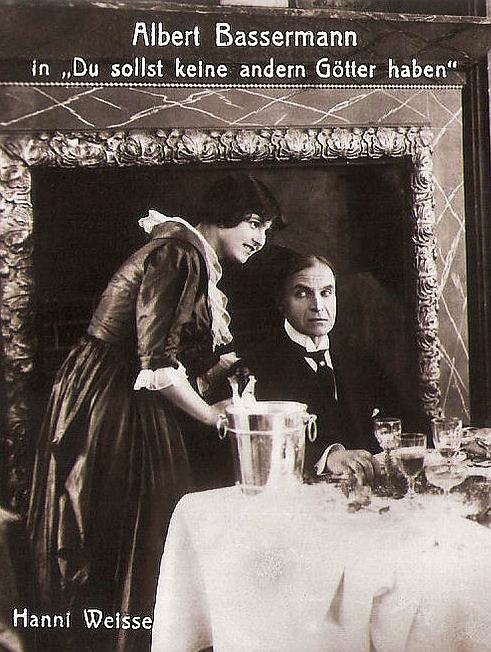
In the annals of early 20th-century German cinema, where shadows danced with a profound symbolic weight and human emotion was writ large across the silent screen, a particular gem, "Du sollst keine anderen Götter haben" (Thou Shalt Have No Other Gods), stands as a stark, compelling testament to the era's intellectual and moral anxieties. This film, a masterclass in allegorical storytelling, transcends its historical context to deliver a message that resonates with chilling relevance even today. It's not merely a narrative; it's a cinematic sermon, a visual parable dissecting the insidious allure of worldly temptation and the corrosive impact of spiritual compromise on the artistic soul. To engage with this work is to embark on a journey into the very heart of human frailty and the enduring struggle between principle and pragmatism.
At its core, the film explores the tragic arc of Elias Thorne, a sculptor whose hands are guided by an almost divine inspiration, crafting works that speak to the soul rather than merely the senses. Albert Bassermann, with his characteristic gravitas and expressive subtlety, imbues Elias with a quiet dignity, a man whose art is his religion. His world, though modest, is rich in spiritual fulfillment. Yet, this serene existence is threatened by the burgeoning materialism of the age, personified by the ambitious Baron von Kempten. Kempten, portrayed with an almost predatory charm by Alfred Kuehne, represents the 'other god' – the worship of wealth, power, and superficial acclaim. His commission to Elias for a monument celebrating pure industrial might, devoid of any higher spiritual aspiration, forms the central ethical dilemma. This is not simply a transactional offer; it's a Faustian bargain, a direct challenge to Elias's core beliefs. The film meticulously details the internal struggle, the gradual erosion of resolve, influenced by his wife Helene's (Elsa Bassermann) yearning for social elevation and his apprentice Lena's (Hanni Weisse) youthful susceptibility to Kempten's glittering promises. Helene's character is particularly poignant; her desires, though understandable, become the catalyst for Elias's downfall, illustrating how even love can, inadvertently, become a tool for compromise. The narrative expertly weaves these personal struggles into a broader critique of a society increasingly valuing the tangible over the transcendental.
The brilliance of the screenplay, penned by Elsa Bassermann herself, lies in its refusal to paint characters in simplistic black and white. Helene is not a villain, but a woman caught between societal pressures and personal longing. Lena's tragedy is that of innocence corrupted, a vivid portrayal of how easily young idealism can be swayed by the promise of worldly success. Elias's capitulation is agonizingly human, a slow surrender not to outright evil, but to a seductive blend of ambition, love, and the desire for recognition. This nuanced exploration elevates the film beyond mere melodrama, positioning it as a profound psychological drama. The 'other god' is not a monstrous deity, but the mundane, the material, the desire for external validation that slowly strangles the internal flame. The film's conclusion, with Elias's climactic act of defiance and redemption, is not a sudden triumph, but a hard-won reclamation of self, a testament to the enduring power of conscience, however battered. It's a journey reminiscent of the moral quandaries explored in Her Atonement, but with a distinctly more allegorical and less personal focus on the nature of the transgression itself.
As a silent film, "Du sollst keine anderen Götter haben" relies heavily on its visual language, and here, it truly excels. The direction, while uncredited in some records, demonstrates a masterful understanding of composition, mise-en-scène, and the evocative power of light and shadow. The early scenes in Elias's studio are bathed in a soft, almost ethereal glow, emphasizing the purity and spiritual nature of his craft. As Kempten's influence grows, the lighting subtly shifts, introducing harsher contrasts, deeper shadows, and an almost claustrophobic sense of impending doom. The sets, too, play a crucial role. Elias's studio, initially a haven of artistic creation, slowly transforms into a symbol of his inner turmoil, cluttered with the unfinished, the abandoned, the soulless. In stark contrast, Kempten's opulent mansion, with its gleaming surfaces and grand, impersonal spaces, represents the seductive but ultimately empty promise of material wealth. This visual dichotomy is not merely aesthetic; it's integral to the film's thematic resonance.
The use of symbolism is particularly potent. The colossal monument Elias is coerced into creating becomes a character in itself – a looming, grotesque representation of his artistic betrayal. Its cold, mechanical lines stand in stark opposition to the organic, soulful curves of his earlier, spiritually inspired works. One cannot help but draw parallels to the way German Expressionism would later utilize exaggerated sets and stark lighting to externalize internal states, though "Du sollst keine anderen Götter haben" predates the full bloom of that movement, hinting at its nascent aesthetic. The film's pacing is deliberate, allowing the emotional weight of each decision to settle, building tension not through rapid cuts, but through sustained glances, subtle gestures, and the slow, inexorable march of fate. This measured approach ensures that Elias's journey from integrity to compromise feels earned and tragically inevitable, making his eventual redemption all the more impactful. The visual narrative is so robust that intertitles, though present, feel almost secondary, serving to punctuate rather than dictate the emotional flow. In this aspect, it shares a certain contemplative visual rhythm with works like Hell's Hinges, albeit with a vastly different thematic landscape.
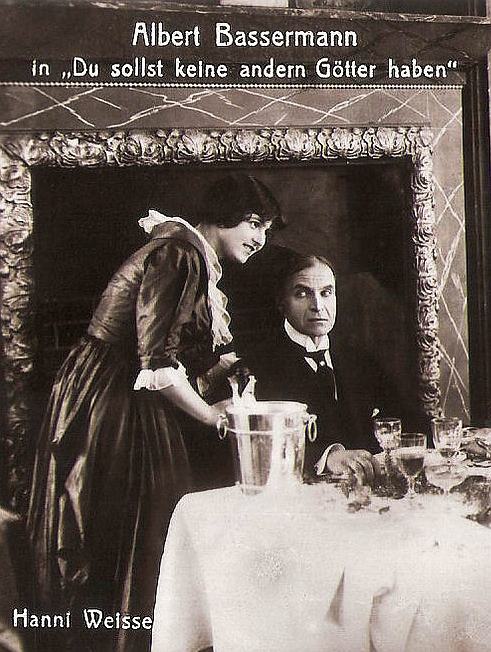
The strength of "Du sollst keine anderen Götter haben" is undeniably bolstered by its exceptional cast, particularly the central performances. Albert Bassermann, a titan of German stage and screen, delivers a performance of profound depth as Elias Thorne. His eyes, even in the stark black and white, convey a universe of internal conflict, shifting from serene conviction to tortured doubt, and finally to resolute despair and then, a glimmer of renewed purpose. He doesn't just act; he embodies the struggle of the soul. His portrayal is a masterclass in silent acting, relying on posture, gesture, and an almost unbearable intensity of gaze to communicate complex emotions. One can feel the weight of his moral burden, the slow erosion of his spirit with each concession.
Elsa Bassermann, as Helene, provides a compelling counterpoint. Her performance is a delicate balance of devotion and burgeoning discontent. She captures the subtle shifts in Helene's character, from loving wife to subtly manipulative instigator, driven by a desire for a life she believes her husband's talent deserves. Her gradual transformation from supportive partner to a woman consumed by social ambition is both tragic and relatable, highlighting how easily even noble intentions can pave the road to ruin. Hanni Weisse, as the impressionable Lena, brings a youthful vulnerability to the screen. Her journey from wide-eyed admiration to bitter disillusionment is heart-wrenching, serving as a stark reminder of the collateral damage wrought by moral compromise. Alfred Kuehne's Baron von Kempten is chillingly effective – not a mustache-twirling villain, but a suave, sophisticated embodiment of secular power, whose allure is precisely his greatest danger. He represents the 'other god' not as a monster, but as a seductive ideal, making his corruption all the more potent. The interplay between these characters, particularly the silent battles waged within Elias's home, forms the emotional bedrock of the film, making it a powerful character study as much as an allegorical drama. The nuanced performances elevate this film beyond a simple morality play, giving it a universal resonance that echoes in the struggles depicted in films like The Inner Shrine, though with a distinct German dramatic sensibility.
"Du sollst keine anderen Götter haben", in its quiet, profound way, leaves an indelible mark. It's a film that, despite its age and the absence of spoken dialogue, communicates with a clarity and force that many contemporary works struggle to achieve. Its examination of artistic integrity versus commercialism, spiritual values versus material gain, and personal conviction versus societal pressure remains as relevant now as it was a century ago. In an era increasingly dominated by the pursuit of external validation and the commodification of art, Elias Thorne's struggle feels incredibly prescient. The film's message serves as a powerful reminder of the hidden costs of compromise, urging viewers to reflect on their own 'other gods' and the silent sacrifices made at their altars.
The film also offers valuable insight into the nascent stages of German cinema, showcasing a sophisticated approach to narrative and character development that would later define the golden age of Weimar Republic filmmaking. It's a precursor to the psychological depth and symbolic richness that would characterize works like Die Silhouette des Teufels, exploring the shadows of the human psyche with a similar intensity. While perhaps not as widely known as some of its Expressionist successors, its thematic weight and the compelling performances by the Bassermanns ensure its place as a significant, if understated, piece of cinematic history. For cinephiles and students of early film, it offers a rich tapestry of social commentary, psychological drama, and artistic expression, proving that a silent film can indeed shout profound truths across the decades. Its exploration of moral decay within a grand societal context also finds echoes in the more overt critiques found in films like The Governor, though "Du sollst keine anderen Götter haben" maintains a more intimate, spiritual focus.
Ultimately, "Du sollst keine anderen Götter haben" is more than just a film; it's a profound meditation on the human condition, a timeless warning against the allure of false idols, and a celebration of the enduring power of the artistic spirit. It challenges us to look inward, to assess our own values, and to question what we truly worship. This forgotten masterpiece deserves to be rediscovered, not just for its historical significance, but for its potent and ever-relevant message. Its quiet power resonates long after the final frame, prompting introspection and a renewed appreciation for the purity of purpose it so eloquently champions and tragically observes.

IMDb —
1924
Community
Log in to comment.