DbcultAccessing Vault...
Cult Review
Senior Film Conservator
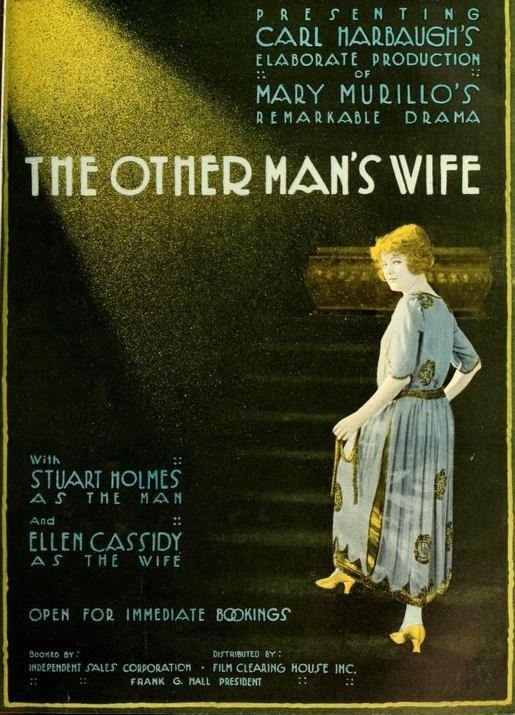
Stepping back into the cinematic landscape of 1919, one encounters a fascinating artifact in 'The Other Man's Wife' (the-other-mans-wife), a film that deftly weaves together threads of high-society intrigue, working-class resilience, and the profound, often disruptive, impact of global conflict. Directed with an eye for both melodrama and the burgeoning comedic sensibilities of the era, this picture offers a rich tableau of New York life just as America grappled with its role on the world stage. It's a testament to the storytelling prowess of the silent era, where nuanced performances and carefully crafted intertitles carried the weight of complex human emotions and societal critiques.
The narrative unfurls across three distinct, yet ultimately intertwined, social strata of New York City. We are first introduced to the opulent, if somewhat emotionally sterile, world of Fred Hartley and his wife. Their wealth provides comfort but fails to nurture connection, leaving Mrs. Hartley adrift in a sea of neglect. This emotional void becomes fertile ground for the attentions of J. Douglas Kerr, a character whose debonair charm masks a predatory opportunism. Laura Newman, as Mrs. Hartley, delivers a performance that subtly conveys her character’s vulnerability and nascent dissatisfaction, making her susceptibility to Kerr's advances understandable, if not entirely excusable. Stuart Holmes, portraying the aloof Fred Hartley, embodies the archetypal busy husband whose priorities are misplaced until tragedy or near-tragedy strikes.
In stark contrast, we are then drawn into the more grounded existence of the middle-class Moore family. Here, the focus falls on Jimmie, the dutiful son whose labor supports his mother and sister. His struggles are palpable, representing the everyday grind faced by countless Americans striving to maintain their dignity and provide for their loved ones. Leslie Casey's portrayal of Jimmie is imbued with a quiet strength and earnestness, making his character a relatable anchor in the unfolding drama. This realism is skillfully juxtaposed against the more theatrical machinations of the upper crust, grounding the film in a broader human experience.
Finally, the vibrant, close-knit Jewish family of the Simons, residing on the bustling East Side, completes this societal mosaic. Their world is one of communal warmth and traditional values, particularly evident in the character of Mr. Simon, played with a compelling blend of sternness and underlying affection by George Jessel. His daughter, Becky, portrayed by Regina Quinn, is Jimmie's sweetheart, and their burgeoning romance provides a tender counterpoint to the more cynical dalliances of the wealthy. The film, through these distinct family units, offers a snapshot of a city teeming with diverse lives, all on the precipice of profound change.
The pivotal turning point arrives with America's entry into the Great War. The call to arms echoes through all social strata, drawing Fred Hartley, Jimmie Moore, and Davy Simon (one of Becky’s brothers) into military service. This collective sacrifice underscores a powerful theme: in the face of national crisis, class distinctions, while not entirely erased, are momentarily overshadowed by a shared sense of duty and vulnerability. As Jimmie bids a poignant farewell to Becky, his hopes for a future with her are dashed by her father's refusal to consider him a suitable match. This pre-war rejection amplifies the stakes of Jimmie's enlistment, adding a layer of personal desperation to his patriotic duty. It’s a moment that resonates with the emotional weight seen in other wartime dramas of the period, such as the poignant goodbyes depicted in films like Defense of Sevastopol, though 'The Other Man's Wife' focuses more on the domestic reverberations than the battlefield itself.
The war's brutality soon manifests in a cruel deception. J. Douglas Kerr, ever the opportunist, seizes upon the fog of war to further his own agenda. He dispatches a cablegram to Mrs. Hartley, falsely reporting Fred's death in action. This act of calculated cruelty is a masterful stroke of villainy, expertly delivered by Evelyn Brent, whose portrayal of Kerr is one of suave menace. Brent manages to convey both the superficial charm and the underlying callousness of a man willing to exploit a nation's tragedy for personal gain. Mrs. Hartley, reeling from this devastating news, is naturally vulnerable, and Kerr wastes no time in pressing his advantage, proposing marriage. Her hesitation, however, speaks volumes about her lingering affections for Fred, despite their earlier estrangement, and perhaps a burgeoning suspicion of Kerr's haste.
The dramatic tension builds as Mrs. Hartley navigates this emotional minefield. Her struggle is a poignant exploration of grief, loyalty, and the pressure of societal expectations. The film effectively uses intertitles to convey her internal turmoil, allowing the audience to empathize with her difficult position. One might draw parallels to the complex female protagonists navigating challenging social mores in films like The Truth About Helen, where women often found themselves at the mercy of circumstance and male machinations.
The armistice, a moment of global relief and celebration, brings with it a personal reckoning for the Hartley household. Unbeknownst to Kerr or Mrs. Hartley, Fred is not dead. His return from the war is one of the film's most potent dramatic beats, a moment of profound shock and immediate confrontation. The scene where Fred discovers his wife in Kerr's embrace is masterfully executed, relying on the raw power of visual storytelling inherent in silent cinema. The audience feels the weight of betrayal, the sudden shift from relief to rage. Stuart Holmes, returning as Fred, imbues the character with a newfound gravitas, his wartime experiences having clearly matured him beyond his earlier detachment.
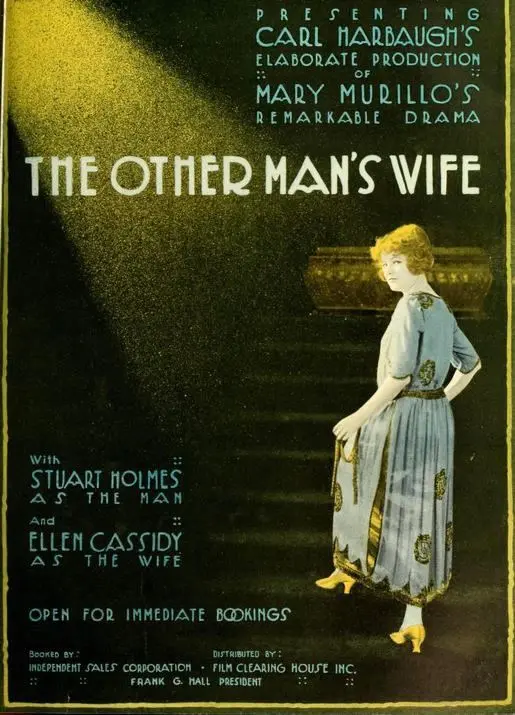
What follows is a brilliant pivot from high drama to expertly timed farce. Kerr, caught red-handed, attempts a hasty, undignified retreat. This is where the film truly shines in its blending of genres. The irate butler, a character often relegated to the background, steps into the spotlight to deliver a moment of pure comedic brilliance, grabbing Kerr's trousers in a moment of righteous indignation. This physical comedy, a hallmark of many silent films, serves not only as a satisfying comeuppance for the villain but also as a release of the built-up tension. It’s a narrative flourish that elevates the film beyond mere melodrama, injecting a memorable, almost slapstick, element that audiences of the era would have adored, much like the lighter moments found in films such as Toby's Bow, which also blended sentiment with humor.
The resolution of the Hartley-Kerr-Hartley triangle allows for the concurrent resolution of Jimmie and Becky's romance. Having proven his worth not just as a provider but as a patriot, Jimmie returns a changed man. Mr. Simon, initially rigid in his expectations, now sees Jimmie through new eyes. The war, which initially separated them, ultimately becomes the catalyst for their union. George Jessel's performance as Mr. Simon is particularly noteworthy here, as he subtly conveys the shift from skepticism to heartfelt acceptance. It’s a powerful affirmation of love triumphing over class prejudice and old-world traditions, a theme that resonates deeply with the post-war sentiment of a changing America.
The film culminates with a final, indelible image of Kerr, stripped of both his ill-gotten gains and his dignity, reduced to squatting in a desperate attempt to cover his bare backside with his overcoat. This final visual gag is a masterclass in silent film comedy, providing a satisfying and memorable end to his villainous machinations. It underscores the film's underlying moral compass: deceit and opportunism ultimately lead to public humiliation, while genuine love and sacrifice are rewarded. It's a comedic resolution that cleverly avoids a darker, more dramatic fate for the antagonist, choosing instead to lean into the era's taste for lighthearted comeuppance.
The strength of 'The Other Man's Wife' lies not just in its engaging plot, but in the compelling performances delivered by its ensemble cast. Laura Newman, as the initially naive and later resilient Mrs. Hartley, carries much of the emotional weight, her expressive face conveying a spectrum of feelings from loneliness to shock to cautious hope. Stuart Holmes, while portraying a character initially distant, manages to evoke sympathy and a sense of a man awakened by hardship. Evelyn Brent, as the conniving J. Douglas Kerr, is a standout. Her ability to project both charm and sinister intent without uttering a single word is a testament to the power of silent acting. Her performance ensures that Kerr is not merely a caricature but a truly memorable antagonist, whose theatrical villainy is perfectly suited to the medium.
George Jessel, a name later synonymous with vaudeville and early sound film, demonstrates his early dramatic chops as Mr. Simon, grounding the film’s East Side narrative with authenticity. His transformation from stern patriarch to benevolent father-in-law is subtly handled, showcasing a range that might surprise those only familiar with his later comedic work. Regina Quinn and Leslie Casey, as the young lovers Becky and Jimmie, bring an innocent charm and earnestness to their roles, providing the emotional heart of the film’s working-class narrative. The supporting cast, including Olive Trevor, Ellen Burford, Danny Sullivan, Elizabeth Garrison, Halbert Brown, and Tom Cameron, each contribute to the rich tapestry of New York life, making the world of the film feel robust and lived-in. Their collective efforts under Mary Murillo's insightful writing create a truly engaging experience.
Beyond its immediate narrative, 'The Other Man's Wife' offers invaluable insight into the socio-cultural landscape of post-World War I America and the evolving art form of cinema. The film’s exploration of class divisions, the changing roles of women, and the psychological scars left by war resonate with the broader societal shifts occurring at the time. It captures a moment when traditional values were being challenged, and the future, while uncertain, was also ripe with possibility. The film’s ability to blend serious themes with moments of levity speaks to a nascent sophistication in cinematic storytelling, moving beyond simplistic morality tales to embrace more complex human experiences.
Technically, the film exemplifies the strengths of silent cinema from this period. The cinematography, though perhaps not groundbreaking by today's standards, effectively uses lighting and composition to enhance mood and character. The pacing, a crucial element in silent film, keeps the audience engaged, balancing dramatic revelations with comedic interludes. The use of intertitles is particularly effective, conveying not just dialogue but also character thoughts and narrative exposition, guiding the viewer through the intricate plot without feeling cumbersome. Comparisons to other films of the era, such as Midnight at Maxim's or The Deciding Kiss, reveal a shared cinematic language but also highlight the unique blend of social commentary and domestic drama that 'The Other Man's Wife' masterfully achieves.
In an age dominated by sound and spectacle, revisiting 'The Other Man's Wife' is a rewarding experience. It serves as a potent reminder of the foundational artistry of silent film, where gestures, expressions, and the evocative power of a well-placed intertitle created worlds of emotion and meaning. Mary Murillo's writing ensures a narrative that is both intricate and emotionally resonant, avoiding simplistic resolutions in favor of character-driven developments. The film's enduring appeal lies in its timeless themes: the corrosive effects of neglect, the resilience of love, the transformative power of sacrifice, and the sweet satisfaction of justice, even if delivered by an irate butler.
It is a film that, despite its century-old vintage, speaks to contemporary audiences about the complexities of human relationships and the unexpected turns life can take. The blend of melodrama and unexpected humor ensures that it remains an engaging watch, proving that compelling storytelling transcends technological advancements. For enthusiasts of early American cinema, or anyone interested in how films grappled with societal changes of their time, 'The Other Man's Wife' is an essential viewing, offering a vibrant window into a bygone era, yet reflecting universal human truths that continue to define our experiences.
IMDb 5.7
1932
Community
Log in to comment.