DbcultAccessing Vault...
Cult Review
Senior Film Conservator
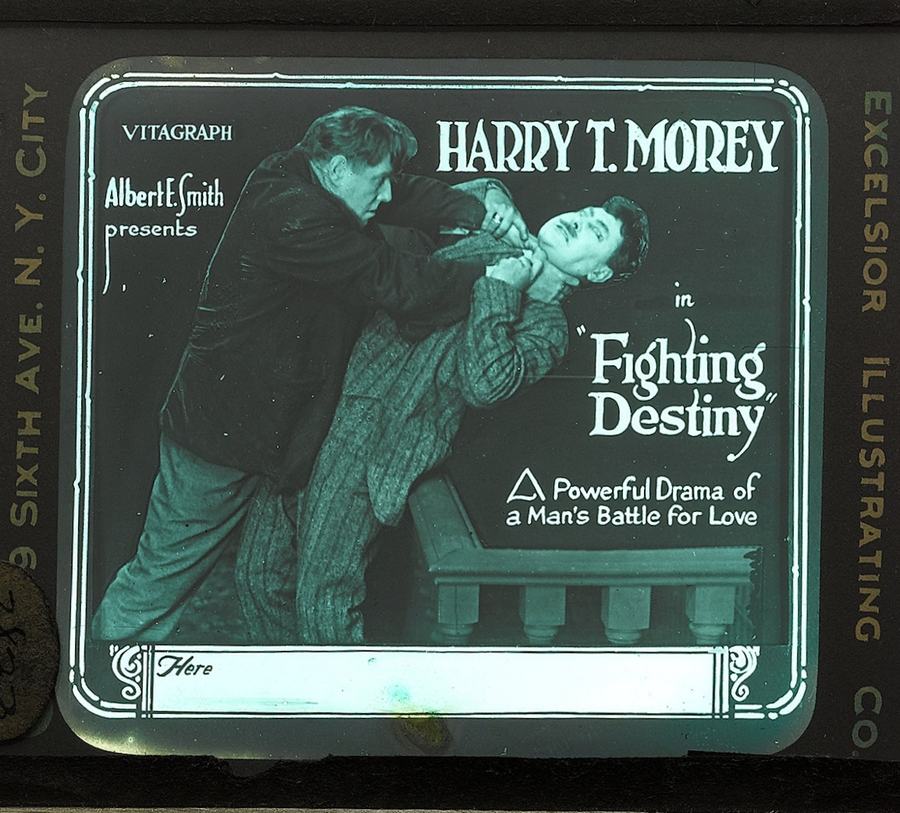
Step into the flickering shadows of early cinema, where the silent screen conveyed narratives of staggering complexity and emotional resonance long before sound graced the silver realm. Among these forgotten treasures, Fighting Destiny (1917) emerges as a fascinating, proto-noir melodrama, a testament to the ingenuity of its era's storytellers. It’s a film that masterfully weaves together political intrigue, a desperate search for truth, and a shocking twist, proving that the power of a compelling narrative transcends the spoken word. This isn't just a historical curiosity; it's a vibrant, pulse-pounding drama that holds its own against the most intricate thrillers of any generation.
Our journey begins on the very cusp of societal triumph for Larry Cavendish (Harry T. Morey), a reform-minded politician poised to marry the captivating Caryl Rundlege (Betty Blythe). Their union promises not only personal happiness but also a symbolic alignment of virtue and influence, a beacon of hope in a city grappling with unseen corruptions. Yet, this idyllic vision shatters with the sudden, inexplicable appearance of Caryl emerging from a mangled automobile, only to disappear into the clutches of Dan Levarro (Arthur Donaldson), a notorious one-armed political crook whose very presence embodies the insidious undercurrents Larry seeks to combat. It’s a moment of profound disorientation, a jarring collision of the public and private spheres that immediately plunges the narrative into a whirlpool of doubt and suspicion.
The subsequent arrival of a cryptic note from Caryl, canceling their impending nuptials due to an unspecified 'higher duty,' only deepens the mystery and compounds Larry’s anguish. This isn't merely a jilted lover's lament; it’s a politician’s reputation, a man’s honor, and a reformer’s faith in justice that hang in the balance. The narrative, penned by Stanley Shaw and Edward J. Montagne, expertly crafts this initial setup, laying the groundwork for a descent into a labyrinthine world where appearances are deceiving and loyalty is a commodity. Unlike the straightforward romantic entanglements of films like The Kiss, Fighting Destiny immediately establishes a darker, more complex tapestry of motivations.
Driven by a potent cocktail of love, betrayal, and a staunch belief in justice, Larry Cavendish embarks on a perilous journey into the city's murky underbelly. With a little assistance from the police – a nod to the societal structures still attempting to maintain order amidst chaos – he dons a disguise, shedding his respectable identity to infiltrate the very world he once sought to reform from afar. This transformation is pivotal, signaling a shift from political idealist to pragmatic detective, willing to dirty his hands to uncover the truth. His quest leads him to a squalid beggar's lodge, a stark visual contrast to the opulent ballrooms and political chambers he typically inhabits, underscoring the film's exploration of societal strata and the grim realities lurking beneath the veneer of civility.
The atmosphere here, thick with desperation and shadows, is masterfully evoked through the silent medium, relying on stark set design, expressive acting, and careful lighting. It’s within these forgotten corners that Larry locates Levarro and, shockingly, Caryl. The tension becomes palpable, a silent scream of recognition and dread. The ensuing chase across the precarious rooftops of the city is a marvel of early cinematic action. It’s a sequence that speaks volumes through its sheer physicality, the breathless pursuit, the perilous leaps, and the desperate scramble for survival. This visceral intensity, reminiscent of the thrilling serials of the era like The Trail of the Octopus, keeps viewers on the edge of their seats, investing them deeply in Larry’s increasingly desperate plight.
The rooftop chase culminates in a moment of shocking tragedy. A stray bullet, a cruel twist of fate, fells Caryl – or so it appears – leaving Larry to push Levarro to the pavement below, a final act of vengeful despair. The visual of Larry carrying Caryl’s lifeless body through the labyrinthine streets of the underworld is profoundly affecting. It’s a tableau of grief and desolation, a man stripped of his hopes and his future, navigating a world that seems to conspire against him. This somber, almost elegiac procession through the city’s grimier districts highlights the film’s thematic depth, exploring the raw, unvarnished consequences of violence and the burden of loss.
His harrowing journey finally leads him into the suffocating haze of a Chinatown opium den, a place symbolizing ultimate escape and utter despair. It is here, amidst his capture by Levarro's remaining henchmen and his subsequent rescue by the timely arrival of the police, that the film delivers its most audacious and brilliant stroke: the revelation that the deceased girl is not Caryl, but her identical twin sister, an opium addict Caryl had been desperately trying to help. This twist, executed with remarkable precision, recontextualizes everything that has come before. Caryl’s 'higher duty' is revealed not as a betrayal, but as an act of profound familial love and sacrifice. It transforms the narrative from a simple tale of political intrigue and lost love into a poignant exploration of hidden lives, secret burdens, and the devastating impact of addiction on families.
The performances in Fighting Destiny are crucial to its enduring power, particularly in a silent film where emotion must be conveyed through gesture, expression, and the subtle nuances of physical acting. Harry T. Morey, as Larry Cavendish, delivers a performance of remarkable range. He transitions effortlessly from the earnest, idealistic politician to the heartbroken, disguised avenger, and finally to the man grappling with a profound, almost unbearable grief. His silent suffering, his desperate actions, and his ultimate relief are all etched onto his face with compelling clarity.
Betty Blythe’s dual role as Caryl Rundlege and her unnamed twin sister is nothing short of extraordinary. Her ability to differentiate between the virtuous, self-sacrificing Caryl and the tragic, addiction-ravaged sister, often within moments of each other (though through clever editing), speaks volumes about her skill. She embodies Caryl with a quiet strength and a deep sense of purpose, making her 'higher duty' feel entirely believable, even before its true nature is revealed. Her portrayal of the twin, even in death, conveys a profound sense of pathos, reminding us of the human cost of the underworld’s grip. This kind of nuanced portrayal of identity and its fracturing echoes the thematic complexity seen in films that explore societal outcasts and hidden lives, such as The Social Leper, though here it is magnified by the literal duality.
Arthur Donaldson’s Dan Levarro is the quintessential silent film villain – menacing, cunning, and physically distinct with his missing arm, which adds a layer of visual menace. George Majeroni and Templar Saxe, though in supporting roles, contribute effectively to the film’s atmosphere of intrigue and danger. The ensemble cast works in concert to create a believable, albeit heightened, world of political corruption and personal sacrifice.
Fighting Destiny is a film rich with thematic depth. At its core, it’s a profound meditation on the deceptive nature of appearance versus reality. Larry Cavendish initially perceives Caryl’s actions as a betrayal, a fall from grace, only to discover a far more complex and tragic truth. This theme is reinforced by Larry’s own disguise, a literal adoption of a false front to uncover a hidden reality. The film argues that true understanding often requires looking beyond the surface, delving into the unseen motivations and secret struggles that shape human lives.
The concept of 'destiny' itself is challenged and explored. Is Larry’s fate to be entangled in this web of deceit, or does his active pursuit of truth allow him to fight against a predetermined, tragic outcome? The film suggests a powerful interplay between external forces and individual agency, where choices, even seemingly small ones, can dramatically alter the course of events. Caryl’s 'higher duty' is a testament to sacrifice and unconditional love, elevating her character beyond a mere damsel in distress to a woman of profound moral conviction. Her secret struggle to help her sister highlights the societal issues of addiction and poverty, subtly woven into the fabric of the melodrama, giving the film a surprising social commentary edge, much like how Doorsteps might portray the struggles of ordinary people, albeit in a different context.
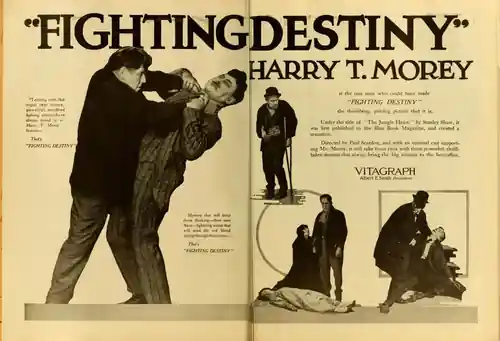
The resolution, with the couple reunited and the criminals arrested, offers a sense of catharsis and justice. It’s a redemption not just for Larry and Caryl’s relationship, but also a symbolic cleansing of the societal ills that threatened to engulf them. The film ultimately champions perseverance, love, and the unyielding pursuit of truth, even when confronted with the darkest corners of human experience.
Directed by Edward J. Montagne, Fighting Destiny stands as a testament to the sophisticated visual storytelling prevalent in early cinema. The film’s pacing is remarkably effective, building suspense gradually, punctuated by bursts of frenetic action and moments of profound emotional stillness. The use of intertitles is artful, providing necessary exposition without disrupting the visual flow, often enhancing the dramatic impact with carefully chosen words.
The cinematography, while adhering to the technical limitations of its time, skillfully uses light and shadow to create mood and atmosphere. The contrast between the brightly lit world of privilege and the stark, shadowy underworld is a visual metaphor for the film’s central themes. The rooftop chase, in particular, showcases an understanding of dynamic camera placement and editing that belies the film’s age, creating a sense of genuine peril and excitement. It’s a masterclass in how to convey complex action sequences without a single spoken word, relying solely on visual cues and the audience's imagination.
In an era where films like The Whip focused on grand spectacles and melodramatic flourishes, Fighting Destiny carves out its niche with a narrative that is both grand in its scope and intimate in its emotional impact. It's a film that, despite its century-plus age, feels surprisingly modern in its psychological depth and its willingness to delve into the darker aspects of human nature and urban life. The intricate plotting and the shocking revelation anticipate the narrative complexities that would later define the film noir genre, making it a fascinating precursor to a style that would dominate mid-20th century cinema.
Fighting Destiny is more than just a piece of cinematic history; it’s a compelling drama that continues to resonate with contemporary audiences. Its themes of mistaken identity, the struggle against corruption, and the enduring power of love and family are timeless. The film reminds us that even in the most tumultuous circumstances, acts of self-sacrifice and the pursuit of truth can lead to unexpected revelations and ultimate redemption. It’s a powerful narrative about navigating a world where danger lurks beneath polite society and where personal integrity is constantly tested.
For enthusiasts of classic cinema, and indeed for anyone interested in the evolution of storytelling, Fighting Destiny offers a rich and rewarding viewing experience. It challenges the notion that silent films are simplistic, showcasing a sophisticated command of visual narrative and emotional impact. It’s a film that demands attention, rewards careful observation, and leaves a lasting impression, proving that some stories are truly timeless, their power undiminished by the passage of a century. Seek out this gem; you'll find a captivating journey into a bygone era, yet one that speaks to the enduring human condition with startling clarity.

IMDb —
1930
Community
Log in to comment.