DbcultAccessing Vault...
5/10
Senior Film Conservator
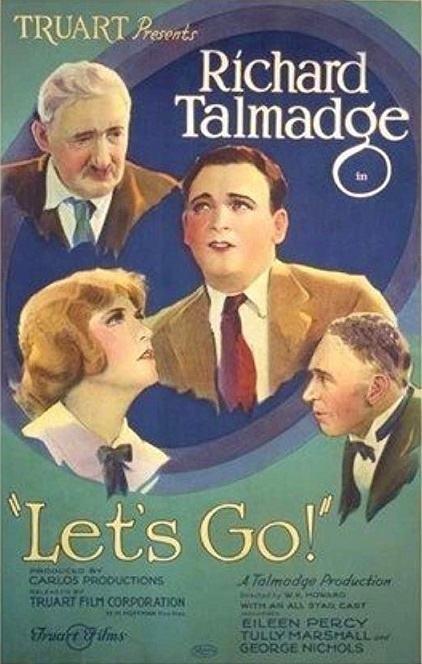
A definitive 5/10 rating for a film that redefined the boundaries of cult cinema. Let's Go remains a cornerstone of transgressive art.
The opening sequence thrusts Barry Macklin (Matthew Betz) into a frenetic chase that feels like a visual poem of motion, the camera tracking his battered roadster as it darts between lantern‑lit streets. The director’s decision to frame the police lights as a staccato rhythm mirrors Barry’s own internal tempo—restless, urgent, and forever on the brink of collapse. Upon his arrival in Hillsboro, the town is rendered in stark chiaroscuro, the black‑and‑white palette accentuating the moral shadows that loom over each protagonist.
Barry’s homecoming is less a warm embrace than a calculated entry onto a stage where his father, Andrew Macklin (Al Fremont), presides like a once‑great industrialist now reduced to a man haunted by the echo of his own successes. Andrew’s dialogue, though sparse, carries the weight of a man who has watched his empire erode under the relentless tide of modernity. The tension between father and son is palpable; each exchange crackles with unspoken grievances, a dynamic that recalls the familial discord in When a Woman Sins.
Ezra Sprowl (Louis King), the mayor, is portrayed with a sly, almost theatrical menace. His ambition to transform Hillsboro into a bustling hub of commerce is juxtaposed against his willingness to sacrifice the town’s heritage. Sprowl’s speeches, delivered with a cadence that oscillates between charismatic persuasion and thinly veiled coercion, remind one of the political maneuverings seen in The Law of Compensation. The film’s script, penned by Keene Thompson and Ralph Spence, weaves these power struggles into a tapestry of dialogue that feels both era‑appropriate and timeless.
The negotiation premise—Barry acting as an intermediary—serves as the narrative’s spine, but the film quickly expands beyond simple mediation. Subplots emerge: a tender romance between Barry and the spirited Aggie Herring (Aggie Herring), a subplot that blossoms amid the town’s crumbling façades; a covert alliance between the mayor’s enforcer, played by Bruce Gordon, and a mysterious outsider whose motives remain opaque until the final act. These threads intertwine, creating a mosaic of human desire and desperation.
Visually, the film employs a palette of deep shadows punctuated by bursts of harsh light, a technique reminiscent of German Expressionism, yet grounded in the American silent tradition. The use of intertitles is sparing, allowing the actors’ expressive faces—particularly the nuanced performance of Eileen Percy as the town’s schoolmistress—to convey emotional nuance. The cinematographer’s choice to linger on the rusted water tower, a symbol of both decay and endurance, underscores the thematic undercurrent of resilience.
The editing rhythm mirrors the plot’s escalating stakes. Early scenes cut with a brisk tempo, echoing Barry’s restless energy, while the climactic confrontation slows, each frame stretched to emphasize the gravity of the decision at hand. The final tableau, bathed in the amber glow of a setting sun, casts the characters in silhouettes that evoke the classic tableau of redemption found in The Slim Princess.
Matthew Betz delivers a performance that balances swagger with vulnerability; his eyes flicker with the haunted memory of a life lived on the edge, yet his smile hints at an underlying hope. Louis King’s mayor is a study in controlled menace; his gestures are precise, his voice—though silent—conveys authority through posture alone. Aggie Herring’s portrayal of a woman caught between love and duty provides a poignant counterpoint, her scenes infused with a quiet strength that recalls the resilience of the heroine in Nan of Music Mountain.
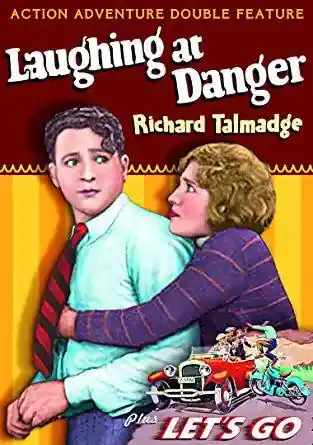
Supporting actors such as George Nichols and Tully Marshall add layers of authenticity, their seasoned presence grounding the film’s more melodramatic moments. The chemistry between the cast feels organic, a testament to the director’s ability to coax genuine interaction from his ensemble.
At its core, "Let's Go" is an exploration of identity—personal, familial, communal. The recurring motif of the railroad, a symbol of progress and displacement, runs parallel to Barry’s internal journey. Each whistle of an approaching train signals a choice: to stay rooted or to chase the horizon. The film also interrogates the notion of power: Andrew’s dwindling influence versus Sprowl’s burgeoning control illustrates the cyclical nature of authority.
The title itself, an imperative, becomes a thematic refrain. It urges characters to act, to confront the past, and to forge new pathways. This imperative resonates with the audience, inviting a reflection on the moments when one must decide to leave behind familiar comforts for uncertain futures.
When placed beside contemporaneous works such as Crooked Straight or the South African epic De Voortrekkers, "Let's Go" distinguishes itself through its intimate focus on personal negotiation rather than grand historical sweep. While the latter films employ sweeping vistas to convey collective destiny, this 1923 drama opts for close‑ups that reveal the micro‑politics of a single town.
The screenplay’s wit, occasionally reminiscent of the rapid repartee found in Mile‑a‑Minute Romeo, offers a refreshing contrast to the otherwise somber tone, ensuring that the narrative never descends into melodramatic excess.
Although "Let's Go" remains a lesser‑known gem of the silent era, its exploration of negotiation—both personal and political—echoes in today’s discourse surrounding community development and intergenerational conflict. The film’s preservation status, while fragile, has allowed scholars to examine its influence on later cinematic depictions of small‑town dynamics.
Modern audiences, accustomed to rapid cuts and digital effects, may find the deliberate pacing a challenge, yet the reward lies in the film’s capacity to invite contemplation. Its reliance on visual storytelling, coupled with a script that balances humor and gravitas, offers a template for contemporary filmmakers seeking to blend classic aesthetics with resonant themes.
In sum, "Let's Go" stands as a masterclass in silent‑era narrative architecture. Its deft interweaving of character arcs, its meticulous visual composition, and its thematic richness coalesce into an experience that feels both historically anchored and timelessly relevant. For cinephiles yearning for a film that marries artistic ambition with heartfelt storytelling, this 1923 drama delivers a compelling invitation to step into the streets of Hillsboro and witness a community at the crossroads of past and future.
IMDb —
1917
Community
Log in to comment.