DbcultAccessing Vault...
Cult Review
Senior Film Conservator
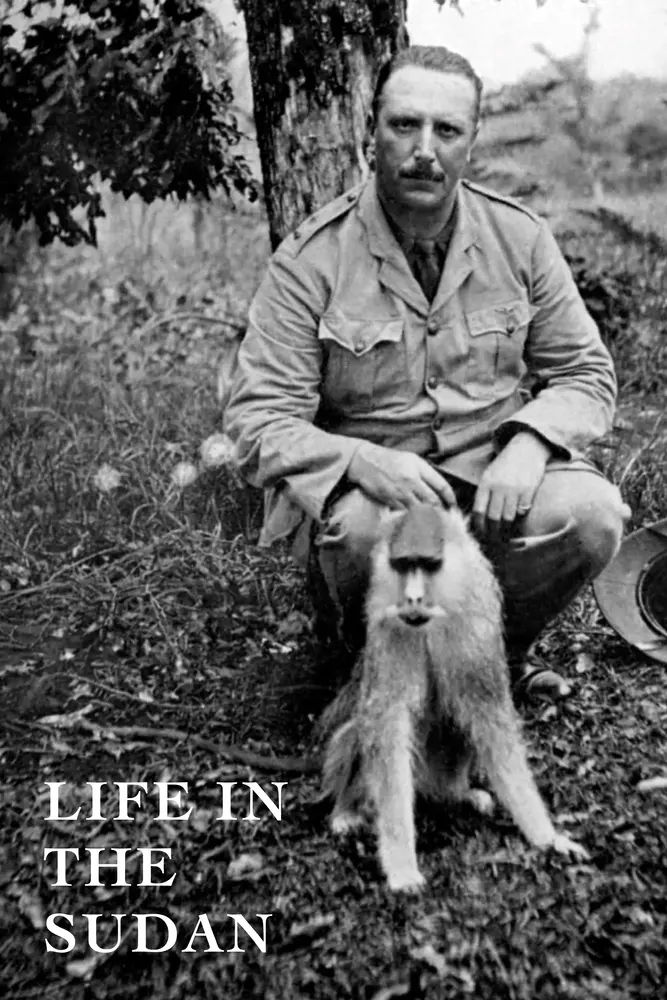
Is Cherry Kearton's Life in the Sudan worth watching today? Short answer: absolutely, but with a crucial asterisk. This isn't a film designed for casual modern entertainment; it's a historical artifact, a window into a world that no longer exists, and as such, it offers profound, albeit sometimes uncomfortable, insights. It’s a vital watch for anyone interested in the history of documentary filmmaking, colonial-era ethnography, or the rich cultural tapestry of Sudan itself, but it will likely test the patience of viewers accustomed to contemporary narrative structures.
This film works because it offers an unfiltered, if undeniably biased, visual record of a pivotal time and place. It fails because its inherent colonial gaze and lack of modern narrative pacing make it a challenging watch for a general audience. You should watch it if you possess a deep curiosity for historical context, anthropological observation, and the raw, unpolished beauty of early 20th-century cinema.
Cherry Kearton, often celebrated as a pioneer of wildlife photography, turns his camera here to human subjects and grand landscapes, offering a unique perspective on the Sudan of his time. His approach is less about storytelling in the conventional sense and more about observation, a series of vignettes stitched together by geography and a prevailing colonial curiosity. It’s a work that, even a century later, retains a certain raw power, showcasing Kearton’s undeniable skill in capturing compelling images under challenging conditions.
The film opens with the majestic White Nile, a recurring motif that underscores the lifeblood of the region. Kearton’s shots of Khartoum and Omdurman are not just static cityscapes; they are alive with the hustle and bustle of early 20th-century urban life, even if the framing occasionally feels more like a surveyor’s record than an artist’s composition. There’s an almost scientific precision to his gaze, an attempt to categorize and present the 'exotic' to a Western audience.
What truly stands out is the sheer ambition of the undertaking. To travel through these regions, to document the Fajoli people, to capture the scale of the Sennar Dam under construction – this was no small feat. Kearton’s dedication, evident in every frame, is a testament to the adventurous spirit of early filmmakers. He wasn't just pointing a camera; he was exploring, documenting, and, perhaps inadvertently, shaping perceptions.
The film’s structure is essentially a travelogue, moving from one significant location or cultural group to the next. The transitions are often abrupt, reflecting the nascent state of film editing, yet they contribute to a sense of unvarnished reality. We are dropped into scenes with minimal preamble, forced to interpret the visual information as it unfolds.
The segments depicting the Fajoli people, for instance, are particularly compelling. While viewed through a distinctly colonial lens, these moments offer a rare, moving glimpse into traditional life. Kearton’s camera lingers on faces, on daily rituals, on the simple yet profound interactions that define a community. It’s in these unscripted moments that the film truly transcends its ethnographic intent and touches upon something universally human.
The inclusion of the Sennar Dam and railway development is a fascinating counterpoint to the more traditional scenes. These segments highlight the rapid modernization efforts underway in the Sudan, a direct consequence of British colonial rule. The sheer scale of the engineering project is breathtaking, particularly when one considers the technological limitations of the era. It’s a stark reminder of the transformative power, both positive and destructive, of such interventions.
“Life in the Sudan” isn't merely a collection of images; it’s a living document of a complex historical moment, a visual argument for the 'progress' brought by empire, even as it inadvertently preserves the very cultures it sought to transform.
From a technical perspective, the cinematography is remarkably competent for its time. Kearton’s framing is often expansive, capturing the vastness of the Sudanese landscape with a real sense of grandeur. The clarity of the images, even in restored versions, speaks to the quality of the original negatives and Kearton's expertise behind the lens. There are moments of genuine beauty, such as the sun glinting off the White Nile, or the intricate patterns of traditional attire during the parade.
However, the pacing is undeniably slow by modern standards. Scenes often unfold with a deliberate, almost static quality, demanding patience from the viewer. There’s a distinct lack of dynamic editing, a characteristic common to early documentary work. This isn't a flaw as much as it is a feature of its era, a style that prioritizes observation over narrative momentum. Compared to something like The Idle Class, which even in its short runtime packed a comedic punch, Kearton's work is a different beast entirely.
The film’s tone is largely observational, tinged with an almost detached curiosity. There are moments of clear awe, particularly when showcasing the architectural wonders or the vibrant ceremonial parade. Yet, it largely refrains from overt emotional manipulation, preferring to let the images speak for themselves. This objectivity, however, is always mediated by the camera's operator, Cherry Kearton, whose presence, though unseen, is ever-felt as the guiding eye.
While there are no actors in the traditional sense, Cherry Kearton himself is the central 'performer' of this film. His choices in what to film, how long to hold a shot, and how to sequence the different segments constitute his artistic 'performance.' He is the curator of this experience, and his personality, or at least his intent, permeates every frame. One could argue that the film’s subjects – the people of Sudan, the chieftains, the workers – are also 'performing' for the camera, whether consciously or unconsciously.
The ceremonial parade of Arab and Nuba chieftains is a highlight, a moment where the subjects are acutely aware of the camera’s presence. Their elaborate costumes, their proud bearing, the synchronized movements – it all feels like a carefully choreographed presentation for Kearton’s lens. It’s a fascinating study in how the act of documentation can influence the documented, a precursor to many modern debates in ethnographic filmmaking.
Kearton’s 'writing' credit is also significant. He wasn't just a cameraman; he was the author of the film’s narrative, however loose it may be. His choices reflect a specific worldview, one shaped by the prevailing attitudes of the British Empire. This makes Life in the Sudan not just a film about Sudan, but also a film about the British perception of Sudan during the colonial era.
Absolutely, but with caveats. For historians, anthropologists, and film scholars, it’s invaluable. For the average viewer seeking entertainment, it will likely be a challenging experience. Its value lies less in its ability to entertain in a conventional sense and more in its capacity to educate and provoke thought. It is a time capsule, and like any good artifact, it requires careful handling and contextual understanding. You won't find the dramatic tension of Shackles of Fear here, nor the lightheartedness of Everything But the Truth. This is a different kind of film entirely.
It’s impossible to discuss Life in the Sudan without acknowledging its colonial context. Kearton’s camera, while seemingly objective, is inherently part of the imperial project. The film, consciously or unconsciously, reinforces certain narratives about 'primitive' cultures encountering 'civilizing' forces. The subjects are often presented as exotic spectacles, observed rather than engaged with as equals.
This isn't a criticism of Kearton's intent, which was likely driven by genuine curiosity and a desire to document. Rather, it's an acknowledgment of the historical framework within which the film was created. Modern viewers must approach it with a critical eye, understanding that what they are seeing is not just a record of Sudan, but also a record of how the West viewed Sudan at that particular moment in time.
The segment featuring the Sultan of Fallata, for example, is presented with a certain reverence, yet it’s still an outsider's view of an indigenous leader. The power dynamics are subtle but present. It works. But it’s flawed. This tension between documentation and interpretation is what makes the film so rich for academic study, even if it complicates its general appeal. Unlike the more focused narrative of The Sorrows of Love, this film's 'narrative' is the very act of observation itself, imbued with the biases of its time.
Cherry Kearton's Life in the Sudan is not a film you 'enjoy' in the conventional sense; it's a film you study, you absorb, and you critically dissect. Its value lies not in entertainment, but in its unparalleled historical significance as a visual record and as a document of early ethnographic filmmaking. It's a challenging watch, demanding patience and a willingness to engage with its inherent biases, but the rewards are substantial for those who approach it with an open mind and a thirst for knowledge.
It stands as a testament to Kearton's pioneering spirit and offers a rare, unfiltered glimpse into a pivotal moment in Sudanese history, even as it serves as a stark reminder of the complex and often problematic legacy of colonial-era documentation. For the right audience, it’s an absolutely essential piece of cinematic history. For everyone else, it’s a curiosity, but one that undeniably holds immense power and offers a unique perspective on a world long past.
IMDb —
1927
Community
Log in to comment.