DbcultAccessing Vault...
5.2/10
Senior Film Conservator
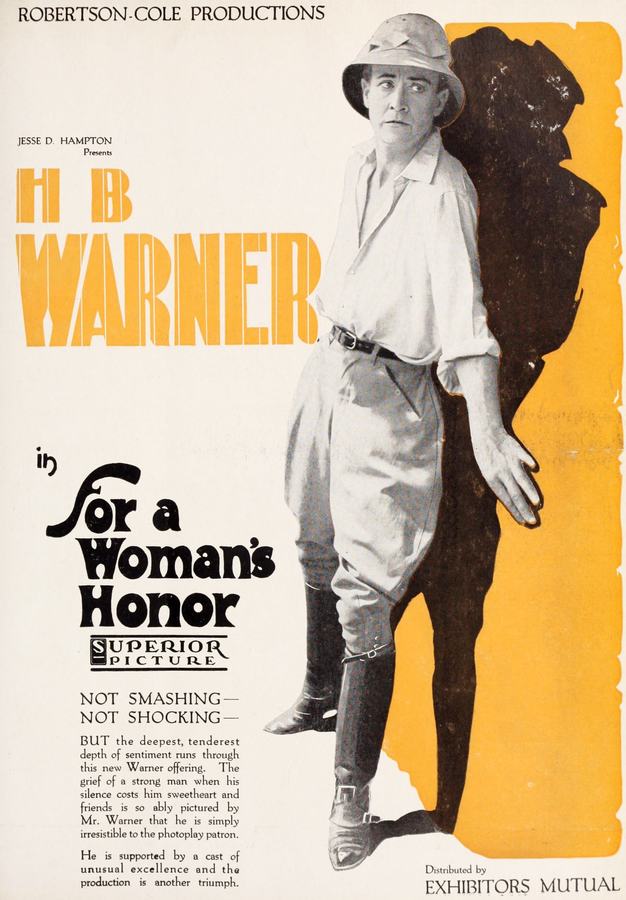
A definitive 5.2/10 rating for a film that redefined the boundaries of cult cinema. For a Woman's Honor remains a cornerstone of transgressive art.
Stepping back into the hallowed halls of silent cinema, one unearths treasures like For a Woman's Honor, a 1922 melodrama that, despite its age, resonates with a timeless exploration of reputation, sacrifice, and the often-destructive power of misunderstanding. Directed by George Elwood Jenks and penned by Clifford Howard and Jenks himself, this film plunges us into a world where a gentleman's word, or rather, his perceived actions, can unravel an entire future. It's a narrative that feels both grand in its scope and intimately tragic in its personal cost, showcasing the era's penchant for high stakes and emotional intensity.
The story orbits around Captain Clyde Mannering, portrayed with the characteristic earnestness and dashing demeanor of the incomparable John Gilbert. Mannering, a pillar of the British India Medical Corps, returns to England, his heart set on marrying Helen Rutherford (Marguerite De La Motte). Their impending union, however, is tragically postponed by the untimely death of Helen's father. This grief-stricken interlude sets the stage for the arrival of Valeska De Marsay (Carmen Phillips), a character dripping with manipulative charm and an agenda as opaque as the London fog. Valeska, armed with a child and a fabricated claim of being the deceased Mr. Rutherford's wife, confronts Mannering. Her motive isn't justice, but a calculated extortion, leveraging the scandal to her advantage. In a move that defines his character, Mannering, driven by an unyielding desire to shield Helen and her mother from further anguish and public disgrace, pays Valeska a substantial sum. This act of profound self-sacrifice, intended to preserve honor, ironically becomes the very instrument of his undoing, misinterpreted by Helen's mother as evidence of a clandestine affair between Mannering and Valeska. The wedding is irrevocably called off, leaving Mannering adrift, his reputation tarnished by a noble lie.
The ramifications of this misunderstanding are swift and devastating. Mannering, unable to defend himself without betraying his promise to protect Helen's family, retreats into a self-imposed exile. He returns to India, a land that serves as both a refuge and a canvas for his continued dedication to healing, ministering to the native population. His isolation underscores the profound sense of injustice he carries, a silent testament to his integrity. The writers, Clifford Howard and George Elwood Jenks, meticulously craft this initial setup, laying the groundwork for Mannering's subsequent redemption while highlighting the rigid societal expectations of the era. The juxtaposition of his honorable intent with the scandalous perception creates a powerful dramatic irony that propels the narrative forward.
Meanwhile, the narrative threads begin to intertwine as Helen, her mother, and, disturbingly, Valeska—now cunningly ensconced as Mrs. Rutherford's traveling companion—also embark for India. Their purpose: to attend to Helen's brother, Dick (Roy Coulson), a customs officer embroiled in a scandal of his own, having accepted bribes from the treacherous high-caste Hindu, Rajput Nath (Hector V. Sarno). The geographical shift from the constrained drawing-rooms of England to the exotic, dangerous landscapes of colonial India provides a vivid backdrop for the escalating drama, amplifying the sense of peril and the vast distances, both literal and emotional, separating our protagonists. This change of scenery is not merely decorative; it serves to heighten the stakes, moving the characters from a world of social decorum to one of raw survival and moral compromise. The film's portrayal of colonial India, while reflecting the perspectives of its time, effectively creates an atmosphere of both allure and underlying menace.
Valeska, ever the opportunist, sees fresh prey in India. Her attempts to ensnare both Rajput and Dick in her web of seduction culminate in a violent climax. Rajput, a villain whose malevolence feels palpable even in silent form, eliminates Valeska when she becomes a liability, staging her death as a suicide and coercing Dick into corroborating the lie. This pivotal turn transforms Valeska from a manipulator into a victim, albeit one whose demise clears the path for Mannering's eventual redemption and the unraveling of the initial deceit. The escalating tension and moral decay among the British expatriates, particularly with Dick's involvement in bribery, highlight the film's subtle commentary on colonial life and the moral ambiguities that often accompanied it. This element of corruption within the British ranks echoes themes found in other films grappling with the darker side of colonial administration, even if For a Woman's Honor doesn't delve as deeply into systemic critique as some later works might. The stain of false accusation, much like the indelible mark in The Brand of Satan, clings to Mannering, but Valeska's death inadvertently begins to scrub it clean.
The narrative reaches its crescendo as Helen finds herself in dire straits, first succumbing to scarlet fever, a prevalent and often fatal disease of the era. It is here that Mannering, despite the past heartbreak, re-enters her life, his medical expertise and unwavering devotion proving instrumental in her recovery. This act of care, devoid of any expectation of reconciliation, serves as a powerful testament to his character. His quiet dedication to healing, both the physical ailments of the native population and Helen's illness, underscores his inherent goodness, a stark contrast to the deceit that initially drove them apart. Yet, the dangers are far from over. Rajput Nath, a figure of increasing menace, continues to loom large, posing a direct threat to Helen. Mannering, ever the protector, once again rises to the occasion, saving Helen from Rajput's clutches. These heroic interventions, unfolding against the vibrant, perilous Indian setting, finally strip away the layers of misunderstanding and deceit that have plagued their relationship. The truth, long buried beneath Valeska's machinations and Mrs. Rutherford's misjudgment, at last comes to light, paving the way for Helen and Mannering's hard-won reunion. It’s a resolution that feels earned, a triumph of enduring love over the most insidious forms of betrayal and misconception.
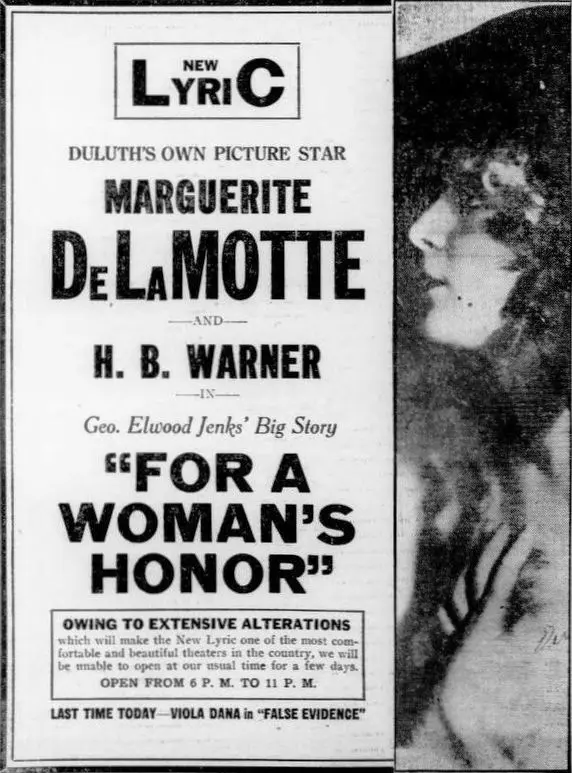
In an era reliant on exaggerated gestures and expressive facial work, the cast of For a Woman's Honor delivers performances that transcend the limitations of silent film. John Gilbert, even in his earlier career, exhibits the magnetic screen presence that would later define his stardom. His Mannering is a figure of noble suffering, his internal turmoil conveyed through subtle shifts in his gaze and posture, rather than overt theatrics. A slight furrow of the brow, a wistful glance, a resolute set of the jaw – these were the tools of his trade, and Gilbert wields them expertly, embodying the ideal of a man willing to sacrifice everything for honor, a theme that resonates deeply within the melodrama genre. Marguerite De La Motte, as Helen, portrays a woman caught between filial duty and burgeoning love, her vulnerability and eventual strength shining through. Her journey from naive fiancée to a woman capable of seeing through deceit is compelling, her transformation subtly conveyed through her evolving expressions of concern, fear, and ultimately, understanding. Carmen Phillips as Valeska De Marsay is, quite simply, captivating in her villainy. She embodies the archetypal femme fatale, her beauty a weapon, her intentions insidious. Phillips’s performance is crucial in driving the plot's many twists, making her character both detestable and undeniably fascinating, her every glance and gesture dripping with calculated malice. The supporting cast, including Roy Coulson as the compromised Dick and Hector V. Sarno as the menacing Rajput Nath, further enriches the narrative tapestry, each contributing to the film's pervasive sense of drama and peril through their distinct, silent portrayals.
At its core, For a Woman's Honor is a profound meditation on the nature of honor itself. Mannering's initial sacrifice is a testament to an antiquated, yet deeply felt, code of conduct where the protection of a woman's reputation, even at the cost of one's own, was paramount. This noble intention is then systematically dismantled by Valeska's deceit and Mrs. Rutherford's hasty judgment, illustrating how easily good intentions can be twisted into perceived wrongdoing. The film masterfully explores the destructive power of miscommunication and the enduring damage wrought by unchecked assumptions. It stands as a cautionary tale against judging solely on appearances, a theme that finds echoes in many melodramas of the era where societal expectations often clashed with personal truths. Consider a film like The Betrothed, which similarly explores the fragility of engagements under external pressures, though perhaps with different stakes. The journey to India introduces another layer of thematic complexity, touching upon the moral compromises inherent in colonial rule, as exemplified by Dick's corruption. This subtle critique adds depth beyond a simple love story, hinting at the broader societal issues that often underpinned personal dramas.
The film also beautifully charts a course towards redemption. Mannering's self-imposed exile and his selfless work among the native population serve as a quiet but powerful form of atonement, not for a sin he committed, but for a perceived one. His eventual re-emergence as Helen's savior is not merely a plot device but a symbolic restoration of his true character. It’s a narrative arc that speaks to the enduring belief in justice and the ultimate triumph of virtue, even if delayed and hard-won. The contrast between Mannering's unwavering moral compass and Valeska's opportunistic amorality forms the central moral axis of the film, highlighting the stark choices characters face and the consequences that ripple outwards. In this sense, it shares a lineage with films like The Evil Women Do, where female characters often wield significant, and sometimes destructive, power over the narrative's direction and the fates of male protagonists. The thematic depth, skillfully woven by writers Howard and Jenks, elevates the film beyond mere spectacle, inviting reflection on the human condition.
As a product of the silent era, For a Woman's Honor relies heavily on visual storytelling, a craft that director George Elwood Jenks and his team navigate with considerable skill. The cinematography, though perhaps not groundbreaking for its time, effectively establishes mood and setting. The visual transition from the somewhat staid English drawing-rooms, often characterized by formal interiors and subdued lighting, to the bustling, exotic, and dangerous landscapes of India, with its vibrant light and distinct architecture, is visually striking. This use of location underscores thematic shifts, moving from social constraint to untamed peril. Intertitles, the lifeblood of silent narratives, are employed judiciously, providing necessary exposition without bogging down the visual flow. Jenks understands the rhythm of silent film, utilizing well-placed close-ups to emphasize emotional reactions and wider shots to establish the grandeur or isolation of a scene. The editing contributes significantly to the film's dramatic tension, building suspense through a series of escalating complications and revelations. The dramatic confrontations, particularly those involving Valeska, are staged to maximize emotional impact, relying on the actors' expressive performances to convey the intensity of their internal conflicts. The film's ability to maintain suspense, despite the lack of spoken dialogue, is a testament to its strong narrative structure and the inherent power of visual drama. It's a reminder of how effectively early filmmakers could weave intricate plots and evoke deep emotions without the aid of sound, a skill that sometimes feels lost in the clamor of modern cinema. In this regard, it stands shoulder-to-shoulder with other well-crafted silent dramas like The Undercurrent, which similarly uses visual cues and character dynamics to drive its emotional narrative.
Watching For a Woman's Honor today offers more than just a historical curiosity; it provides a window into the narrative conventions and moral preoccupations of a bygone era. While some plot points might strike a modern viewer as overly dramatic or conveniently contrived, they were staples of the melodrama genre, designed to elicit strong emotional responses. The film's exploration of themes like mistaken identity, the burden of secrets, and the eventual triumph of truth remains universally resonant. It reminds us that human nature, with all its flaws and virtues, has always been a compelling subject for storytelling. The film's portrayal of British India, though viewed through a colonial lens typical of the period, still manages to convey a sense of its vastness and inherent dangers, contributing significantly to the film's dramatic atmosphere. The interplay of personal drama against a grand, exotic backdrop is a formula that continues to captivate audiences, albeit with different cultural sensitivities today. Much like The Sunbeam, which might explore innocence and hope against a challenging world, For a Woman's Honor uses its setting to amplify the emotional journey of its characters. It's a testament to the enduring power of narrative that such a film, nearly a century old, can still evoke strong feelings and offer valuable insights into historical sensibilities.
In conclusion, For a Woman's Honor is a robust example of silent era melodrama. It is a film that demands engagement, rewarding the viewer with a complex narrative, compelling performances, and a potent exploration of honor, sacrifice, and the relentless pursuit of truth. John Gilbert, even in this earlier role, shines as the stoic hero, and Carmen Phillips delivers a memorable turn as the deliciously wicked Valeska. It stands as a testament to the power of visual storytelling and the enduring appeal of a well-crafted dramatic saga, proving that some stories, particularly those woven with threads of deep human emotion and moral quandary, possess an intrinsic timelessness that transcends the technological advancements of cinema. For enthusiasts of early Hollywood and intricate, character-driven drama, this film is undoubtedly a worthwhile cinematic journey, revealing the foundational elements that would shape the golden age of film.
IMDb —
1923
Community
Log in to comment.