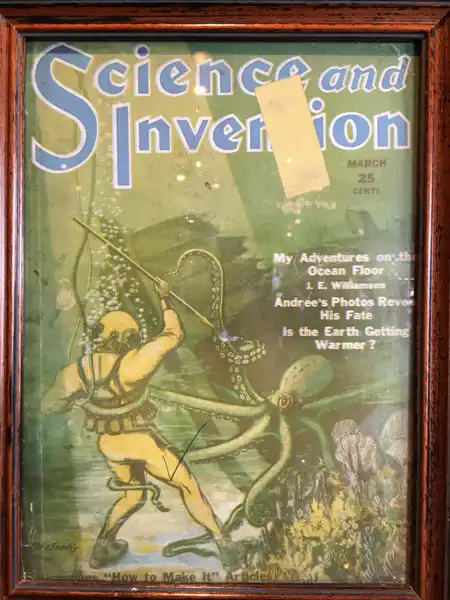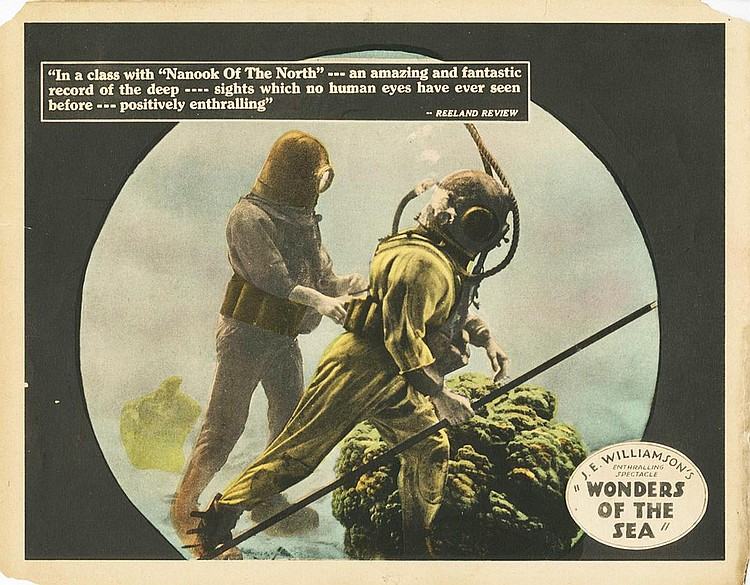
The ocean depths are explored with the aid of a submarine chamber of Williamson's invention and a few hardy souls. The construction of the device is examined; but most of the footage is given to plant and animal life, a girl swimming among the coral growths, and two divers who encounter a moray and an octopus.

There are films you watch, and then there are films that drown you—slowly, blissfully—until your lungs remember ancestral gills. Wonders of the Sea belongs to the latter order. Conceived in 1922 by marine maverick J. Ernest Williamson, this hour-long phantasmagoria predates every nature documentary trope yet feels fr...


Comparing the cinematic DNA and archive impact of two defining moments in cult history.
J. Ernest Williamson

C.L. Chester
Community
Log in to comment.
" There are films you watch, and then there are films that drown you—slowly, blissfully—until your lungs remember ancestral gills. Wonders of the Sea belongs to the latter order. Conceived in 1922 by marine maverick J. Ernest Williamson, this hour-long phantasmagoria predates every nature documentary trope yet feels fresher than most 4K reef porn streaming on your smart-TV today. How? It achieves the rare alchemical trick of letting the ocean author its own spectacle while still confessing the b..."
Richard Ross
J. Ernest Williamson
United States
1920 · IMDb —
C.L. Chester
Deep dive into the cult classic
Discover similar cinematic experiences
A Directorial Spotlight on J. Ernest Williamson