DbcultAccessing Vault...
4/10
Senior Film Conservator
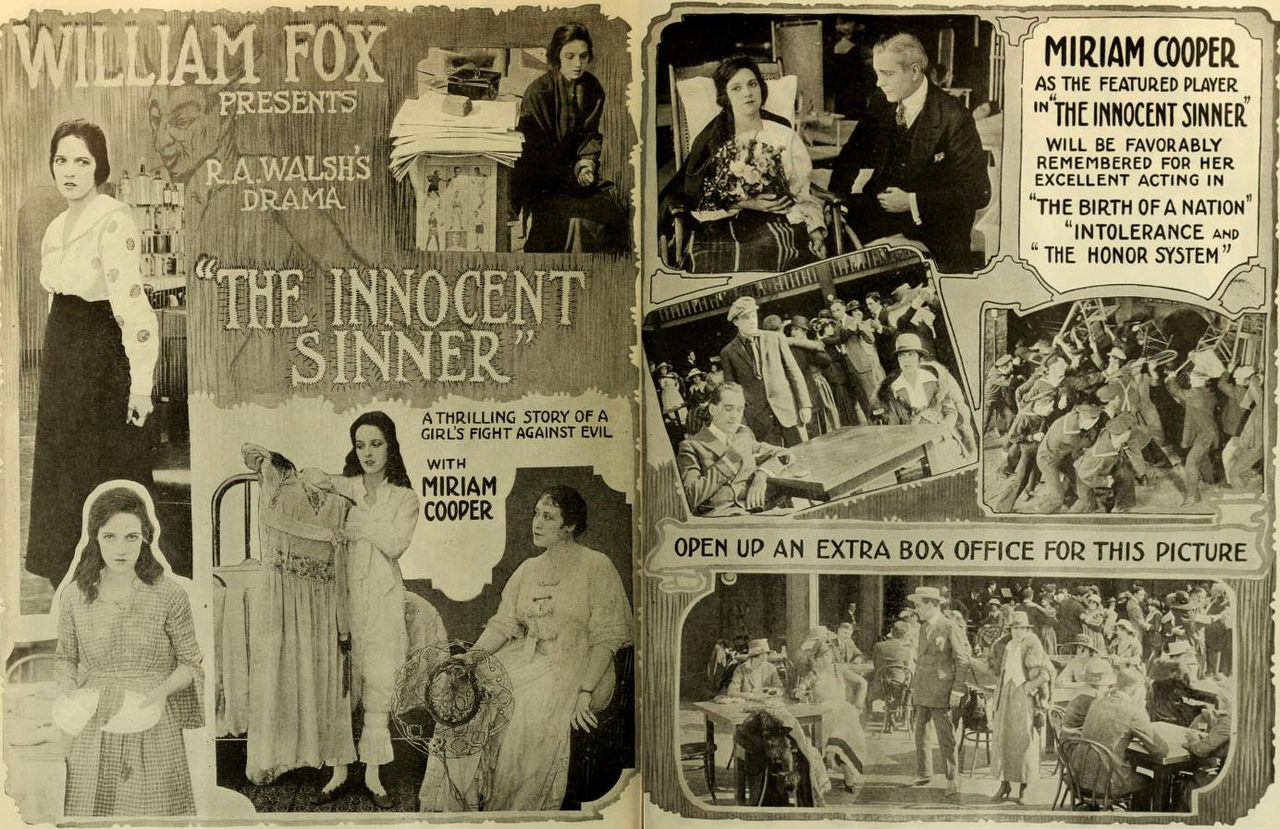
A definitive 4/10 rating for a film that redefined the boundaries of cult cinema. The Innocent Sinner remains a cornerstone of transgressive art.
The film’s prologue bathes Mary Ellen’s homestead in a honeyed nimbus—hand-tinted amber that smells of clover and wet fence posts—then slices to the city’s mercury vapor, a stroboscopic assault of trolley sparks and marquee bulbs. Walsh’s camera, drunk on kinesis, glides from fur-collar opulence to basement speakeasies where cigarette smoke coils like ectoplasm. The tonal whiplash is intentional: innocence is not eroded here, it is guillotined.
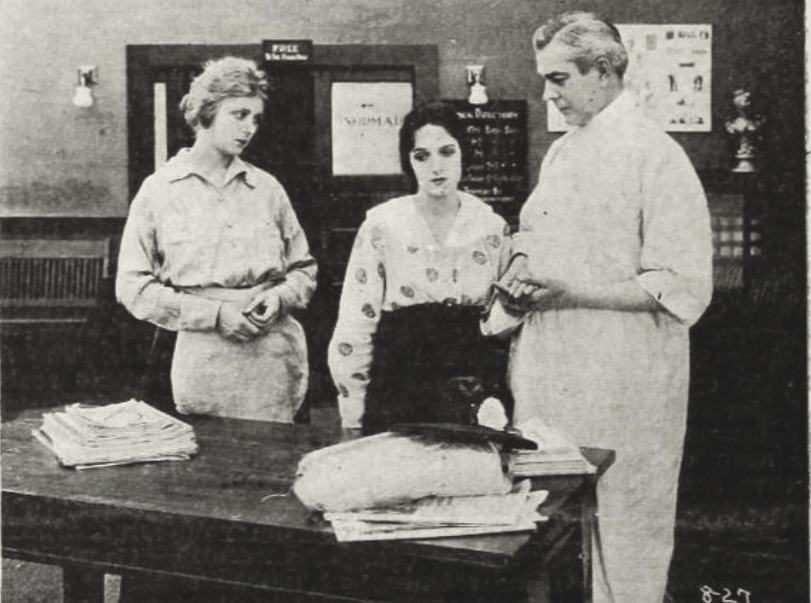
Miriam Cooper’s Mary Ellen quivers with reactive nuance—every close-up a sonnet of pupils dilating between trust and terror. Opposite her, Charles Clary’s Bull Clark suggests a renaissance sculpture smashed in a bar fight: cheekbones of alabaster, fists of butcher-block. Watch the moment he first fingers a child’s marbles left on a saloon table—guilt flickers like a faulty bulb—proof that Walsh trusted silent acting to speak entire homilies.
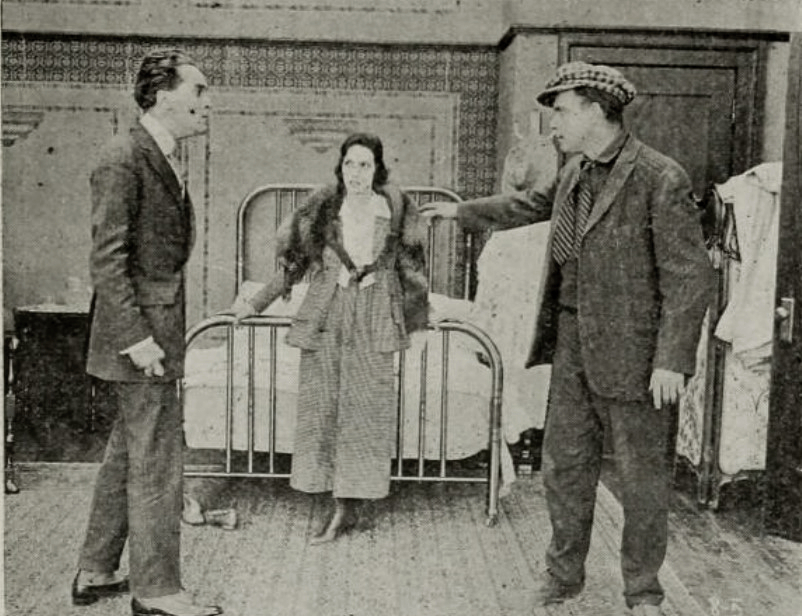
Cinematographer Alfred Ortlieb chiaroscuros every frame: Mary Ellen alone in a boarding-house corridor, her silhouette devoured by a wallpaper pattern of carnivorous roses; Clark framed through a cracked saloon mirror, identity fractured. The climactic fight—Benton, Clark, The Weasel—is lit by a single swinging bulb: light itself becomes a metronome counting down mortality.
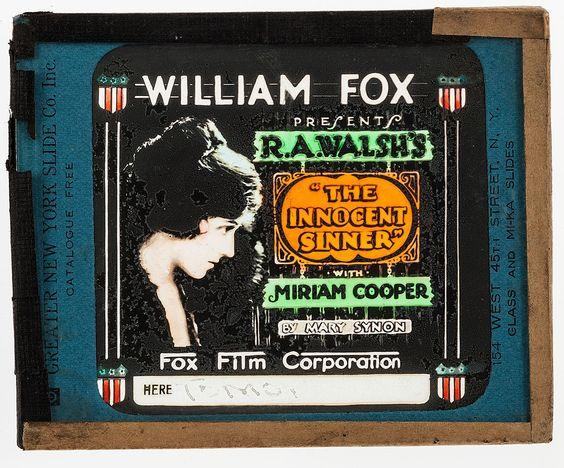
Released months before the Volstead Act’s teeth fully clamped, The Innocent Sinner skirts Hays-censorship yet anticipates it. Mary Ellen’s fall is framed less as sexual transgression than as economic sabotage—city men weaponize poverty, not seduction. Compare this to Extravagance where the woman’s ruin is purely consumerist, or The Tempting of Justice which moralizes through courtroom spectacle.
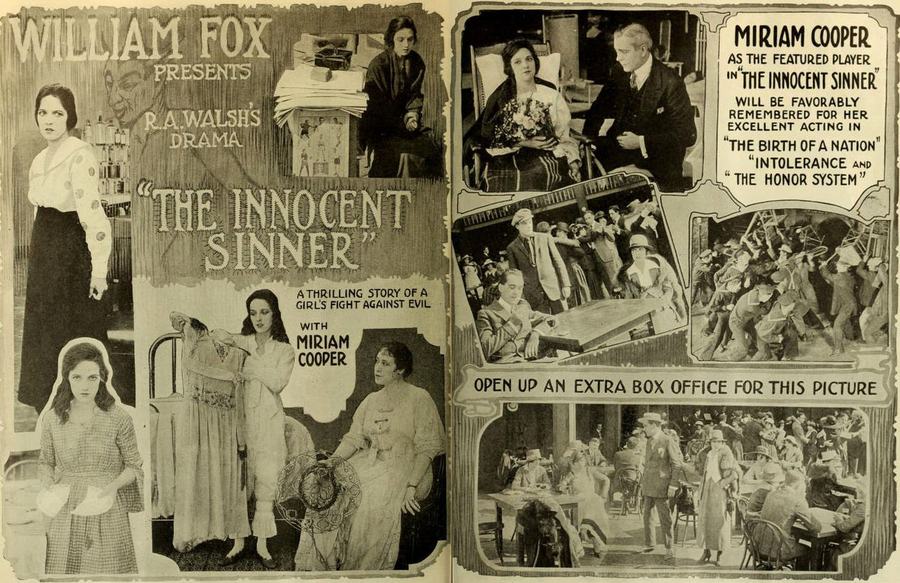
Walsh privileges staccato: a smash-cut from ticking death-row clock to oceanic liner piston—both machines of transit, one toward doom, one toward reinvention. Intertitles arrive sparingly, many superimposed over moving imagery, creating a split-focus that keeps eyeballs jitterbugging. The tempo presages Soviet montage yet drinks distinctly from American jazz—an improvised urgency that makes Griffith’s parallel edits feel Victorian.
Archival evidence suggests premiered with a live trio performing a medley of “Sweet Louise,” Erik Satie’s “Gymnopédie,” and interpolated sea-shanties. Modern restorations (MoMA 2019) commissioned a reactive score—clarinet, muted trumpet, brushed snare—that whispers rather than wallops, allowing creaking seats and projector hum to coexist with melody.
Unlike Walsh’s later The Return of Draw Egan, which mythologizes outlaws, Sinner seeks secular redemption, landing it closer to The Turn of the Road’s Christian humanism. Yet its underworld verisimilitude rivals Les Misérables’ sewer chases, and its maritime coda prefigures the nautical escapism of When Rome Ruled’s galley sequences.
Only two of five reels survive in 35mm at Library of Congress; the rest linger as 28mm Kodascope excerpts. AI-upscaled 4K scans reveal previously invisible textures—lace on Mary Ellen’s nightgown, condensation on Clark’s beer stein—yet the missing middle reel (the jailbreak) survives only via production stills, creating a dream-logic lacuna that, perversely, intensifies the myth.
Because it captures the hinge moment when American cinema learned that morality is not binary but prismatic. Because Miriam Cooper’s eyes still haunt like lantern-glow across a century. Because in our era of algorithmic comfort, Walsh’s frantic humanism feels like a defibrillator jolt. Seek festivals, university screenings, or the flickering corner of an obscure streaming channel—let this sinner wash you clean of cinematic complacency.
IMDb —
1934
Community
Log in to comment.