DbcultAccessing Vault...
6.8/10
Senior Film Conservator
A definitive 6.8/10 rating for a film that redefined the boundaries of cult cinema. Hot Foot remains a cornerstone of transgressive art.
Cinema, in its nascent stages, was obsessed with the limits of the human body. The 1923 short Hot Foot stands as a quintessential artifact of this fixation, utilizing the then-burgeoning craze of dance marathons as a backdrop for a comedy of errors. Bobby Dunn, an actor often relegated to the peripheries of film history despite his work with L-KO and Keystone, takes center stage here with a performance that is as much an athletic feat as it is a comedic one. The premise is deceptively simple: a case of mistaken identity forces a layman into the high-stakes arena of competitive endurance dancing. Yet, beneath the surface of the slapstick lies a poignant commentary on the performative nature of survival.
The film opens with a sequence of rapid-fire misunderstandings that set the pace for the entire production. Dunn’s character, a man whose very existence seems defined by his lack of distinction, is suddenly thrust into the spotlight when he is heralded as 'Hot Foot,' a champion of the dance floor. Unlike the more grounded dramas of the era, such as The Law of the Yukon, which sought to find majesty in the wilderness, Hot Foot finds its majesty in the claustrophobic, sweat-drenched confines of the dance hall. Here, the geography is not the vast tundra, but the few square feet of floor space that the protagonist must occupy for hours on end.
Dunn’s physicality is the engine that drives the film. While contemporaries like Buster Keaton were known for their stoicism, Dunn employs a more frantic, jittery energy. His portrayal of a man pretending to be a master dancer while his legs are failing him is a masterclass in physical irony. The way he mimics the fluid motions of a pro, only to have his knees buckle in a moment of genuine fatigue, creates a tension that is both hilarious and visceral. This tension is a far cry from the more structured, almost theatrical comedy found in Oh! Bill Behave, opting instead for a raw, unbridled chaos.
The cinematography, though primitive by modern standards, captures the frenetic energy of the marathon with a surprising degree of intimacy. The camera lingers on the faces of the other contestants—a gallery of weary, determined, and often eccentric figures. These background characters provide a necessary counterpoint to Dunn’s antics, grounding the film in a reality that feels lived-in. The exhaustion depicted on screen was likely not entirely feigned; the production of these shorts was notoriously grueling, mirroring the very marathons they parodied. This blur between performance and reality adds a layer of depth to the film that is often missing from more polished studio productions like The Girl with the Champagne Eyes.
In the 1920s, dance marathons were a bizarre intersection of sport, entertainment, and human suffering. Hot Foot taps into this zeitgeist with a satirical edge. By placing a complete amateur in the role of a champion, the film mocks the arbitrary nature of fame and the desperation of the public to witness endurance. The spectators in the film are depicted as a ravenous mob, cheering for the very collapse of the participants. This social critique is subtle, hidden beneath layers of pratfalls, but it resonates with the same cynical observation of human nature found in Crainquebille, where the individual is crushed by the mechanisms of society.
The supporting cast, led by Glen Cavender, provides the perfect foil for Dunn. Cavender’s presence adds a layer of menace to the proceedings, as he represents the looming threat of the 'real' world—the people who will eventually realize that Dunn is an impostor. The interaction between the two is a highlight of the film, a dance of deception that mirrors the actual dancing occurring on the floor. It is this duality—the fake dance for the audience and the real dance for survival—that elevates Hot Foot above standard slapstick fare. It shares a certain thematic DNA with Zakovannaya filmoi, exploring the ways in which we are trapped by the roles we are forced to play.
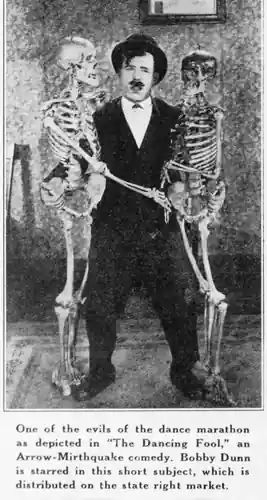
Despite being a short subject, the visual storytelling in Hot Foot is remarkably efficient. The use of intertitles is minimal, allowing the physical actions of the actors to convey the narrative. This is a testament to the skill of the unnamed director and the writers who understood that in comedy, the 'bit' is king. The pacing is relentless; there is hardly a moment for the audience (or the protagonist) to catch their breath. This relentless forward motion is a characteristic of the best silent comedies, creating a sense of escalating absurdity that culminates in a chaotic finale.
When compared to the more atmospheric and perhaps more 'artistic' films of the period, such as Hungry Eyes, Hot Foot might seem superficial. However, there is a profound honesty in its commitment to the gag. It does not pretend to be anything other than a delivery system for laughter, and in doing so, it achieves a purity of form. The film’s ability to find humor in the mundane act of walking—or failing to walk—is a reminder of the foundational elements of cinema: light, shadow, and movement.
Bobby Dunn’s 'Little Man' in Hot Foot is a precursor to the many everyman characters that would populate cinema for decades. He is the underdog we can't help but root for, even as we laugh at his misfortune. His struggle is universal; we have all been in situations where we are woefully underprepared, forced to 'dance' our way through a crisis. This relatability is what has allowed the film to endure, even as the specific cultural context of the dance marathon has faded into history. It lacks the dark, brooding intensity of Ten Nights in a Bar Room, but it possesses a lighthearted resilience that is equally compelling.
Furthermore, the film’s exploration of identity—the idea that one can become someone else simply because others believe it to be true—is a sophisticated concept for a slapstick short. It touches on the same themes of persona and performance that would be explored in more depth in films like Carmen. In Hot Foot, this theme is played for laughs, but the underlying anxiety of being 'found out' is palpable. It is this anxiety that fuels the comedy, making every stumble and every close call feel significant.
In the vast archive of silent film, it is easy for works like Hot Foot to be lost in the shadow of the giants. Yet, to ignore it is to miss a vital piece of the comedic puzzle. It represents a moment in time when cinema was discovering its power to transform the ordinary into the extraordinary through nothing more than timing and physical bravery. It is a film that demands to be seen not just as a historical curiosity, but as a living piece of entertainment that still has the power to elicit a genuine chuckle.
Whether you are a scholar of the era or a casual viewer looking for a glimpse into the past, Hot Foot offers a rewarding experience. It is a reminder of the sheer joy of movement, the absurdity of human endurance, and the enduring power of a well-timed pratfall. While it may not have the epic scale of The Midnight Raiders or the social weight of Famous Women in World's Work, it occupies a unique and necessary space in the cinematic landscape. It is, quite simply, a foot-stomping good time that refuses to stand still.
Final Verdict: A kinetic, high-energy farce that showcases Bobby Dunn at the height of his physical powers. A must-watch for fans of silent slapstick and those interested in the cultural oddities of the 1920s.
IMDb 4.4
1930
Community
Log in to comment.