DbcultAccessing Vault...
5/10
Senior Film Conservator
A definitive 5/10 rating for a film that redefined the boundaries of cult cinema. Film 16 remains a cornerstone of transgressive art.
Is Solomon Sir Jones’ Film 16 worth your time today? Short answer: Yes, but only if you view it as a portal rather than a play. This film is for the historian, the sociologist, and the cinephile who values truth over artifice; it is decidedly not for those seeking the escapist thrills of a standard silent melodrama.
1) This film works because it provides an unfiltered, non-performative look at Black prosperity that Hollywood refused to film. 2) This film fails because it lacks a formal narrative structure, making it a challenging sit for the uninitiated. 3) You should watch it if you want to see the real 1920s, stripped of the Great Gatsby veneer.
Solomon Sir Jones was not a filmmaker by trade; he was a man with a mission and a 16mm camera. In Film 16, we see the culmination of his travels through the Oklahoma territories. Unlike the high-budget productions of The Vamp, there are no sets here. The residences in Clearview and Okmulgee are the sets. The clergy members are the stars. This is reality, raw and unadorned.
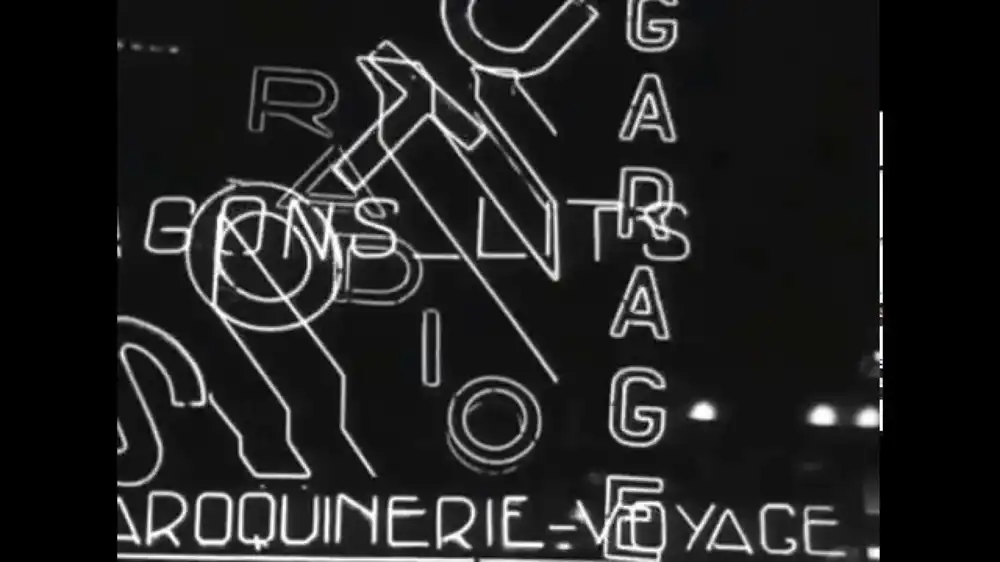
The cinematography is functional, yet it possesses a rhythmic quality that rivals the avant-garde movements of Europe. While Dziga Vertov was experimenting with propaganda in Kino-pravda no. 21, Jones was practicing a different kind of 'film-truth.' He wasn't trying to change the world; he was trying to prove that his world existed. The way he frames the churchgoers in Muskogee suggests a deep, communal respect. He lingers on faces. He captures the texture of Sunday bests.
It is raw. It is real. It is essential.
The film moves through a specific geography: Clearview, Okmulgee, Muskogee, Wetumka, Wewoka, Holdenville, and Shawnee. In each location, Jones focuses on the pillars of the community. We see the brick-and-mortar evidence of a society that was self-sufficient. This stands in stark contrast to the urban grit seen in Underworld. Here, the 'underworld' is actually the upper crust of a marginalized society building their own heaven.
One specific scene in Okmulgee stands out: a group of men standing outside a residence. They don't look at the camera with the coached fear of an extra in The Bar Sinister. They look with a mixture of curiosity and ownership. This is their town. This is their film. The camera acts as a member of the community, not an interloper. This subtle shift in the 'gaze' is what makes Film 16 a radical piece of cinema.
Yes, Film 16 is worth watching for anyone interested in authentic American history. It offers a rare, unscripted glimpse into the All-Black towns of Oklahoma during the 1920s. While it lacks a plot, the visual data it provides is more valuable than most fictional films of the era. It is a vital document of resilience and everyday life.
Critics often dismiss amateur footage as 'home movies,' but that label is too small for what Jones achieved. The pacing of Film 16 is dictated by the reel, not by a script supervisor. This creates a dreamlike, almost hypnotic experience. You aren't waiting for a climax; you are soaking in the atmosphere. It lacks the polish of Forbidden Fruit, but it gains a visceral honesty that Cecil B. DeMille could never replicate with a million-dollar budget.
The lighting is naturalistic, often harsh, reflecting the bright Oklahoma sun. There are no soft-focus lenses to hide the wrinkles on the elders' faces or the dust on the Shawnee streets. This lack of artifice is its greatest strength. When we see the clergy in Wewoka, we aren't seeing 'characters'; we are seeing the weight of leadership. The film doesn't need a soundtrack because the images are loud enough on their own.
To understand the importance of Film 16, one must compare it to the commercial output of 1924-1928. While Hollywood was busy perfecting the 'vamp' archetype in films like The Vamp, Jones was documenting the 'vanguard.' He wasn't interested in the melodrama of The Money Mill. He was interested in the actual money—the businesses, the homes, and the economic stability of his people.
There is a stubborn refusal in this footage to perform for a white audience. In many films of the time, like Tol'able David, rural life is often sentimentalized or made grotesque. Jones does neither. He simply records. This neutrality is a stance in itself. By refusing to dramatize, he humanizes. It is a quiet rebellion caught on 16mm stock.
Pros:
Cons:
Here is a thought: Film 16 is the 1920s equivalent of a high-end social media feed, but with soul. It is a curated display of 'living your best life' amidst a political climate that wanted these people to fail. Jones wasn't just filming; he was 'flexing' on behalf of an entire community. Every shot of a well-maintained residence in Holdenville is a political statement. It’s not just a house; it’s a fortress of middle-class defiance.
We see the same pride in Arms and the Woman, but there it feels performative. In Film 16, it feels earned. There is a specific shot of a woman in Clearview adjusting her hat that carries more weight than any scripted scene in The Temptress. It is a moment of pure, unadulterated humanity.
Film 16 is a ghost story where the ghosts refuse to be haunted. Solomon Sir Jones captured a world that many tried to burn down or forget, and in doing so, he created one of the most important cinematic artifacts of the 20th century. It is not 'entertainment' in the way The Yellow Back is entertainment. It is something much more durable. It is evidence.
If you approach this film expecting a story, you will be disappointed. If you approach it expecting a revelation, you will be rewarded. It is a difficult, beautiful, and necessary piece of the American puzzle. Solomon Sir Jones didn't just make a film; he saved a world from the darkness of the cutting room floor.
"Film 16 is a masterclass in the power of the amateur lens to capture the truths that professional cinema ignores."
IMDb 6.4
1933
Community
Log in to comment.