DbcultAccessing Vault...
Cult Review
Senior Film Conservator
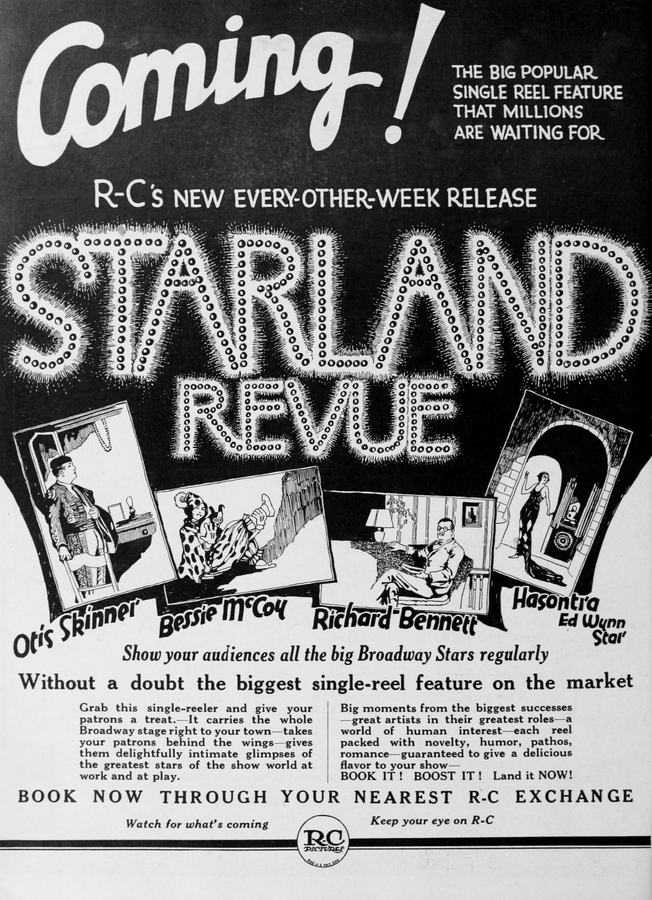
The archival haunting of Starland Review No. 1 offers more than a mere glimpse into the past; it provides a visceral confrontation with the origins of the cinematic gaze in the Southern Hemisphere. In an era where the moving image was still grappling with its own identity—oscillating between the voyeuristic thrill of the 'cinema of attractions' and the burgeoning demands of narrative structure—this screen magazine stands as a defiant middle ground. It is a work of curation rather than orchestration, a collection of moments that, when viewed through a contemporary lens, reveal the sociological undercurrents of the 1920s with startling clarity.
Unlike the heavy-handed moralism found in The Woman Suffers, which sought to instruct through tragedy, Starland Review No. 1 adopts a more observational posture. There is a raw, unvarnished quality to the cinematography here. The hand-cranked rhythm of the camera imbues every frame with a slight, nervous energy, a flickering heartbeat that reminds the viewer of the medium's inherent fragility. The segments are edited with a briskness that predates the sophisticated montage theories of the Soviet masters, yet they achieve a similar sense of momentum. Whether we are observing the launch of a new vessel or the intricate footwork of a horse race, the film prioritizes the movement of the subject over the artifice of the set.
The visual texture of the film is a character in its own right. The silver halide grains dance across the screen, creating a veil of history that both obscures and illuminates. When compared to the more polished, studio-bound aesthetics of The Mistress of Shenstone, the Review feels dangerously alive. It captures the dust of the street and the glare of the Australian sun with a fidelity that narrative features of the time often sacrificed for the sake of theatrical lighting. This is cinema as an ethnographic tool, recording the gestures, the millinery, and the architectural ambitions of a society emerging from the shadow of the Great War.
What strikes the modern critic most is the film's inadvertent documentation of class and gender roles. In segments that highlight social gatherings, we see the performative elegance of the upper echelons—a stark contrast to the rugged, utilitarian depictions of rural life often found in films like The Sawdust Trail. Starland Review No. 1 does not attempt to bridge these gaps; it merely presents them as parallel realities. There is a sequence involving a local festival that, while ostensibly intended as light entertainment, reveals the rigid social hierarchies of the time. The way the camera lingers on the faces of the crowd—some curious, some suspicious, others performatively joyful—provides a psychological depth that no script could replicate.
In the broader context of the Australian silent era, this review serves as a necessary counterpoint to the 'backblocks' dramas. While The Law of Nature wrestled with the harsh realities of the environment, Starland Review No. 1 celebrates the burgeoning urbanity of Melbourne and Sydney. It showcases the triumph of engineering and the sophistication of the modern city-dweller. This tension between the wild interior and the civilized coast is a recurring motif in the national cinema, and here, the pendulum swings firmly toward the metropolitan. The film acts as a promotional reel for a nation eager to prove its worth on the global stage, mirroring the cosmopolitan aspirations found in international imports like My Cousin.
Technically, the film is a marvel of early 20th-century logistics. The ability to capture high-quality footage in disparate locations and assemble it into a coherent 'magazine' format was no small feat. The framing is often surprisingly sophisticated. We see use of the 'Phantom Ride'—cameras mounted on moving vehicles—to give the audience a sense of immersion that was still relatively novel. This kinetic energy is something often missing from the more static, stage-influenced productions like The Caprices of Kitty. In the Review, the camera is an active participant in the scene, navigating through crowds and scaling industrial heights to find the most evocative angle.
The lighting, though largely naturalistic, shows a keen understanding of contrast. The harsh Australian light is utilized to create deep blacks and brilliant whites, a monochromatic range that gives the footage a sculptural quality. This is particularly evident in the scenes of maritime activity, where the reflection of the sun on the water creates a shimmering, almost ethereal background for the dark silhouettes of the ships. It is a visual language of starkness and clarity, one that would later be refined in the works of cinematographers working on films like The Man Beneath.
While Starland Review No. 1 lacks a protagonist in the traditional sense, its hero is undoubtedly 'Progress.' Every segment is imbued with an optimistic belief in the future. We see new bridges being built, new technologies being implemented, and a general sense of collective forward motion. This optimism stands in stark contrast to the domestic anxieties explored in Why Girls Leave Home or the moral dilemmas of Real Folks. Here, the individual is subsumed by the machine of the state, a cog in the wheel of a rapidly advancing civilization. It is a fascinating look at the propaganda of the everyday—the subtle ways in which the media of the time reinforced the values of industry and order.
The pacing of the film is another area where it excels. There is a rhythmic quality to the way the segments are ordered, moving from the high-octane energy of a sporting event to the quiet, contemplative beauty of a scenic landscape. This ebb and flow keeps the viewer engaged, preventing the 'magazine' format from feeling like a disjointed series of clips. It shares a certain DNA with the episodic nature of The Cabaret Girl, though its aims are far more grounded in reality. The Review understands the importance of variety, ensuring that the intellectual stimulation of an industrial report is balanced by the visual pleasure of a fashion parade.
To watch Starland Review No. 1 today is to participate in a form of time travel. It is an invitation to look into the eyes of people who could never have imagined the digital world we inhabit. There is a haunting quality to the footage, particularly in the candid shots of children or the unscripted moments of laughter between workers. These are the 'real folks' of history, captured in a moment of unselfconscious existence. The film lacks the melodramatic flourishes of Dawn of Revenge, but it possesses a far more enduring power: the power of the truth.
In comparison to the more structured narratives of The Little School Ma'am or the romanticism of His Sweetheart, the Review offers a refreshing lack of artifice. It does not try to manipulate our emotions through tragic plot twists or comedic misunderstandings. Instead, it relies on the inherent interest of the world itself. It assumes an intelligent, curious audience—one that is interested in the mechanics of their world and the lives of their fellow citizens. This respect for the viewer is one of the film's most commendable qualities.
The film also serves as a reminder of the importance of film preservation. Without the efforts to save these early reviews, large swaths of our visual history would be lost to the ravages of nitrate decay. Starland Review No. 1 is a survivor, a fragment of a much larger puzzle that allows us to reconstruct the visual landscape of the 1920s. It is as essential to our understanding of the era as any high-budget feature like A Little Brother of the Rich. It provides the context, the atmosphere, and the 'flavor' of the time that fiction often overlooks.
Ultimately, Starland Review No. 1 is a testament to the enduring power of the image. Even after a century, the footage retains its ability to fascinate and inform. It is a work that rewards close viewing, offering up small details—a specific hat style, a brand of car, a forgotten street corner—that speak volumes about the world in which it was made. It is a film that demands to be seen not just as a historical curiosity, but as a deliberate piece of visual communication that helped shape the way Australians saw themselves.
While it may lack the narrative drive of Sure Fire, it compensates with a breadth of vision that few narrative films can match. It is a sweeping, inclusive, and deeply human document. As we watch the sun set over a 1920s harbor in the film's closing moments, we are struck by the realization that while the world has changed beyond recognition, the human impulse to record, to share, and to remember remains constant. Starland Review No. 1 is a vital link in that chain, a shimmering beacon of light from a world that, though gone, continues to flicker in the dark of the cinema.
Critique by the Cinephile's Journal © 2024

IMDb 6.5
1929
Community
Log in to comment.