DbcultAccessing Vault...
Cult Review
Senior Film Conservator
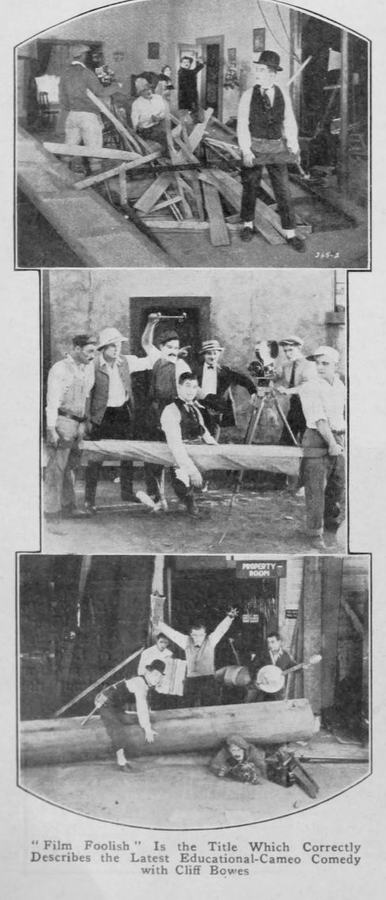
Stepping back into the flickering glow of early cinema, one encounters 'Film Foolish' not merely as a narrative, but as a fascinating artifact, a window into the nascent, often chaotic, world that birthed the moving picture industry. This isn't just a story; it’s a self-reflexive glance at the very act of creation, seen through the eyes of an earnest aspirant. The film's premise, deceptively simple, unravels a complex tapestry of ambition, illusion, and the sheer, unadulterated passion that fueled the pioneers of the silver screen. It's a testament to the enduring allure of Hollywood, even in its most rudimentary form, and the magnetic pull it exerted on individuals like our protagonist, Cliff Bowes.
Cliff, portrayed with an understated eagerness that speaks volumes, embodies the quintessential dreamer drawn to the West Coast's burgeoning film studios. His desire to 'get into the movies in the worst way' isn't just a casual whim; it's an all-consuming drive, a yearning for a world where reality is malleable and imagination reigns supreme. Unable to immediately seize the spotlight, Cliff, with pragmatic determination, secures a position as an assistant to the head property man. This seemingly humble role places him squarely in the engine room of cinematic production, a world far removed from the glamorous façade but infinitely closer to its beating heart. Here, amidst the dusty props and bustling crew, Cliff's journey becomes a microcosm of countless others who sought their fortune, or simply their passion, in the dream factory.
The very setting of 'Film Foolish' — the bustling, often bewildering environment of a silent film set — is a character in itself. It's a symphony of controlled chaos, where carpenters hammer, lights glare, and actors rehearse lines that will never be heard. The property department, Cliff's domain, is the unsung hero of this theatrical illusion. It’s here that the mundane transforms into the magical, where everyday objects are imbued with cinematic significance. A simple chair might become a throne, a piece of cloth a royal banner. This is where the raw materials of storytelling are gathered, cataloged, and deployed with a precision that belies the apparent pandemonium. Cliff, as an assistant, is intimately involved in this alchemical process, his hands touching the very fabric of the fictional worlds being conjured.
The film subtly explores the theme of aspiration versus reality. Cliff's grand cinematic dreams are juxtaposed with the gritty, often unglamorous reality of his daily tasks. He's not performing in front of the camera, but rather ensuring the performer has the correct prop. Yet, this proximity to the creative core is precisely what nourishes his ambition. Every prop he handles, every set he helps construct, is a step closer to the world he so desperately wishes to inhabit. This internal conflict, though perhaps not explicitly articulated through intertitles, is palpable in the visual language of silent cinema, where gestures, expressions, and the very composition of a shot convey depth of character and motivation.
Considering the era, 'Film Foolish' likely predates the full blossoming of Hollywood's studio system, placing it in a period of intense experimentation and rapid evolution. Films like Tillie's Punctured Romance (1914) had already demonstrated the nascent power of feature-length comedy and the star system, but many productions were still shorter, more direct narrative explorations. 'Film Foolish' captures the spirit of this transitional phase, where the lines between stage and screen were still blurring, and the grammar of cinematic storytelling was being written one frame at a time. The emphasis on the behind-the-scenes aspect suggests an early form of self-awareness within the industry, a playful peek at its own mechanics, which would become a recurring motif in cinema history.
The performances, even in a film of this vintage and perhaps shorter runtime, are crucial. While explicit details about the roles of Virginia Vance and Earl Montgomery are scarce from the plot synopsis, their presence undoubtedly contributes to the film's texture. Virginia Vance, a name associated with early cinematic ventures, likely brings a certain vivacity or dramatic weight to her role, perhaps as an actress on set, a love interest for Cliff, or a fellow dreamer navigating the industry's labyrinth. Earl Montgomery, too, would embody a specific archetype, whether the gruff property master, a rival, or a colleague. In silent films, actors relied heavily on exaggerated facial expressions and gestural language to convey emotion and intent, a skill set that defined early screen presence. These performances, even if broad by today's standards, were the lingua franca of an art form still finding its voice.
The film's title itself, 'Film Foolish,' hints at a comedic or lighthearted tone, possibly suggesting the absurdity or unexpected challenges inherent in filmmaking. It could be a gentle lampooning of the industry's grandiose self-image, or a nod to the often-foolish risks and leaps of faith taken by those who entered its orbit. This playful self-awareness is a delightful aspect of early cinema, where filmmakers were often as much inventors as artists, and humor was a universal language. It stands in contrast to the more overtly dramatic explorations of ambition seen in films like The Reckoning or the moral complexities of A Woman of Pleasure, opting instead for a lighter, more observational approach to its subject matter.
The technical aspects of 'Film Foolish,' though constrained by the technology of its era, are nonetheless worthy of consideration. Cinematography in silent films was primarily functional, focusing on clear composition and effective storytelling through visual means. Lighting, often rudimentary by modern standards, was used to delineate characters and settings, creating contrast and mood. The editing, while perhaps not as complex as the montage theories that would emerge later, would have been crucial in establishing rhythm and advancing the plot, especially in a narrative that likely balances comedic moments with Cliff's overarching ambition. Every cut, every camera angle, however simple, was a deliberate choice aimed at engaging an audience still marveling at the very concept of moving images.
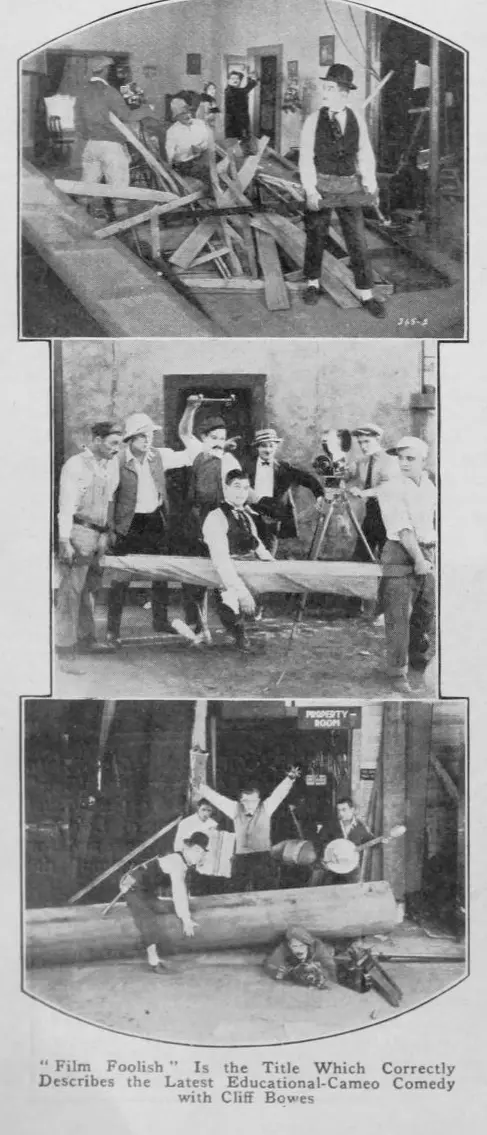
The narrative's focus on the 'property man's' assistant is particularly insightful. In an industry built on visual spectacle, props are the silent storytellers, the physical anchors of a fictional world. From a simple teacup to an elaborate costume, each item serves a purpose, enriching the narrative and enhancing character. Cliff's role places him at the nexus of this visual language, giving him a unique perspective on how illusions are crafted piece by painstaking piece. This behind-the-scenes exploration resonates with the fascination viewers have always had for the magic of moviemaking, a curiosity that persists to this day. It's a precursor to countless films that would later pull back the curtain on Hollywood, from the satirical to the celebratory.
The human element, as always, is central. Cliff's journey is not just about getting into movies; it's about finding his place, understanding the value of his labor, and perhaps even realizing that the true magic lies not just in the finished product, but in the collaborative effort of its creation. His interactions, whether with the head property man (perhaps played by Earl Montgomery), fellow crew members, or even the actors like Virginia Vance, would define his experience. These relationships, however fleetingly depicted, would add layers of humanity to the industrial backdrop, reminding us that even in the largest of enterprises, it is individual dreams and efforts that propel progress.
The film, in its essence, is a commentary on the nature of work and the pursuit of passion. Cliff's dedication to his assistant role, despite its lack of glamour, speaks to a deeper commitment to the craft. He is learning the ropes, understanding the fundamental building blocks of cinema, perhaps unknowingly preparing himself for a greater role. This theme of apprenticeship and perseverance is timeless, echoing in various forms across cinematic history, from the aspiring artist to the determined entrepreneur. It’s a narrative thread that connects 'Film Foolish' to universal human experiences, even as it depicts a specific historical moment.
One could draw parallels between Cliff's ambition and the audacious spirit seen in other films of the era. The yearning for a better life or a grander stage is a common motif. Consider The Gamblers, where characters navigate risky propositions, or Sudden Riches, which explores the transformative power of unexpected fortune. While 'Film Foolish' might lack the overt dramatic stakes of these titles, it shares a common thread of individuals striving against circumstances, hoping for their moment in the sun. Cliff's 'worst way' approach to getting into movies is a form of gambling, a calculated risk of time and effort in the hopes of a grand payoff.
Despite the passage of time and the monumental shifts in cinematic technology, 'Film Foolish' retains a certain charm and relevance. It serves as an invaluable historical document, offering glimpses into the rudimentary yet utterly vital processes that laid the groundwork for the colossal industry we know today. The film’s focus on the property department, an often-overlooked aspect of production, highlights the meticulous attention to detail required to create believable worlds on screen. It’s a reminder that even the smallest elements contribute to the overall magic, much like the intricate machinery of a clock where every cog, no matter how tiny, is essential.
The comedic potential of 'Film Foolish' should not be underestimated. The chaotic nature of early film sets, the occasional mishaps with props, and the often-exaggerated acting styles could lend themselves to genuine humor. Imagine Cliff accidentally breaking a crucial prop, or struggling to find a specific item under immense pressure. These moments of levity would not only entertain but also humanize the process, making the dream factory feel more accessible and relatable. This lighthearted approach differentiates it from more serious dramas like The Wild Olive or the intense romantic conflicts found in The Power of Love, demonstrating the diverse range of storytelling emerging from early studios.
The film also subtly critiques the hierarchy within the industry. Cliff, as an assistant, is at the bottom rung, yet his efforts are indispensable. The film, by centering his perspective, gives voice to the countless unsung heroes who work behind the camera, ensuring the stars can shine. This democratic spirit, acknowledging the collective effort, is a powerful message that transcends its historical context. It’s a celebration of the craftspeople, the technicians, and the diligent workers who make the impossible possible, a theme that resonates whether one is viewing a century-old silent film or a modern blockbuster.
In conclusion, 'Film Foolish' is more than just a historical curiosity; it's a poignant and often humorous exploration of ambition, the mechanics of illusion, and the human spirit's unwavering pursuit of a dream. It offers a unique vantage point into the formative years of cinema, reminding us that the magic of the movies has always been a collaborative endeavor, fueled by the passion of individuals like Cliff Bowes. Its legacy lies not just in its narrative, but in its ability to transport us back to a time when every frame was a marvel, and every film set a crucible of dreams. It stands as a charming testament to the foundational grit and glamour of early Hollywood, a quiet yet compelling voice from an era that forever changed how we see the world.
IMDb 7.5
1935
Community
Log in to comment.