DbcultAccessing Vault...
7.7/10
Senior Film Conservator
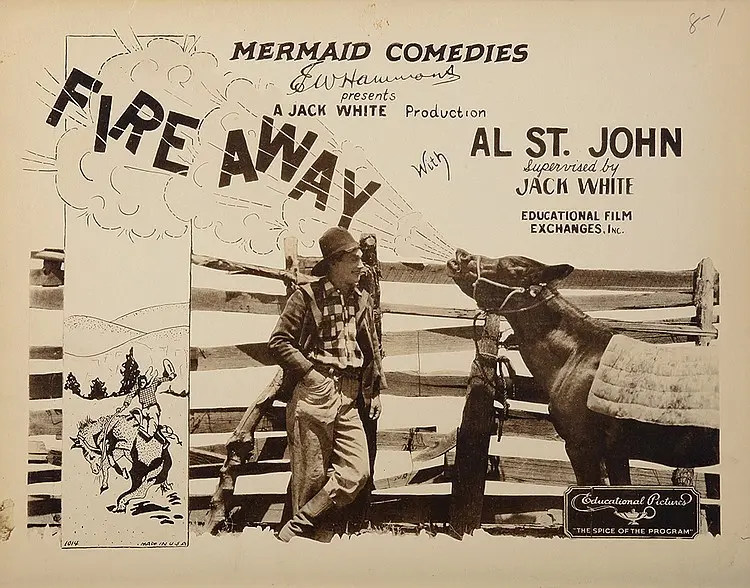
A definitive 7.7/10 rating for a film that redefined the boundaries of cult cinema. Fire Away remains a cornerstone of transgressive art.
Is Fire Away worth watching today? Short answer: yes, but with significant caveats. This early 20th-century silent Western comedy offers a fascinating glimpse into the nascent days of cinematic storytelling and physical humor, making it a compelling watch for film historians and enthusiasts of the genre.
However, for those accustomed to modern narrative complexity or high-definition spectacle, its charms might prove elusive. This film is unequivocally for viewers who appreciate the historical context of cinema, the raw energy of silent era slapstick, and the foundational elements of the Western. It is not for audiences seeking fast-paced action, sophisticated character development, or contemporary comedic sensibilities.
Fire Away, a product of its time, arrives as a testament to the simplicity and exuberance of early American cinema. It’s a film that doesn't just tell a story; it performs it with a broad, almost theatrical earnestness that defines the era. The premise, while straightforward, serves as a robust framework for the kind of physical comedy and rudimentary action that captivated audiences a century ago.
The film navigates a landscape where heroism is largely expressed through exaggerated gestures and daring, if often improbable, feats. It’s a foundational piece, demonstrating how quickly filmmakers learned to leverage the medium for pure entertainment, even with limited technical means.
This film works because it fully commits to its comedic premise, delivering a consistent stream of physical gags and a clear, morally unambiguous conflict. It fails because its narrative depth is minimal, and its pacing, while effective for its era, can feel sluggish to a contemporary audience. You should watch it if you're prepared to engage with film as a historical artifact, appreciating its pioneering spirit and unrefined charm.
Al St. John, a name perhaps less recognized than his more famous contemporaries, carries Fire Away with a raw, almost unbridled energy that defines the film's comedic core. His portrayal of Al is less about nuanced characterization and more about relentless physical presence. St. John's movements are broad, his expressions pronounced, perfectly suited for the silent screen where every emotion and intention had to be writ large.
There's a particular scene involving a runaway horse, where St. John's flailing limbs and acrobatic tumbles are less about grace and more about sheer comedic effort. It’s a testament to his vaudeville roots, transforming potential danger into a spectacle of controlled chaos. This isn't subtle acting; it's a full-body commitment to the gag, and in its era, it was undoubtedly effective.
Lucille Hutton, as the damsel in distress, delivers a performance that is, by necessity, reactive. Her role primarily involves conveying alarm, fear, and eventual relief. While her character lacks agency, Hutton’s expressions are clear and legible, effectively communicating the stakes without the aid of dialogue. Her wide-eyed terror during the abduction scenes, though melodramatic by modern standards, perfectly serves the film's dramatic requirements.
James T. Kelley and Glen Cavender, as the 'yegg-men,' embody the archetypal silent film villains. They are menacing in their physicality, their sneers and aggressive posturing leaving no doubt as to their nefarious intentions. Their performances are caricatures, designed to be easily identifiable as antagonists, and they execute this with a pantomime flair that adds to the film's overall charm. It’s a simple but effective dynamic.
The directing in Fire Away, while rudimentary compared to later works, showcases an understanding of how to build momentum through chase sequences and physical confrontations. The use of intertitles is standard for the period, guiding the audience through plot points and character motivations. What stands out, however, is the film's ability to convey action through dynamic blocking and early forms of editing.
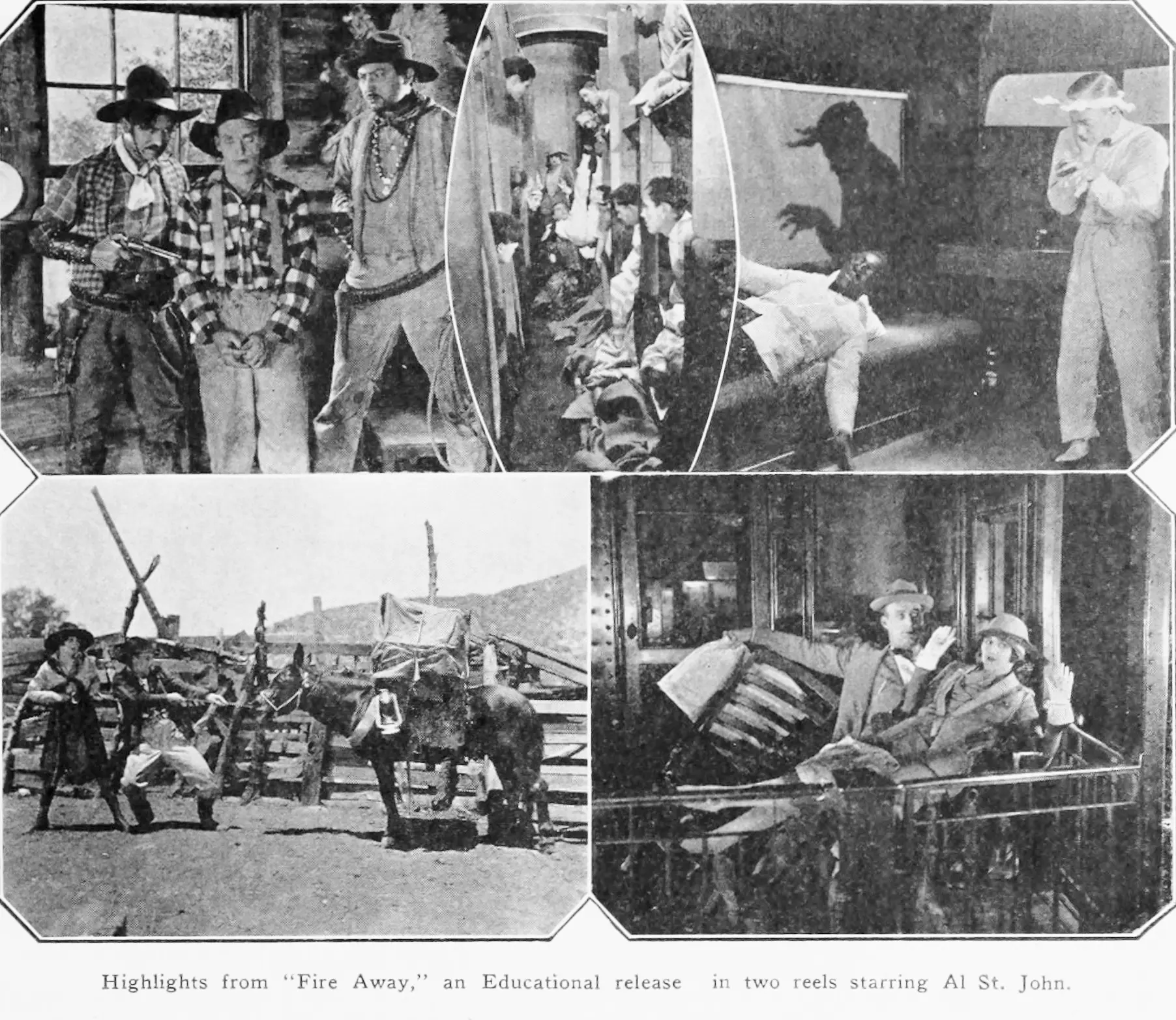
Consider the train sequence at the beginning, where the sense of travel and the vastness of the landscape are established through simple, yet effective, wide shots. The camera, largely static, acts as an observer, allowing the action to unfold within the frame. This approach, while limiting, forces the performers to be visually engaging.
The cinematography, though black and white and lacking the depth of field we've come to expect, manages to capture the essence of the 'open spaces' promised in the plot. The outdoor scenes, likely shot on location, lend an authenticity to the Western setting, even if the production values are modest. There's a particular shot of Al riding across a prairie that, despite its technical limitations, evokes a genuine sense of freedom and adventure.
One unconventional observation: the film, through its simplistic portrayal of land ownership and villainy, inadvertently highlights the burgeoning anxieties around resource acquisition in the early 20th century. The 'rich mine' isn't just a MacGuffin; it's a symbol of the era's relentless pursuit of wealth and expansion, a subtle undercurrent beneath the slapstick. This makes it more than just a silly film; it’s a time capsule of societal values.
The pacing of Fire Away is a curious mix. It starts with a relatively measured introduction, establishing Al's journey and the initial encounter. However, once the 'yegg-men' enter the picture and the abduction plot kicks into gear, the film shifts into a more frenetic, almost non-stop series of chases and comedic mishaps. This episodic structure, where one close call leads directly to another, keeps the narrative moving, albeit without much deviation from its core conflict.
The tone is overwhelmingly comedic, leaning heavily into slapstick and physical gags. Even the moments of genuine peril are quickly undercut by Al's ingenious, often ludicrous, methods of thwarting the villains. The film doesn't aim for high drama or complex emotional arcs; its sole purpose is to entertain through laughter and lighthearted adventure. It’s a clear example of early cinema's commitment to pure escapism.
There's a delightful, almost innocent quality to the humor. It relies on mistaken identities, exaggerated falls, and clever (or sometimes incredibly lucky) coincidences. For instance, the repeated thwarting of the villains, often by Al simply being in the right place at the right time, or through a series of increasingly absurd physical struggles, forms the bedrock of the film's comedic appeal. It’s simple. But it’s flawed. Yet, it works.
Yes, Fire Away is worth watching today, but primarily for specific audiences. It offers a valuable historical perspective on silent Western comedies. The film showcases early cinematic techniques and comedic styles.
It's a strong recommendation for film students, historians, and anyone deeply interested in the evolution of cinema. Casual viewers might find its pacing slow and its humor dated. However, if you approach it with an open mind and appreciation for its historical context, there's genuine enjoyment to be found in Al St. John's physical comedy and the simple, charming narrative.
“Fire Away is a delightful historical curiosity, but don’t expect a modern blockbuster. It’s a foundational chuckle, not a belly laugh.”
Fire Away isn't a forgotten masterpiece, nor does it aim to be. It's a robust, if unpolished, example of early silent-era entertainment, driven by the boisterous physical comedy of Al St. John. The film functions less as a compelling narrative for today's audiences and more as a historical document, a charming relic that illuminates the foundational elements of cinematic storytelling and genre conventions. Its value lies not in its ability to compete with modern blockbusters, but in its unapologetic commitment to the simple pleasures of a chase, a pratfall, and a clear victory of good over evil. I would argue that its historical importance far outweighs its entertainment value for a general audience, yet for the discerning viewer, it holds a unique, undeniable charm. While it may not 'fire away' with a grand cinematic statement, it certainly offers a delightful spark of nostalgia and a foundational lesson in film history. For fans of The Adventures of Ruth or Cupid the Cowpuncher, this will feel like familiar, albeit slightly more slapstick, territory. It's a film that deserves to be seen, not just watched, for what it represents: the joyous, unrefined birth of popular cinema.
IMDb —
1918
Community
Log in to comment.