DbcultAccessing Vault...
Cult Review
Senior Film Conservator
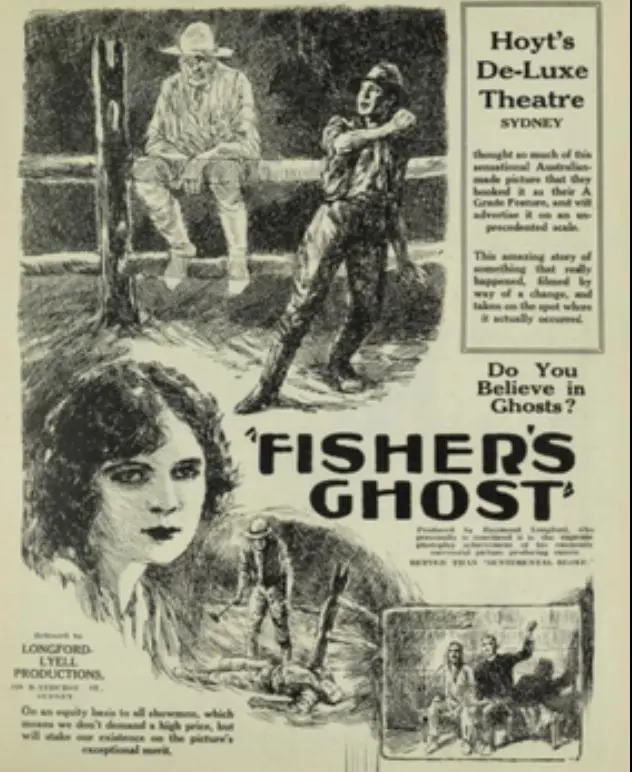
Cinema in the early twentieth century was often a battleground between the burgeoning industrial might of Hollywood and the localized, idiosyncratic voices of national identities. In the Australian context, few names resonate with as much gravitas as Raymond Longford and Lottie Lyell. Their 1924 production, Fisher’s Ghost, is not merely a retelling of a campfire legend; it is a sophisticated cinematic inquiry into the nature of truth, visibility, and the lingering scars of a convict society. While contemporary audiences might be more familiar with the slapstick antics found in The Essanay-Chaplin Revue of 1916, Longford’s work here aims for something far more atmospheric and psychologically resonant.
The film transports us to the rugged outpost of Campbelltown in 1826, a place where the line between civilization and the untamed wilderness was as thin as the celluloid it was captured on. The story of Frederick Fisher—a man who vanished only to reappear as a silent, pointing phantom—is handled with a restraint that belies the era's penchant for melodrama. Unlike the overt theatricality seen in The Witching Hour, which dealt with hypnosis and the occult through a more structured stage-to-screen lens, Fisher’s Ghost relies on the raw, topographical dread of the Australian landscape. The bush is not just a setting; it is a co-conspirator in the concealment of a crime.
The narrative architecture, penned by the legendary Lyell and Longford, avoids the pitfalls of simple ghost-hunting. Instead, it focuses on the psychological disintegration of the community. When John Farley, portrayed with a haunting sincerity by Percy Walshe, claims to have seen Fisher on the bridge, the film pivots into a study of social alienation. The skepticism of the townspeople reflects a broader colonial anxiety about the reliability of perception in a land that felt fundamentally alien to its new inhabitants.
Visually, the film is a masterclass in silent-era chiaroscuro. The use of natural light to create deep, impenetrable shadows within the eucalyptus groves provides a stark contrast to the ethereal double-exposures used to depict Fisher’s spirit. These technical flourishes, while rudimentary by today’s digital standards, possess a tactile, ghostly quality that modern CGI fails to replicate. There is a weight to the silence in this film. It is a silence that speaks of buried secrets and the inevitability of justice. One might compare the thematic weight of this moral reckoning to God's Law and Man's, though Longford’s vision is arguably more grounded in the dirt and grit of reality.
The performance of Lorraine Esmond adds a necessary layer of emotional vulnerability to the proceedings. In an era where female roles were often relegated to the background or used as mere plot devices, Esmond brings a nuanced presence that anchors the film’s more fantastical elements. The supporting cast, including Charles Keegan and William Ryan, populates the screen with faces that look as though they were carved from the very timber of the Campbelltown settlements. This commitment to authenticity is what separates Longford from his contemporaries who were content with studio-bound artifice.
When examining Fisher’s Ghost alongside other silent works like I pesn ostalas nedopetoy or the more whimsical Distilled Love, the sheer gravity of Longford’s intent becomes clear. He wasn't merely looking to entertain; he was attempting to document a national folklore in its infancy. The film shares a certain rugged individualism with Ruth of the Rockies, yet it swaps the adventure of the frontier for the haunting persistence of the past. It is a film that understands that the greatest horrors are not those that jump from the dark, but those that sit quietly on a bridge, waiting to be acknowledged.
The pacing of the film is deliberate, almost meditative. It eschews the frenetic editing of contemporary action-comedies like Smarty or the high-octane thrills of A Motorcycle Adventure. Instead, Longford allows the camera to linger on the stillness of the creek and the apprehensive faces of the search party. This creates a cumulative tension that pays off spectacularly in the final act. The discovery of the body is handled with a grim solemnity that feels startlingly modern, avoiding the sensationalism that would later characterize the horror genre.
It is impossible to discuss Fisher’s Ghost without acknowledging the profound influence of Lottie Lyell. Her contributions as a writer and editor provided the structural backbone for Longford’s visual poetry. Their partnership was the engine of the Australian film industry during its first golden age, and this film stands as one of their most intriguing, if overlooked, collaborations. While films like Colomba explored European sensibilities, Longford and Lyell were resolutely focused on the Australian vernacular. They understood that to build a national cinema, one must first confront the national ghosts.
The film also touches upon themes of class and redemption that are echoed in A Soul Enslaved and Half Breed. Fisher’s killer is not just a villain; he is a man undone by the very system that sought to establish order in a chaotic land. The jurisprudential drama that unfolds is a precursor to the complex social critiques found in later Australian New Wave cinema. The film suggests that even in a land of 'new beginnings,' the old sins have a way of surfacing, much like Fisher’s body from the silt of the creek.
Working with limited resources, the production team managed to imbue the film with a sense of scale that belies its budget. The outdoor sequences possess a documentary-like quality that captures the harsh sunlight and the abrasive textures of the Australian landscape. This realism serves to ground the supernatural elements, making the appearance of the ghost feel like a natural, if terrifying, extension of the environment. One can see similar attempts at atmospheric world-building in The Evil Eye, though Longford’s work feels more integrated and less reliant on genre tropes.
The narrative flow is further enhanced by the intertitles, which avoid excessive exposition in favor of poetic brevity. This allows the visual storytelling to remain paramount. The cast, particularly Ada St Clare and Ruby Dellew, provide a social context that enriches the central mystery. We see the impact of the tragedy on the women of the community, a perspective often missing from colonial narratives like The Heart of a Girl or Molly of the Follies. In Fisher’s Ghost, the domestic sphere is just as haunted as the bridge itself.
To watch Fisher’s Ghost today is to engage with a piece of living history. It is a reminder that the Australian film industry was born from a desire to tell stories that are uniquely tied to the land and its history. While it may lack the polished sheen of contemporary horror, its ability to evoke a sense of uncanny dread remains undiminished. It stands alongside international works like Blandt Samfundets Fjender as a testament to the power of cinema to explore the darker recesses of the human condition.
Raymond Longford’s direction is confident and visionary, steering the film away from the pitfalls of simple folklore and toward a profound meditation on justice and the afterlife. The legend of Frederick Fisher continues to haunt the Australian imagination, and this 1924 masterpiece remains its most potent cinematic incarnation. It is a work of stark beauty, a monochromatic nightmare that lingers in the mind long after the final frame has flickered out. For anyone interested in the roots of Australian storytelling or the evolution of the supernatural on film, Fisher’s Ghost is an essential, haunting experience that demands to be seen and studied.
Reviewed by the Editorial Team at CineArchive – Preserving the Phantoms of the Past.
IMDb —
1920
Community
Log in to comment.