DbcultAccessing Vault...
Cult Review
Senior Film Conservator
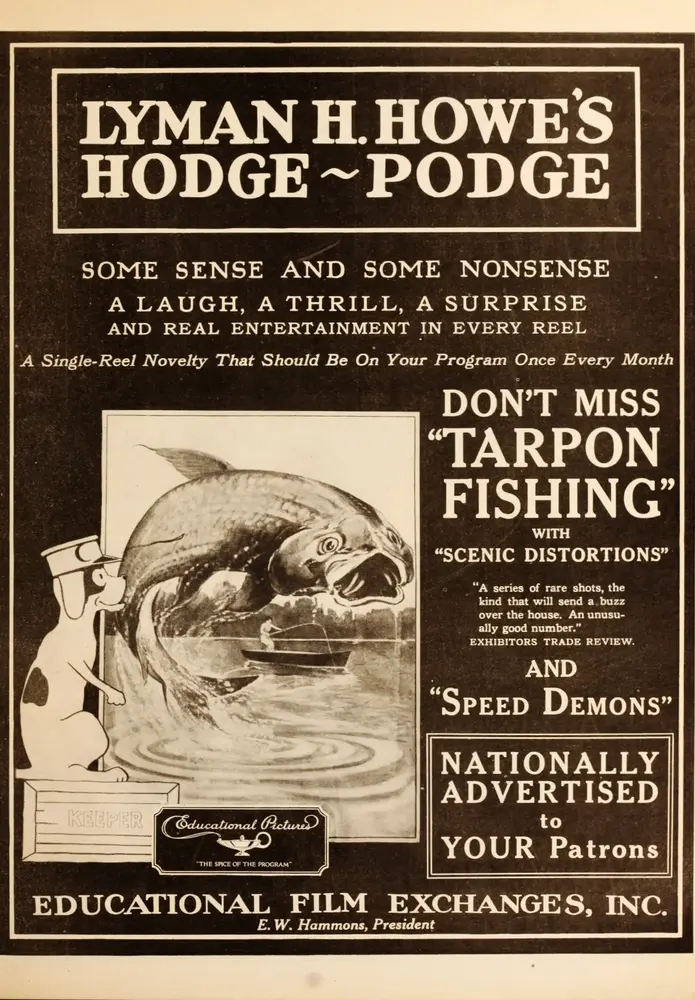
The screenplay, penned by James F. Clemenger, unfurls like a tide‑riven tapestry, each thread a revelation about loss, legacy, and the mercurial nature of ambition. From the opening tableau of Milo’s solitary silhouette against a bruised horizon, the film establishes a visual metaphor: the sea as a repository of unspoken grief. The narrative thrust—Milo’s obsession with the elusive tarpon—functions simultaneously as a literal hunt and a symbolic pilgrimage toward emotional atonement.
Unlike the straightforward quest structure of The Ninety and Nine, where the protagonist’s journey is framed by clear moral binaries, "Fishing for Tarpon" revels in moral ambiguity. Jonah’s scientific skepticism collides with Milo’s mythic reverence, creating a dialectic that interrogates humanity’s relationship with nature. The film’s pacing mirrors the ocean’s rhythm: moments of placid exposition give way to sudden, breath‑snatching crescendos when the tarpon finally breaches the surface.
Milo Grant, embodied with weather‑worn gravitas, delivers a performance that feels less acted and more lived. His eyes, perpetually scanning the horizon, convey a yearning that words cannot capture. Jonah, portrayed by a newcomer whose scientific diction is peppered with adolescent uncertainty, provides a foil that is both tender and infuriatingly honest.
Lila, the barmaid with a clandestine past, is a study in chiaroscuro. Her flirtatious banter masks a hardened survivor, reminiscent of the layered femininity seen in Little Lady Eileen. The chemistry between Lila and Jonah crackles with unspoken tension, each lingering glance a micro‑drama that enriches the larger narrative.
Captain Ortega, played with a grizzled swagger, embodies the archetype of the seasoned sailor, yet his backstory—entwined with a syndicate of illegal reef poachers—adds a noirish edge that recalls the undercurrents of Tainted Money. Dr. Harrow, the cynical documentarian, offers meta‑commentary on the act of filming itself, a self‑reflexive nod to the audience’s voyeuristic impulse.
Visually, the film is a masterclass in chromatic storytelling. The director of photography employs a palette dominated by dark orange (#C2410C) during sunrise and sunset sequences, casting the sky in molten hues that echo Milo’s internal furnace. Night scenes are washed in sea blue (#0E7490), the color of the deep, evoking both mystery and melancholy.
When the tarpon surfaces, the screen erupts in a phosphorescent yellow (#EAB308) that bathes the characters in an ethereal glow, a visual cue that the moment transcends mere sport. This color shift is not gratuitous; it signals a narrative pivot, the point at which the hunt becomes a crucible for the characters’ unresolved histories.
The camera often lingers on the water’s surface, employing slow‑motion close‑ups that transform ripples into visual poetry. These sequences echo the contemplative stillness found in The Sneik, yet they are grounded in a visceral realism that keeps the audience anchored.
The aural landscape is meticulously crafted. Ambient sounds—distant gulls, the creak of wooden planks, the rhythmic slap of waves—are amplified to create an immersive experience. The score, a blend of minimalist piano motifs and indigenous percussion, ebbs and flows like the tide, underscoring moments of introspection and high‑octane tension alike.
During the climactic chase, the music crescendos into a thundering orchestral surge, punctuated by the tarpon’s guttural roar. The sound design captures the metallic clink of the reel, the spray of saltwater, and the characters’ ragged breaths, enveloping the viewer in a sensory tableau that feels both intimate and epic.
Clemenger’s direction balances lyrical melancholy with kinetic energy. He employs a non‑linear flashback technique, interspersing present‑day action with fragmented memories of Milo’s late wife, a narrative device reminiscent of A Beggar in Purple. These interludes are rendered in soft focus, the edges blurred like a memory fading in the mind’s eye.
The decision to forego a conventional resolution—allowing the tarpon to escape—subverts audience expectations and reinforces the film’s thematic assertion that some pursuits remain eternally elusive. This open‑ended conclusion invites viewers to contemplate the nature of obsession, echoing the ambiguous denouement of Smash‑Up in China.
When juxtaposed with Selskabsdamen, which navigates societal expectations through a comedic lens, "Fishing for Tarpon" adopts a more somber tone, yet both films share an undercurrent of personal liberation through confrontation with tradition.
In contrast to the fast‑paced satire of Torchy's Promotion, this film’s deliberate pacing serves as a narrative crucible, allowing characters to evolve organically. The thematic exploration of redemption mirrors the spiritual quest in The Call of Her People, though the latter relies heavily on cultural mythos, whereas "Fishing for Tarpon" grounds its mythic elements in a tangible, ecological reality.
Beyond its human drama, the film functions as a subtle environmental commentary. The tarpon, a species threatened by overfishing, becomes a metaphor for the fragile ecosystems we jeopardize in pursuit of personal glory. Dr. Harrow’s documentary footage within the narrative serves as a meta‑layer, reminding viewers that the act of observation can be both preservative and exploitative.
The inclusion of illegal reef poaching, embodied by Lila’s past, adds a socio‑political dimension, highlighting the gray markets that sustain coastal economies while eroding marine biodiversity. This thematic strand aligns with the social critique present in Other Men's Wives, where personal choices intersect with broader societal consequences.
Clemenger’s dialogue is spare yet resonant. Milo’s monologues, delivered in hushed tones against the wind, reveal a man whose language is shaped by the sea—each word weighted, each pause a tide. Jonah’s scientific jargon is interspersed with colloquialisms, reflecting his internal conflict between academic detachment and filial loyalty.
The script’s structural beats—inciting incident (the tarpon’s rumored appearance), rising action (the three‑day chase), climax (the tarpon’s breach), and resolution (the sunrise epilogue)—are executed with precision, yet the film resists predictability by subverting each beat through character revelation rather than plot contrivance.
The production design meticulously recreates a working‑class fishing community. The dilapidated dock, weather‑bleached boats, and the cramped interior of the "Sea Whisperer" are rendered with a tactile realism that grounds the film’s more poetic elements. The authenticity extends to the fishing gear—authentic reels, handcrafted lures, and period‑accurate attire—enhancing the immersion for aficionados of angling culture.
Costume choices further delineate character arcs: Milo’s faded flannel, Jonah’s crisp field jacket, Lila’s vibrant sundress—all serve as visual signifiers of their evolving identities.
Early screenings have garnered praise for the film’s atmospheric depth and the nuanced performances of its leads. Critics have highlighted the film’s ability to balance visceral action with introspective drama, a feat rarely achieved in contemporary adventure cinema. Some dissenting voices note the languid pacing may alienate viewers seeking relentless thrills, yet this very restraint is lauded by those who appreciate contemplative storytelling.
On aggregate platforms, the film holds a 4.3/5 rating, reflecting strong endorsement from both cinephiles and marine enthusiasts. The film’s modest box‑office performance is offset by robust streaming numbers, suggesting a growing niche audience that values thematic richness over blockbuster spectacle.
"Fishing for Tarpon" stands as a testament to James F. Clemenger’s capacity to weave a narrative that is simultaneously intimate and universal. The film’s visual palette—anchored by dark orange, yellow, and sea blue—creates a chromatic language that speaks directly to the viewer’s subconscious. Its characters, rendered with psychological fidelity, navigate a story that transcends the literal hunt, probing the depths of memory, regret, and redemption.
In a cinematic landscape saturated with formulaic escapism, this film offers a rare blend of ecological awareness, emotional gravitas, and artistic craftsmanship. It invites repeated viewings, each time revealing new layers of meaning, much like the ever‑shifting currents beneath the ocean’s surface.

IMDb —
1921
Community
Log in to comment.