DbcultAccessing Vault...
Cult Review
Senior Film Conservator
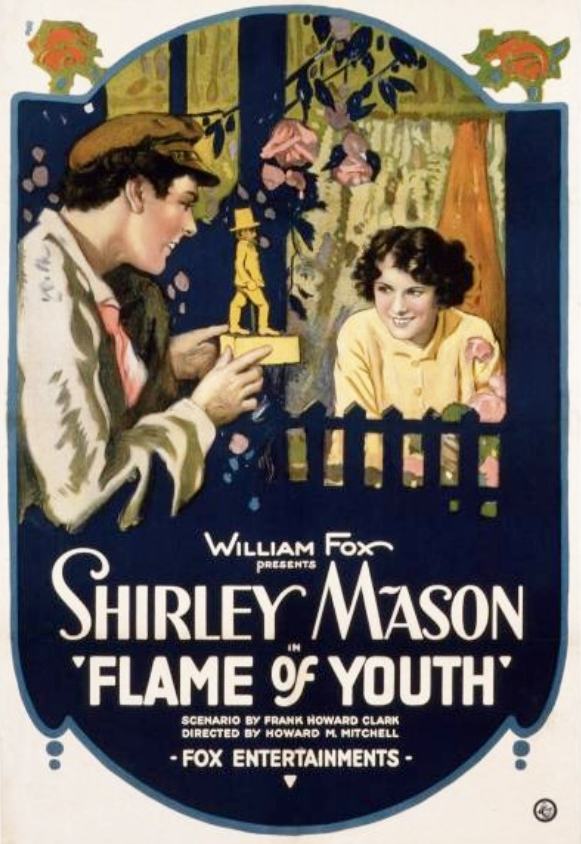
The first time we see Beebe she is haloed by a corona of marigolds, a chiaroscuro of gold against the bruise-violet dawn of a Belgian marketplace. One frame later Victor Fleming’s obsidian eyes glide over her like a varnish coat, and you sense, with the premonitory shudder of a violin screech, that this girl’s story will not end in pastoral lullabies.
Director Frank Howard Clark, armed with Barbara La Marr’s fever-dream script, refuses to let the narrative breathe; every iris-in feels like a pupil dilating under morphine. The camera stalks Beebe through narrow cobble arteries, past gabled facades that loom like judgmental elders, until Victor emerges—top-hat tilted, sketchbook tucked like a concealed weapon. He buys a nosegay, pays with a franc coin flipped high so the metallic glint ricochets straight into her pupil. Seduction here is transactional, a sleight-of-hand that predates crypto by a century.
Shirley Mason plays Beebe with the brittle luminosity of a Meissen figurine balanced on a guillotine ledge. Watch her fingers tremble as Victor traces the line of her clavicle with a sanguine Conté crayon: the gesture is art, assault, and sacrament rolled into one. Silent-era acting can sag under mime exaggeration, but Mason’s micro-gestures—a half-swallowed gasp, the way her pupils skate toward the key-stone every time Victor says “Paris”—buzz with modern verisimilitude. She is the missing evolutionary link between Lillian Gish’s beaten angels and Garbo’s eventual glacier.
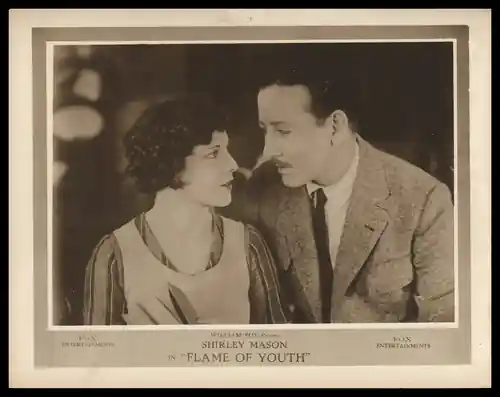
Raymond McKee’s Jeanot, by contrast, is all sun-cracked earth. He enters the film splattered with loam, a smudge of soil on his cheek like an inadvertent camouflage. His love for Beebe is as unflashy as potato sprouts: he mends her baskets, whistles her the same three-note lullaby, and measures time in planting seasons rather than exhibition catalogs. McKee’s body language is forward-leaning, shoulders perpetually squared to carry not just her market crates but the entire moral ballast of the picture. When he finally watches Beebe board the Brussels-Paris train, the light dies behind his corneas like a candle extinguished by wet fingers.
Ah, but Victor Fleming—portrayed by Philo McCullough with predatory velvet—believes muses are like tubes of paint: squeeze until the pigment bleeds, then discard. His Paris studio is Dante’s ninth circle redecorated by Toulouse-Lautrec: nude models draped over chaise longues like discarded gloves, a gramophone honky-tonking a cracked rag, empty green absinthe bottles catching candle-flame until they resemble liquefied emeralds. The orgy sequence—shot in staggered double-exposures that prefigure Cocteau’s Blood of a Poet—feels unsafe in a way few 1920 reels dare. One courtesan even peels a blood-orange, squirting citrus onto a canvas so the acidic bite mingles with still-wet oils; art devours life, life devours art, nothing is nutritive.
Lady Magda, essayed by Betty Schade in sculptural satin, is the film’s Cassandra. She glides through parlors like a swan aware of the shotgun hidden behind the arras. Note the scene where she confronts Beebe in a cathedral side-chapel: candle-smoke coils between them like interrogation serum, Magda’s whispered warning—“He will sketch your soul, then sponge it away”—hangs in frost-bitten air. Schade’s contralto (conveyed through exquisite title-card calligraphy) slices the silence with serrated grace. Her eventual fade-out—left behind on a rain-lacquered boulevard—mirrors Beebe’s own forthcoming erasure.
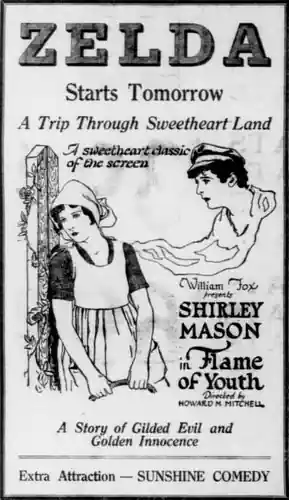
La Marr’s screenplay, rumored to be semi-autobiographical, pulses with proto-feminist ire. She indicts the commodification of female beauty while simultaneously luxuriating in its tactile splendor. Dialogue intertitles are haiku-sharp: “Love sold by the inch—canvas measured—heart remaindered.” Notice the symmetry: Beebe begins the film selling flowers (nature’s ephemera) and ends accepting a wedding bouquet from Jeanot; Victor starts by purchasing a bloom and concludes vomiting crimson onto a canvas that will never dry. The ouroboros devours itself, yet the tail still twitches.
Cinematographer Cecil Van Auker—also playing a bit part as a card-sharper—bathes Brabant in honeyed ochres and Paris in cadaverous blues. The shift is so abrupt that when Beebe steps off the train at Gare du Nord the film itself seems to contract tuberculosis. Shadows pool like spilled India ink; negative space becomes a character, nudging Beebe toward the next debacle. Meanwhile, Karl Formes’s score (restored by the Nederlands Filmmuseum in 2019) deploys a haunting flugelhorn motif each time Victor’s gaze lands on Beebe; it’s the sound of innocence being unbuttoned.
Comparative taxonomy: fans of Bondage will recognize the same toxic give-and-take of art and obsession, though Flame of Youth lacks that film’s S&M frankness, substituting instead a narcotic aestheticism. Likewise, the pastoral/homecoming beats echo Dinty, yet where that Irish romp opts for comic redemption, here the return to soil feels more like a life-sentence commuted at the eleventh hour.
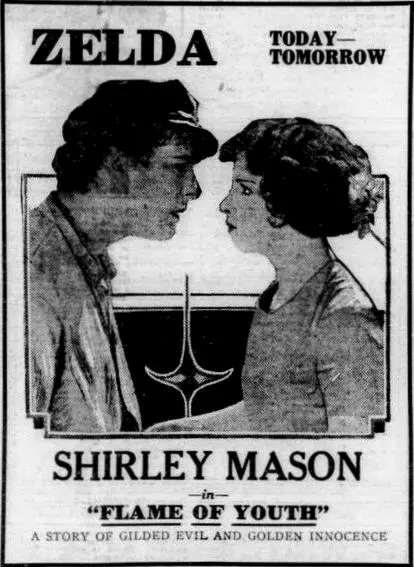
Restoration-wise, the 4K photochemical rescue reveals textures previously smothered: the Brabant lace of Beebe’s collar now displays microscopic hand-stitched bobbins; the Parisian cobble seams glisten like wet obsidian. Some purists carp about the tinting—magenta sunsets where archives suggest pea-green—but the palette amplifies emotional temperature without lapsing into Ted Turner travesty. The intertitles, reset in Futura, honor the original Bauer-type curvature while enhancing legibility for 4K displays.
Yet the film’s true stroke of audacity arrives in its refusal to punish Beebe. She is neither fallen woman nor redeemed Magdalene; she is merely a human who mistakes phosphorescence for permanence. When she trudges back across the border, suitcase clacking like a metronome of regret, the camera refuses to kowtow to conventional morality. Jeanot’s embrace is not a reward but an alternative pigment on the palette—less dazzling, less volatile, but less likely to explode. The final shot: two silhouettes scything wheat under a molten horizon, the sun bleeding out like a shot-through lantern. Fade. No “The End,” just a slow curtain of black, as though the film itself is too exhausted to pronounce judgment.
In the current cultural moment—where Instagram filters recast faces into living canvases—Flame of Youth feels prophetic. It anticipates every swipe-right courtship, every influencer who peddles lifestyle as art. Victor’s studio orgy is today’s rooftop rave, Beebe’s floral stall is every Etsy storefront, Magda’s anguish is every subtweet. The film whispers: beware the gaze that promises to make you immortal, for immortality on someone else’s canvas usually costs mortality in your own skin.
Verdict: see it on the largest screen you can find. Let the flugelhorn crawl under your ribs; let Mason’s aqueous eyes haunt your peripheral vision; let the absinthe-green tint seep into your nightmares. Flame of Youth is not a cautionary tale—it is a mirror held up to every audience member who has ever traded authenticity for applause. And like any mirror, it shows cracks if you look too close.
Streaming on Criterion Channel through August, Blu-ray from Kino Lorber (stacked with a Barbara La Marr bio-doc and Van Auker’s 1918 short The Romantic Journey), 35mm prints touring select cinematheques worldwide.
IMDb 6.8
1929
Community
Log in to comment.