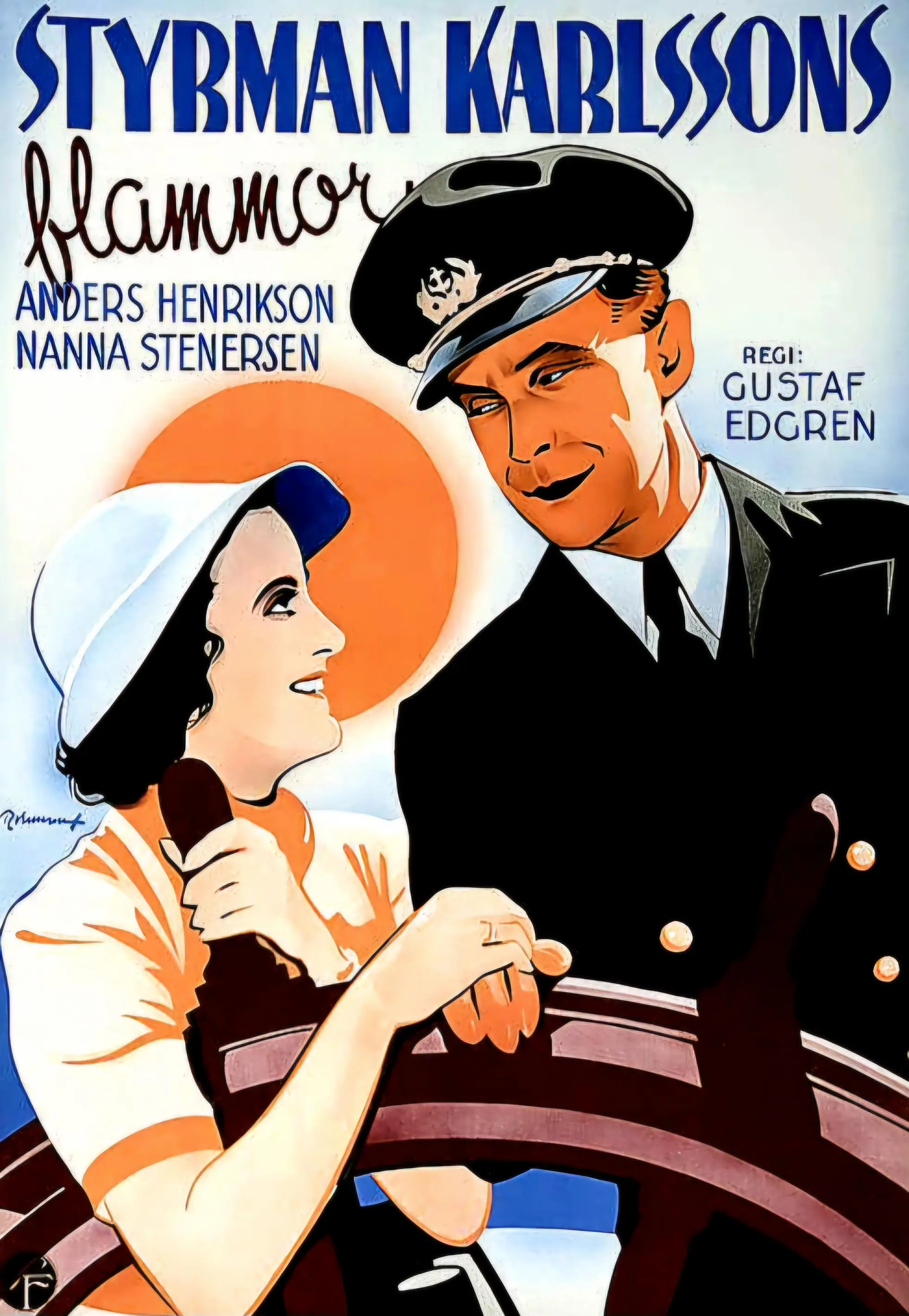
Is 'Styrman Karlssons flammor' worth your time today? Short answer: yes, but with significant caveats. This film stands as a fascinating, if sometimes challenging, relic from an earlier era of Swedish cinema. It is a journey, both for its protagonist and its audience, into a specific kind of storytelling that has largely faded from contemporary screens.
It's a film best suited for the cinematic historian, the ardent enthusiast of early 20th-century Nordic film, or anyone with a deep appreciation for the foundational efforts of narrative filmmaking. Conversely, those accustomed to modern pacing, intricate plots, and high-definition spectacle will likely find its charms elusive and its rhythm slow. This isn't a film designed for casual Friday night viewing; it demands patience and a willingness to engage with its historical context.
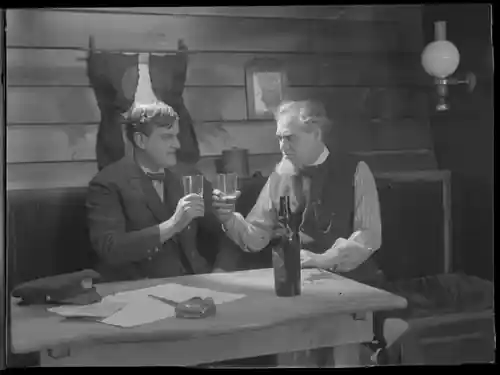
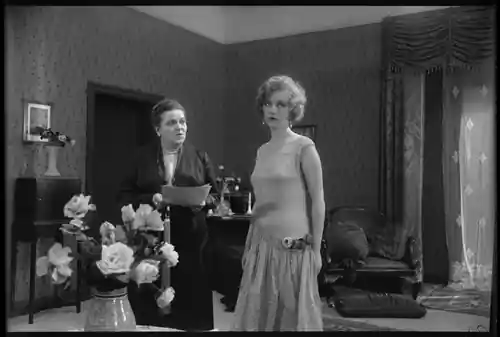
Scene from Styrman Karlssons flammor
Cinematic perspective: Exploring the visual vocabulary of Styrman Karlssons flammor (1925) through its definitive frames.
A Voyage into Early Cinema
At its core, 'Styrman Karlssons flammor' is an adventure story, a seemingly simple premise that belies the ambition often found in early cinema. We follow Karl Alfred Karlsson, portrayed with a certain everyman earnestness by Knut Lambert, as he embarks upon a grand journey across the "seven seas." This isn't a tale of complex moral dilemmas or intricate character arcs; rather, it’s an episodic exploration of the world through the eyes of a mariner, a testament to the era's fascination with global travel and the romanticized notion of life at sea.
The film’s narrative structure, penned by Sölve Cederstrand, Gustaf Edgren, and Sigge Strömberg, feels less like a tightly wound plot and more like a series of vignettes. Each port of call, each new face encountered, adds another brushstroke to the broader canvas of Karlsson's experience. This approach, while potentially frustrating for modern viewers, was a common technique in early films, allowing for a broader sweep of events without demanding deep psychological dives into characters.
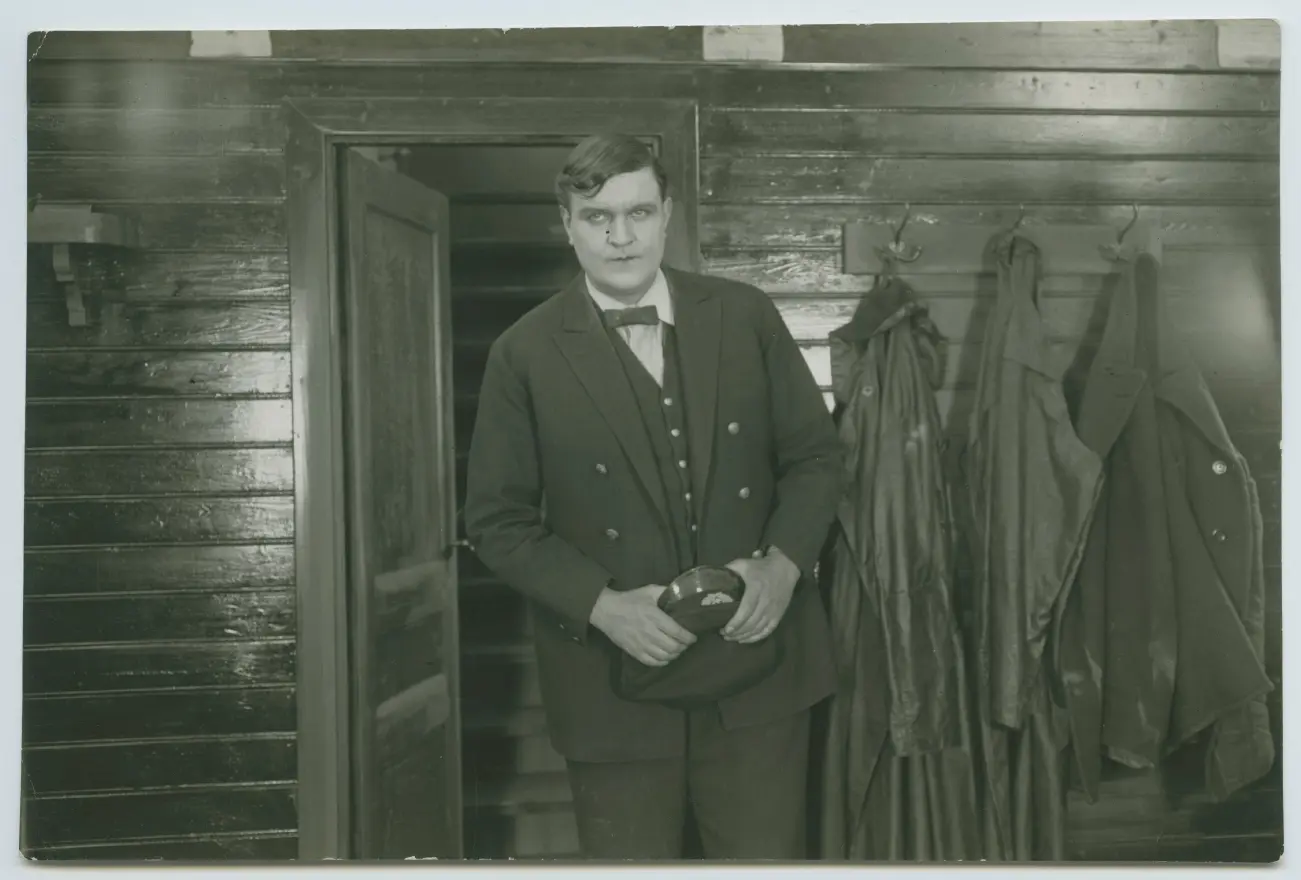
Scene from Styrman Karlssons flammor
Cinematic perspective: Exploring the visual vocabulary of Styrman Karlssons flammor (1925) through its definitive frames.
This film works because it taps into a primal human desire for escape and the romanticized notion of global travel, offering a window into a simpler, yet adventurous, cinematic past. It captures a specific innocence.
This film fails because its narrative ambition, while charming, often outstrips the technical capabilities or perhaps the available budget of its era, leading to some moments that feel more sketched than fully realized. The pacing can feel glacial.
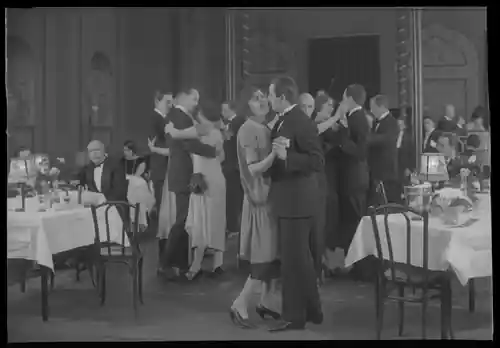
Scene from Styrman Karlssons flammor
Cinematic perspective: Exploring the visual vocabulary of Styrman Karlssons flammor (1925) through its definitive frames.
You should watch it if you possess a keen interest in the evolution of Swedish cinema, or if you simply yearn for a nostalgic, unpretentious journey across cinematic oceans, appreciating films for their historical rather than purely entertainment value.
Performance and Direction: A Look Back
Knut Lambert, as Karl Alfred Karlsson, carries much of the film's emotional weight, delivering a performance typical of the period: broad gestures, clear facial expressions, and a certain theatricality that might seem over-the-top by today's standards. Yet, within its context, it's effective. He embodies the archetype of the earnest adventurer, a man propelled by curiosity and perhaps a touch of naiveté. The supporting cast, featuring familiar names like Axel Hultman and Fridolf Rhudin, provide a vibrant tapestry of characters that Karlsson encounters. Their interactions, though often brief, add texture to his journey, depicting a world teeming with distinct personalities.
Scene from Styrman Karlssons flammor
Cinematic perspective: Exploring the visual vocabulary of Styrman Karlssons flammor (1925) through its definitive frames.
The direction, likely overseen by Gustaf Edgren (who is also credited as a writer), attempts to convey the vastness of the ocean and the exoticism of foreign lands. While specific directorial flourishes might be hard to pinpoint in surviving prints, the ambition is clear. There are moments where the film strives for visual grandeur, using what was available in terms of set design and location shooting to suggest far-flung locales. One could draw parallels to the adventurous spirit seen in earlier, equally ambitious European productions, though perhaps without the same scale as a French epic like 'Rapax' (slug: rapax).
The camera work, while static by contemporary standards, serves its purpose, framing the action clearly. It's less about dynamic movement and more about presenting a tableau. This is a common characteristic of films from this era, where the novelty of moving pictures themselves was often enough to captivate audiences. We see the world through a fixed window, observing rather than immersing.
Scene from Styrman Karlssons flammor
Cinematic perspective: Exploring the visual vocabulary of Styrman Karlssons flammor (1925) through its definitive frames.
Cinematography and Visual Storytelling
The visual language of 'Styrman Karlssons flammor' is a product of its time. Cinematography, while not boasting the fluid camera movements or intricate lighting setups of later eras, relies on clear composition and the inherent drama of its settings. We are presented with wide shots of ships at sea, bustling docks, and perhaps even some rudimentary attempts at depicting foreign landscapes. The film likely leveraged natural light extensively, giving it an authentic, if sometimes stark, aesthetic.
Consider the framing of Karlsson as he gazes out at the horizon; these moments, though simple, are powerful in their evocation of longing and discovery. They are visual metaphors for the journey itself. While it lacks the groundbreaking visual innovations of a film like 'The Avalanche' (slug: the-avalanche-1919) or the dramatic close-ups that would become more prevalent, its strength lies in its unpretentious directness. It's a snapshot of how stories were told visually before the grammar of cinema fully matured.
The use of practical effects, if any, would have been rudimentary but charming. One can imagine miniature ships sailing across painted backdrops or clever uses of perspective to create the illusion of distance. This reliance on ingenuity rather than technology gives these early films a unique, handcrafted feel that is often absent in today's CGI-heavy productions. It works. But it’s flawed. The limitations are visible.
Pacing and Tone: A Leisurely Sail
The pacing of 'Styrman Karlssons flammor' is undoubtedly slow by modern standards. Narratives unfolded at a more deliberate speed in the early 20th century, allowing scenes to breathe and audiences to absorb the visual information. This can be a significant hurdle for contemporary viewers, who are accustomed to rapid-fire editing and constant narrative propulsion. However, for those willing to adjust their expectations, this leisurely pace allows for a contemplative experience, mirroring the slow, deliberate rhythm of a long sea voyage.
The tone oscillates between lighthearted adventure and moments of earnest drama. There's a certain innocence to the storytelling, a sense of wonder that pervades Karlsson's encounters. It avoids cynicism, preferring to present the world as a place of opportunity and discovery, even if challenges arise. This optimistic outlook is a hallmark of many films from this period, a reflection of societal attitudes or perhaps a deliberate choice to provide escapism for audiences.
It’s a tonal choice that sets it apart from the more cynical or gritty adventures that would emerge decades later. Compare it to the more focused, character-driven comedy of '