DbcultAccessing Vault...
Cult Review
Senior Film Conservator
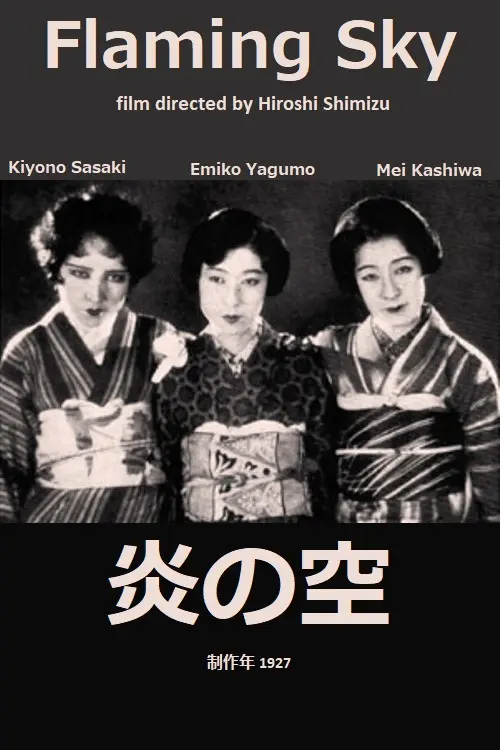
Should you seek out this nearly century-old relic today? Short answer: Yes, but only if you possess the patience of an archivist and a deep love for the foundations of Japanese social realism. This isn't a film for the casual weekend viewer looking for a popcorn thrill; it is a meticulously crafted artifact for those who want to see the DNA of future masters like Yasujirō Ozu being formed in real-time.
This film is for historians of the silent era and fans of the 'Shomin-geki' genre. It is definitely not for anyone who finds the pacing of 1920s domestic dramas tedious or those who require a high-octane plot to stay engaged.
1) This film works because it leverages the early collaborative genius of Kōgo Noda, whose ability to find profound meaning in the mundane would later define the golden age of Japanese cinema.
2) This film fails because its narrative structure can feel overly theatrical and stagnant to a modern eye, lacking the dynamic camera movement found in contemporary Western films like A Gentleman of Leisure.
3) You should watch it if you are interested in the 'Modern Girl' movement of 1920s Japan and how silent cinema captured the country’s identity crisis between tradition and Westernization.
To understand Flaming Sky, one must first understand the pen behind the lens. Kōgo Noda is a name that resonates through history, primarily for his later work with Ozu. However, in 1927, Noda was already refining his specific brand of humanism. The script avoids the histrionics common in many silent films of the era, opting instead for a grounded, almost rhythmic exploration of family dynamics.
In one standout sequence, the interaction between Mei Kashiwa and Kiyono Sasaki conveys more through a shared glance over a meal than ten pages of dialogue could achieve. It is this restraint that makes the film feel surprisingly modern. While other films of the period, such as The Mating, leaned into the melodrama of romance, Flaming Sky keeps its feet firmly planted in the soil of reality. The 'flame' in the title isn't a literal fire; it’s the burning resentment of a youth that feels its wings are being clipped by tradition.
The cinematography in Flaming Sky serves as a bridge between two worlds. We see the influence of German Expressionism creeping into the lighting—harsh shadows that cut across the traditional tatami mats—symbolizing the encroachment of the modern world. The framing is often tight, creating a sense of claustrophobia that mirrors the protagonist's emotional state.
Comparing this to the lightheartedness of Mirandy Smiles reveals a stark cultural difference. Where American silent films often sought to entertain through charm and physical comedy, the Japanese output of the late 20s, especially from the Shochiku studio, was becoming increasingly obsessed with the psychological weight of the everyday. The pacing is deliberate. It doesn't rush. It breathes. Sometimes, it breathes too much, leading to moments where the narrative tension slackens, but the visual composition usually compensates for these lulls.
Mei Kashiwa delivers a performance that anchors the entire film. In the silent era, actors often fell into the trap of 'kabuki-lite'—over-exaggerated facial expressions and wild gestures. Kashiwa resists this. Her performance is internal. When her character is faced with an arranged marriage she clearly detests, her resistance isn't shown through a tantrum, but through a subtle stiffening of the shoulders and a hollow look in her eyes.
The supporting cast, including Sôtarô Okada and Shin'ichirō Komura, provide a solid, if somewhat more conventional, backdrop. There is a specific scene involving a walk through an industrializing neighborhood where the actors must compete with the scale of the machinery. It’s a literal representation of the individual being swallowed by the collective progress of the nation. It works. But it’s flawed. The secondary characters often feel like archetypes rather than fully realized humans, a common issue in films that are trying to make a 'point' about society.
Is Flaming Sky a lost masterpiece or a dated relic?
It is a bit of both. For the average viewer, the lack of a driving, high-stakes plot will make the 1927 pacing feel glacial. However, for those interested in the evolution of visual storytelling, it is an essential watch. It captures a specific moment in time when Japanese cinema was finding its own voice, separate from both its theatrical roots and the influence of Hollywood imports like The Splendid Crime.
To truly appreciate Flaming Sky, one must look at the year it was released. 1927 was a year of immense transition. The Great Kantō earthquake was a recent memory, and the country was rebuilding both physically and culturally. The 'Modern Girl' (moga) was a figure of both fascination and fear. We see traces of this in the film’s female characters—they are no longer content to be silent observers of their own lives.
The film acts as a pressure cooker. It traps these characters in small rooms and forces them to confront the changing world outside. It’s a fascinating contrast to the more fantastical or genre-heavy films of the time, like the animated experiments of El Apóstol or the atmospheric horror of La Bruja. Flaming Sky is aggressively terrestrial. It wants you to feel the weight of the floorboards and the chill of the morning air.
Flaming Sky is a quiet, burning ember of a film. It doesn't explode with the cinematic fireworks of modern blockbusters, but it glows with a persistent, intellectual heat. While it suffers from some of the technical limitations and structural rigidities of the 1920s, the strength of its writing and its lead performance make it a vital piece of the puzzle for anyone trying to understand the trajectory of world cinema. It is a demanding watch, but for the right audience, a deeply rewarding one. It isn't a masterpiece, but it is a necessary step on the road to them.
IMDb —
1916
Community
Log in to comment.