DbcultAccessing Vault...
6/10
Senior Film Conservator
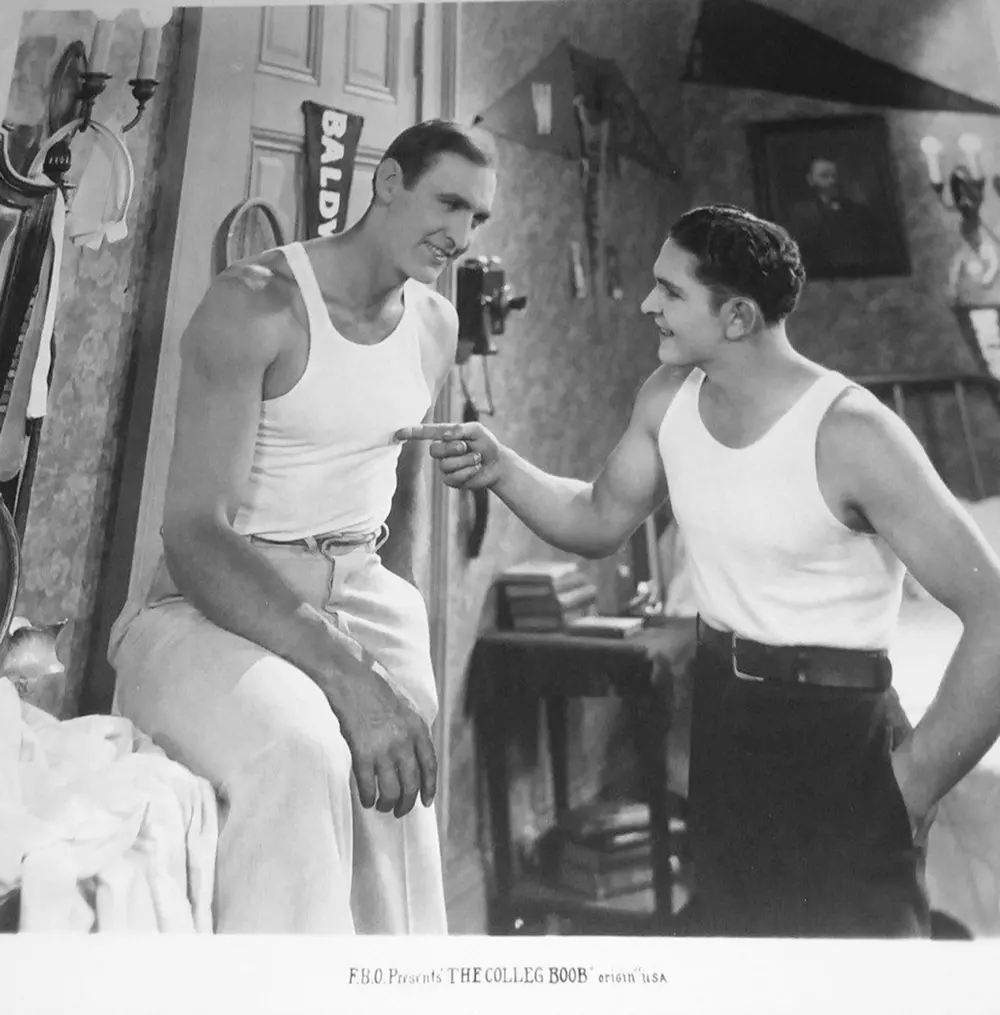
A definitive 6/10 rating for a film that redefined the boundaries of cult cinema. The College Boob remains a cornerstone of transgressive art.
Is 'The College Boob' worth watching today? Short answer: yes, but with significant caveats that demand a certain appreciation for the era. This film is a fascinating artifact for silent film enthusiasts, cinephiles interested in the formative years of Hollywood, and those curious to witness the early screen presence of a young Jean Arthur.
It is decidedly NOT for audiences seeking modern pacing, complex character arcs, or sophisticated humor, nor for those who find the conventions of silent cinema a barrier to entry. If you demand immediate gratification or high-octane narrative thrills, you will likely find its charms elusive.
This film works because of its surprisingly enduring underdog narrative, the charming physical comedy of William Malan, and its historical value as a snapshot of collegiate life and comedic tropes of the late 1920s. It offers a genuine, albeit simple, warmth.
This film fails because its humor is often broad and dated, the pacing can feel sluggish to contemporary viewers, and its plot, while foundational, is entirely predictable. The narrative beats are telegraphed miles in advance, leaving little room for genuine surprise.
You should watch it if you appreciate silent comedies, are a fan of early Hollywood, or want to see a foundational example of the "fish out of water" and "boob becomes hero" narrative. It’s a time capsule, plain and simple.
'The College Boob,' a 1926 silent film, plunges us into the familiar, yet strangely archaic, world of collegiate life nearly a century ago. Directed with a straightforward simplicity common to its era, the film presents Aloysius "Ally" Appleby, played by the amiable William Malan, as our central innocent abroad. Ally's journey from a sheltered small town to the bustling Baldwin College is the kind of narrative bedrock that countless comedies have built upon, from the silent era to the present day.
The premise, while simple, is effective: a promise to doting relatives (Aunt Polly and Uncle Lish) to abstain from sports, immediately setting up a conflict against Ally's obvious physical prowess. It’s a classic setup, a ticking clock of inevitable breakage, but it’s handled with a particular silent-era earnestness that, for all its lack of subtlety, retains a certain charm.
The film’s historical significance lies not just in its age, but in its encapsulation of popular entertainment tropes of the 1920s. Campus comedies were a burgeoning genre, and 'The College Boob' delivers exactly what its title promises: a good-natured oaf who, through a series of mishaps and misunderstandings, stumbles into heroism. It’s a formula that still resonates, proving its fundamental appeal.
William Malan, as Ally Appleby, carries the film with an earnestness that is both his greatest strength and occasional weakness. His portrayal of Ally is a masterclass in physical comedy, relying on broad gestures and exaggerated expressions to convey the character's innocence, bewilderment, and eventual triumph. When Ally is tricked into wearing a ludicrous outfit at the "pep" dance, Malan’s crumpled posture and wide-eyed confusion perfectly capture the sting of public humiliation.
However, it is in Ally's transformation that Malan truly shines. The moment he sheds his embarrassment to defend himself and, more importantly, Angela, with his fists, is genuinely satisfying. It’s a primal release, a moment where the "boob" finds his backbone. This scene, though silent, speaks volumes about the character’s internal shift and the audience’s desire for justice.
The character of Ally himself, an unwitting powerhouse constrained by an oath, taps into a universal fantasy: the underestimated individual who, against all odds, rises to the occasion. It's the same core appeal found in countless narratives, from the earliest myths to modern blockbusters. Malan’s performance, while broad, is undeniably effective in embodying this archetype.
The screenplay by Jack Casey and Gerald C. Duffy is robust in its construction of classic comedic conflict, even if it lacks the intricate layering of later eras. They establish clear antagonists in Horatio Winston (Bob Steele), a jealous senior, and a clear motivation for Ally in his burgeoning affection for Angela Boothby (Jean Arthur).
The narrative progression is linear and predictable, but this isn't necessarily a flaw for a film of this vintage. Silent films often relied on clear, easily digestible plot points to ensure audience comprehension without spoken dialogue. The pacing, however, can feel somewhat deliberate by today's standards. Scenes tend to linger a beat longer than modern editing dictates, a common characteristic that requires a recalibration of viewer expectations.
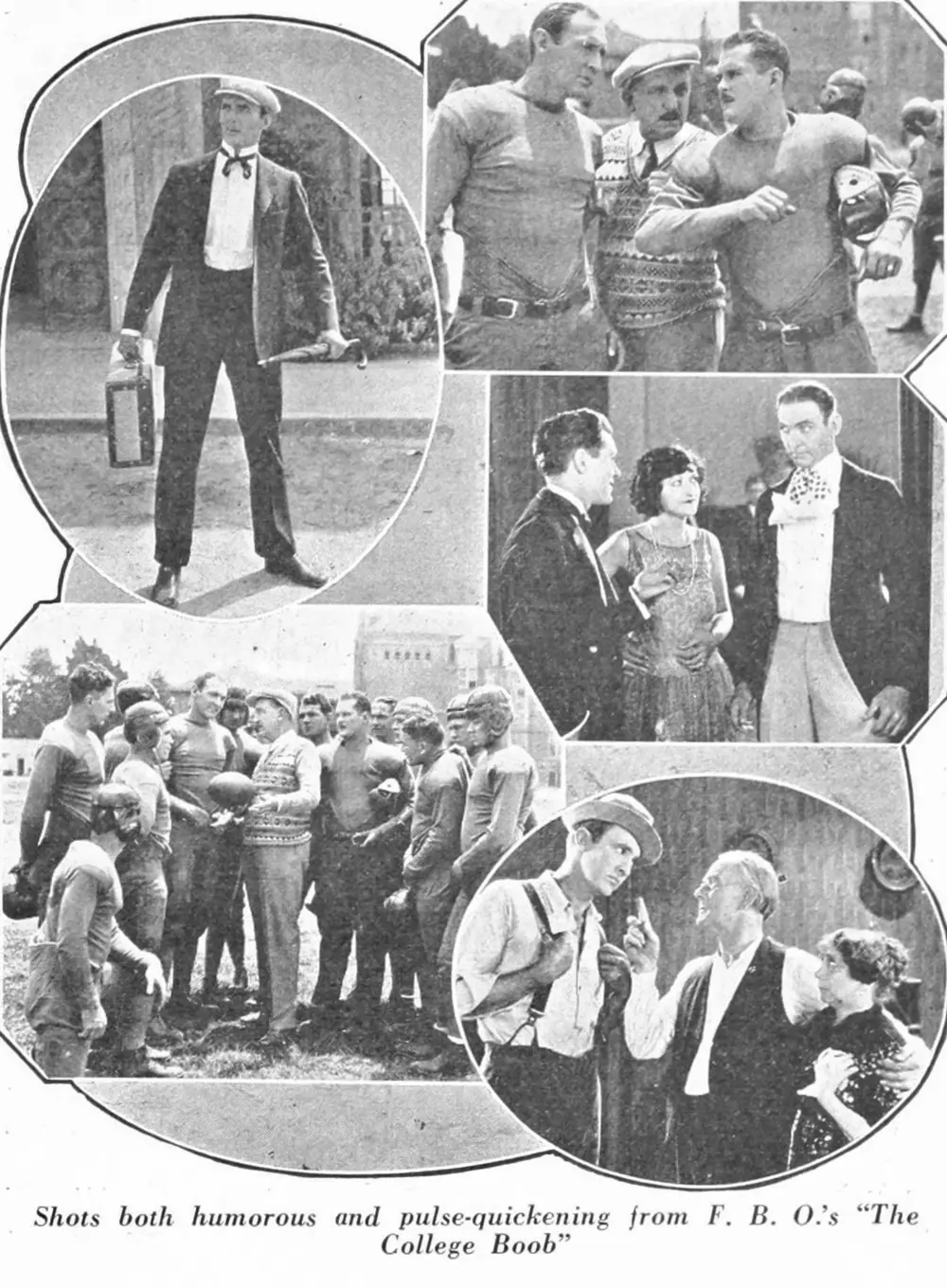
The direction, though uncredited, effectively utilizes visual storytelling. Close-ups emphasize emotional reactions, particularly Malan's shifts from naiveté to anger, and the use of intertitles is generally well-judged, providing necessary exposition without overwhelming the visual flow. One particular strength is the way the camera captures the dynamic energy of the football sequences, even if the action itself feels somewhat staged compared to contemporary sports cinematography.
Silent comedies, for all their charm, often struggle to maintain comedic momentum without the aid of spoken dialogue, and 'The College Boob' is no exception. Its humor relies heavily on slapstick and situational irony, which can feel repetitive over its runtime.
Beyond Malan, the film’s most significant draw for modern audiences is undoubtedly the early appearance of Jean Arthur as Angela Boothby. Even in this relatively minor role, Arthur exhibits the nascent sparks of the screen presence that would make her a beloved star in the talkies.
Her Angela is initially Horatio’s girl, but her quick shift of allegiance to Ally, especially after witnessing his humiliation and subsequent defense, feels authentic and earned. Arthur’s expressions, even without dialogue, convey a compelling mixture of empathy, disapproval for Horatio, and growing admiration for Ally. It’s a performance that hints at the future intelligence and spunk she would bring to iconic roles in films like Mr. Smith Goes to Washington.
Jimmy Anderson as Shorty Buzelle provides reliable comic relief as Ally’s exasperated roommate, a classic foil character whose reactions mirror the audience’s own amusement and occasional disbelief at Ally’s antics. Bob Steele, as the villainous Horatio, is suitably sneering, embodying the arrogant college bully with conviction. The chemistry between Malan and Arthur, though understated, is palpable, giving the romantic subplot a foundational sweetness that grounds the broader comedy.
The cinematography, typical of the era, is functional rather than overtly artistic. Shot in black and white, the film effectively uses lighting to delineate characters and create atmosphere, though it rarely ventures into visually experimental territory. The college setting is adequately conveyed, with a mix of interior and exterior shots that establish a sense of place without being overly elaborate.
The film's tone is overwhelmingly lighthearted and optimistic, even during moments of Ally’s humiliation. There’s an innocence to the proceedings, a reflection of a pre-Depression, pre-Code era where cinematic morality was simpler and outcomes were almost always happy. This unwavering optimism, while perhaps simplistic, contributes to its enduring charm as a comfort watch for those who appreciate the uncomplicated narratives of early cinema.
One unconventional observation is how 'The College Boob' inadvertently highlights the cultural shift in collegiate sports. The casual way Pop Warren, the football coach, 'discovers' Ally, and the relatively low-stakes nature of the games (until the very end), feels quaint compared to the hyper-professionalized world of college athletics today. It’s a fascinating, if unintentional, peek into a bygone era of amateurism.
For those with an open mind and a fondness for film history, 'The College Boob' absolutely warrants a viewing. It’s a foundational text for the campus comedy genre. It showcases early talent. It’s a snapshot of a different time.
However, it requires patience. The pacing is deliberate. The humor is often broad. Modern viewers accustomed to rapid-fire dialogue and complex visual effects might find it a slow burn. Its greatest value lies in its historical context and the performances of its leads, particularly Malan’s physical comedy and Arthur’s nascent star power.
If you are seeking a profound cinematic experience or a film that challenges conventional narrative structures, this is not it. If you wish to understand the roots of cinematic comedy and appreciate the charm of silent storytelling, then 'The College Boob' offers a surprisingly engaging, if undemanding, experience. It works. But it’s flawed.
'The College Boob' is more than just a relic; it's a foundational text in the history of American screen comedy. While it undeniably shows its age in terms of pacing and comedic sensibilities, its core narrative of an underestimated outsider finding his strength remains timeless.
William Malan delivers a performance that, though broad, is infused with a genuine likability, and the glimpses of Jean Arthur’s nascent star power are worth the price of admission alone for any serious cinephile. It’s not a masterpiece, and certainly not for everyone, but as a piece of cinematic history and a charming, if somewhat plodding, comedy, it holds its own.
Consider it a valuable educational experience, a pleasant distraction, or a curious case study in the evolution of film. Just don't expect it to redefine your understanding of cinema. It’s a solid, if unspectacular, score for the silent era.
IMDb —
1918
Community
Log in to comment.