DbcultAccessing Vault...
Cult Review
Senior Film Conservator
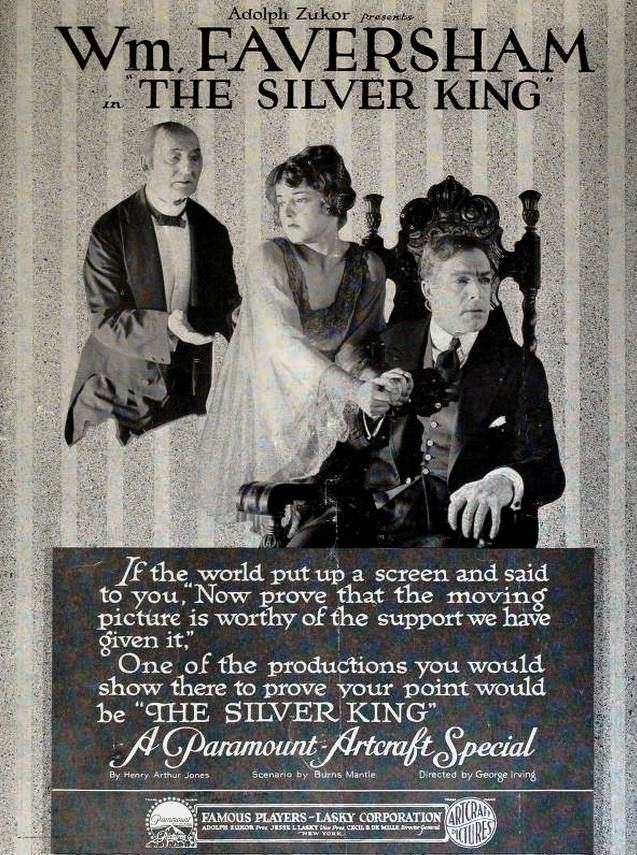
When the silver screen first flickered with The Silver King, audiences were greeted by a tableau that seemed to echo the very cadence of Edwardian propriety. John Sunderland’s Wilfred Denver arrives on screen with the poise of a man who has never known the sting of poverty, his crisp tuxedo a visual metaphor for the immaculate façade he clings to. Helen Meyers, as Nellie, embodies the luminous ideal of a wife whose smile could illuminate even the most shadowed drawing‑room. Yet beneath the polished veneer lies a simmering cauldron of resentment, embodied by Robert Ayrton’s Geoffrey Ware, whose brooding stare suggests a man perpetually teetering on the brink of moral collapse.
Denver’s financial ruin is not merely a plot device; it is the axis upon which the entire narrative pivots. The script, co‑authored by Henry Herman and Henry Arthur Jones, treats debt as a character in its own right—an omnipresent, invisible antagonist that gnaws at the edges of every decision. When Denver’s fortunes begin to wilt, the audience witnesses a transformation that is both tragic and oddly liberating. The once‑confident gentleman becomes a man hunched over ledgers, his once‑steady hand now trembling with the weight of unpaid obligations. This descent is rendered with a subtlety that recalls the quiet desperation of Old Heidelberg, where personal crisis is conveyed through restrained performance rather than melodramatic outcry.
Robert Ayrton’s portrayal of Ware is a study in restrained menace. He never raises his voice; his fury is a low, persistent hum that reverberates through each scene. The tension between him and Sunderland is palpable, a chess match where each glance is a move, each pause a calculated threat. Ware’s motivations are layered: jealousy, wounded pride, and perhaps a lingering affection for Nellie that refuses to die. In moments where the camera lingers on his clenched jaw, the audience can almost taste the metallic tang of his simmering rage. This nuanced antagonism invites comparison to the calculated villainy of The Devil, where the threat is never overt, but ever‑present.
Helen Meyers’ Nellie is more than a decorative love interest; she is the emotional fulcrum that steadies the narrative’s tumultuous swing. Her loyalty to Denver, even as his world collapses, is portrayed with a stoic grace that evokes the quiet fortitude of Barbara Castleton’s characters in contemporaneous dramas. Yet Nellie is not blind. Her eyes, often cast toward the window, hint at an inner dialogue—a yearning for stability that clashes with the chaotic storm surrounding her husband. In one of the film’s most poignant moments, she whispers a promise to Denver, her voice barely audible over the crackle of the projector, a scene that resonates with the same tender melancholy found in My Wife.
The cinematography of The Silver King employs chiaroscuro to accentuate the moral dichotomies at play. Darkened interiors, punctuated by shafts of amber light, mirror Denver’s descent into financial darkness while simultaneously illuminating the flicker of hope that Nellie clings to. The occasional use of sea‑blue tones—most evident in the river scenes where Denver contemplates his fate—offers a visual respite, a symbolic reminder of the possibility of redemption. This palette choice is reminiscent of the visual language employed in The Canyon Hold‑Up, where color is wielded not merely for aesthetic pleasure but as an emotional compass.
The film’s supporting cast provides a rich tapestry of secondary narratives that enhance the central drama. William Faversham’s portrayal of the shrewd solicitor, whose counsel oscillates between benevolent guidance and merciless exploitation, adds a layer of legal intrigue that deepens the stakes of Denver’s fiscal crisis. Lawrence Johnson, as the loyal but weary valet, offers moments of quiet comic relief—his dry wit a brief respite from the film’s relentless tension. Meanwhile, the enigmatic presence of Nadia Gary as a mysterious benefactor hints at an undercurrent of societal commentary: the precarious position of women who wield influence behind the scenes, much like the unseen hand of fate itself.
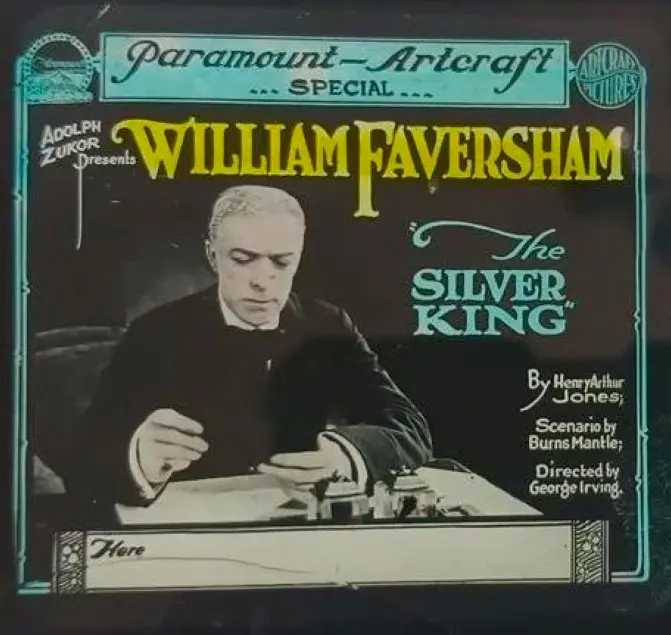
The screenplay unfolds with a deliberate cadence, each act building upon the last with a measured sense of inevitability. The opening act establishes the idyllic marriage, the middle act plunges Denver into a vortex of debt, and the final act culminates in a confrontation that feels both inevitable and startlingly fresh. This tripartite structure mirrors the classic three‑act model championed by Burns Mantle, yet the film subverts expectations by allowing characters to evolve in ways that defy conventional morality. Denver’s eventual acceptance of his culpability, rather than a triumphant redemption, leaves the audience with a lingering sense of bittersweet realism.
When placed beside its contemporaries, The Silver King distinguishes itself through its unflinching examination of class and financial ruin. While Raffles, the Amateur Cracksman dazzles with its heist‑centric bravado, Denver’s struggle is far more intimate, rooted in the quotidian anxieties of a man whose world is built upon credit and reputation. The film also shares thematic DNA with He Got His, where personal ambition collides with societal expectations, but The Silver King leans more heavily into the emotional toll of those collisions.
John Sunderland delivers a masterclass in restrained anguish. His performance is not marked by overt melodrama; instead, his eyes betray a soul teetering on the edge of collapse. In a scene where Denver reads a foreclosure notice, Sunderland’s subtle twitch of the left eyebrow conveys more than a thousand words. Robert Ayrton’s Ware, meanwhile, is a study in controlled fury; his clenched fists remain hidden, yet the audience can feel the kinetic energy coiled within. Helen Meyers, perhaps the film’s most under‑appreciated asset, infuses Nellie with a quiet strength that never veers into melodramatic hysteria.
At its core, The Silver King interrogates the notion that financial solvency is synonymous with moral integrity. Denver’s descent illustrates how the pursuit of wealth can erode personal ethics, while Ware’s vengeful machinations reveal how resentment can be weaponized when one feels disenfranchised. The film posits that true nobility lies not in the accumulation of assets but in the willingness to confront one’s failures with humility—a message that reverberates with modern audiences still grappling with economic uncertainty.
Produced in the twilight of the silent era, the film captures the zeitgeist of a Britain emerging from the shadows of World War I. The pervasive anxiety about financial stability, the shifting dynamics of class, and the evolving role of women in society are all subtly woven into the narrative fabric. Nellie’s quiet assertiveness mirrors the growing empowerment of women during the 1920s, while Denver’s desperation reflects a nation grappling with the aftershocks of economic upheaval.
In the grand tapestry of early twentieth‑century cinema, The Silver King occupies a niche that is both intimate and expansive. Its deft blend of character study, social commentary, and visual storytelling renders it a film that rewards repeated viewings. Whether one is drawn to the intricate performances, the nuanced cinematography, or the resonant themes of love, debt, and redemption, the film offers a rich banquet for the discerning eye. For those seeking a cinematic experience that transcends its era, this silent masterpiece remains a compelling, if under‑celebrated, gem.

IMDb —
1927
Community
Log in to comment.