DbcultAccessing Vault...
Cult Review
Senior Film Conservator
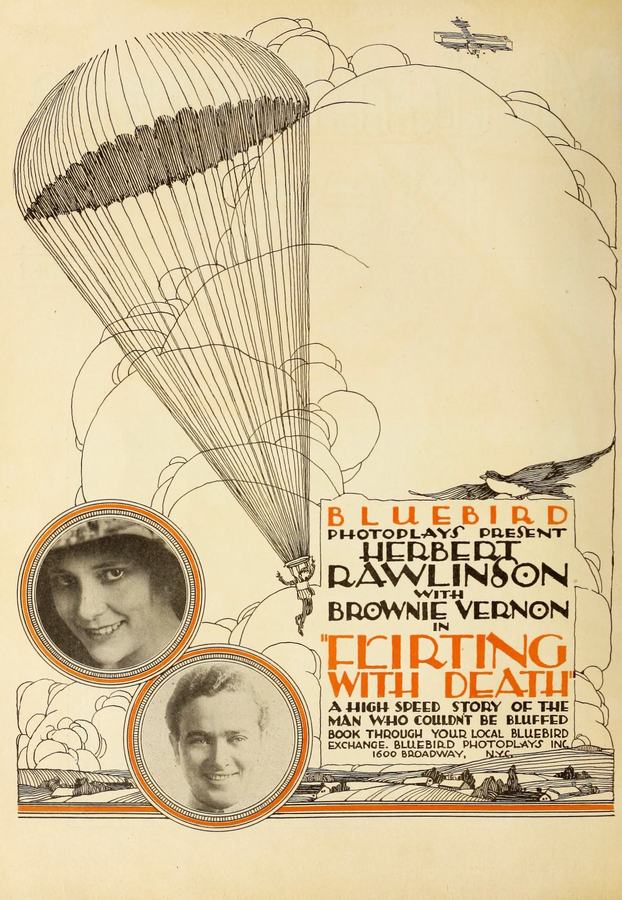
The first time I watched Flirting with Death I expected flapper frivolity; instead I got a celluloid poem stitched from bailing wire and prayer. Director Edward Sedgwick—never shy of velocity—opens with a biplane spiraling inside a circus tent, wings clipped by canvas shadows, the crash rendered in silhouettes that feel like cave paintings for the Machine Age. The projector’s staccato flicker is a heartbeat we share with the aviator; when it stops, the silence is obscene.
Enter Billy Wardell, carnival barker of the clouds, played by Herbert Rawlinson with the elastic smirk of a man who has sold gravity on layaway. Rawlinson, once a real-life stunt pilot, moves as though his joints are rigged to guy-wires; every gesture is a negotiation with the ground. His chemistry with Fred Unger’s Domino—equal parts Harpo and card-shark—gives the picture its jazz rhythm: Domino’s shuffle-and-deal hands are a metronome for the plot’s sleight-of-mind.

Once the narrative hops the freight to Higgenbotham’s town, the film trades sawdust for sacramental pie steam. Agnes Vernon’s Jane is no farmer’s-daughter cliché; she ladles sugar into crust with the same solemnity one might pour communion wine. Notice how cinematographer Reggie Lanning lenses her first close-up: a curtain of dawn light slices across her face like the blade of a promise. Billy, mouth full of berries, glimpses salvation and knows the con is over—he’s about to hustle himself into honesty.
The script, by Waldemar Young, is a Swiss watch full of bent forks. When Billy invents the “aerochute stock company,” the film stages capitalism as carnival mid-way: farmers fork over egg money for mimeographed certificates illustrated with doodles of angels wearing parachutes. The montage is Eisenstein by way of barn dance—intercutting chickens, prayer books, and a brass band that tootles like a drunk calliope. It’s American aspiration rendered as three-card monte.
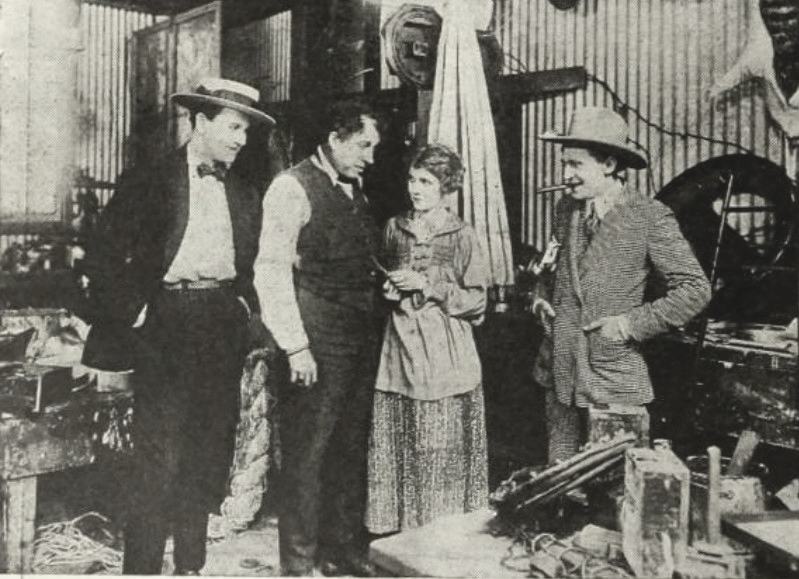
Ed Warmbath, the spurned rival, arrives wearing civic virtue like an ill-fitting store coat. Played by Mark Fenton with the rigid spine of every small-town scold, he embodies the film’s awareness that respectability can be the sharpest grift. His revelation of Billy’s jailbreak past triggers a town-hall scene worthy of Dreyer: faces lit by guttering oil lamps, mouths forming a Greek chorus of foreclosure. The camera dollies backward as if ashamed, leaving Jane center-frame, her trust evaporating in real time.
And then the jump. The plane—“Old Murph’s Folly”—is a patched Jenny that looks held together by spit and hymnals. Inside the cockpit Murphy, essayed by Frank MacQuarrie, swigs from a pocket flask shaped like a miniature dirigible; his eyes are twin wrecking balls. The aerial footage, shot over California’s San Fernando Valley, intercuts daredevil wing-walking with close-ups of Billy’s knuckles whitening on the strut. When he lets go, the world tilts; the parachute unfurls in hand-tinted cobalt and saffron, a silk chrysalis against bruised sky. On the ground the townsfolk tilt their heads as if witnessing transubstantiation. The descent is twenty seconds; the redemption feels eternal.

Silent-era aviation pictures often fetishize hardware; Flirting with Death fetishizes aftermath. Notice how the final embrace is staged in a wheat field, not a hangar. Jane runs between furrows, her dress catching chaff like stardust; Billy, still smelling of parachute silk, meets her halfway. The camera pirouettes 360 degrees—an homage to the opening crash—yet this time the motion is resurrection, not ruin.
Rawlinson’s acting philosophy seems borrowed from barometric pressure: he expands when the plot thins, contracts when stakes compress. Watch the micro-shift in his eyes during the shareholder meeting—how the glib patter falters a half-beat after Jane’s father confesses bankruptcy. It’s a blink-and-you-miss-it admission that the grifter has skin in the game. Vernon, for her part, underplays; she trusts the camera to magnify the tremor in her pie-floured fingers when Billy’s warrant is read aloud. The result is chemistry that feels documented rather than performed.
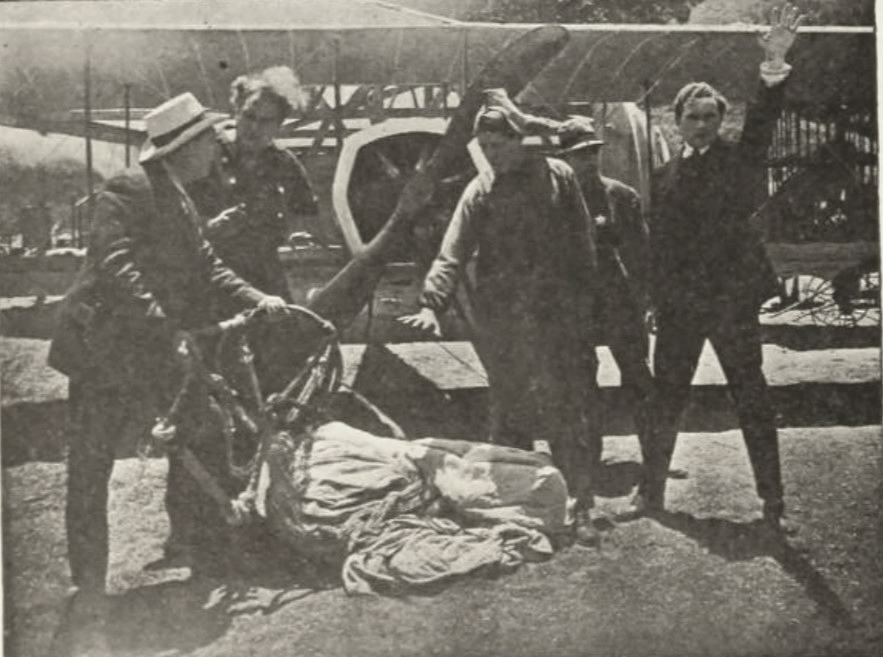
Lanning and Sedgwick collaborate on a visual dialectic: interiors suffocate in chiaroscuro, exteriors exhale in luminous nitrate. The jailbreak sequence alternates high-key moonlight with velvet cell shadows—a yin-yang that predicts film noir a decade early. Compare this to the pastoral optimism of The Virginian or the urban swagger of One Shot Ross; here the frontier is vertical, a sky to be conquered by both saints and hucksters.
Restoration screenings often pair the film with new scores; my favorite is the 2019 San Francisco Silent Film Festival commission—a brass quintet that channels barnstormer ragtime. When the aerochute deploys, the trumpets hold a suspended chord that seems to stretch the screen itself. If you can’t catch a live orchestra, queue up “Cloudburst” by Erik Friedlander; its pizzicato mimics the ratchet-click of the parachute unfolding.
Where Triumph moralizes about aviation valor and The Crimson Wing wallows in wartime spectacle, Flirting with Death treats flight as metaphysical punchline: the only way to fall is into grace. Its DNA echoes through The Fugitive’s redemption arc and even Preston Sturges’ Hail the Conquering Hero, where civic hypocrisy is skewered by the very everyman it pretends to sanctify.
The 4K restoration by UCLA Film & Television Archive sources a 35mm nitrate print discovered beneath a Fresno theater floorboard. Grain swarms like amber gnats, but the hand-tinted parachute survives in citrus and indigo glory. Kino Classics’ Blu-ray offers a commentary by aviation historian John M. Smith who notes that the Jenny serial number matches a craft crashed by Ormer Locklear in 1920. Digital editions stream via FilmStruck-Nostalgia and Kanopy; beware fuzzy public-domain rips that drain the cobalt sky to dishwater.
Flirting with Death is a 63-minute sermon on the gospel of risk, preached from a rickety cockpit. It argues that identity—like altitude—is a matter of adjustable trim, that a man can fall out of the sky and land inside his own best self. The film’s greatest stunt isn’t the parachute leap; it’s the conviction that a grift, aerated by love, can become civic sacrament. When the end card fades, you may find your hand instinctively reaching for the nearest pie, searching for cinnamon, for forgiveness, for the nerve to jump.
IMDb 5.4
1924
Community
Log in to comment.