DbcultAccessing Vault...
Cult Review
Senior Film Conservator
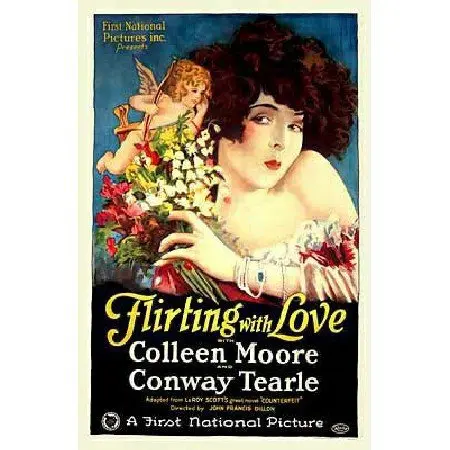
The year 1924 marked a pivotal juncture in the evolution of American silent cinema, a period where the industry began to shed its melodramatic infancy for the sophisticated, self-reflexive narratives of the Jazz Age. At the heart of this transition stands Flirting with Love, a film that functions as both a vehicle for the effervescent Colleen Moore and a sharp-edged critique of the moral gatekeeping that plagued the era's artistic landscape. Directed with a keen eye for social nuance, the film navigates the treacherous waters of reputation and artifice, presenting a story that is as much about the construction of identity as it is about the traditional romantic arc.
The narrative engine is fueled by the collision between Gilda Lamont, an actress of immense potential, and Wade Cameron, a man whose very title—Chairman of the Better Plays Society—evokes a sense of stifling Victorian residue. When Cameron shutter's Gilda's first major production on moral grounds, he isn't just stopping a play; he is challenging the autonomy of the female artist. This conflict sets the stage for a psychological game of cat and mouse that mirrors the thematic depth found in other 1920s explorations of social masks, such as The Misleading Lady, where gender roles are similarly weaponized for romantic and social dominance.
Colleen Moore, often remembered as the quintessential flapper, demonstrates a range here that transcends the bobbed-hair stereotype. As Gilda, she is required to play a character playing a character—a double-layered performance that demands precision. Her transition from the indignant, scorned actress to the mysterious, confidence-winning interloper is handled with a deftness that avoids the pitfalls of broad caricature. Unlike the more straightforward romantic archetypes found in The Girl of My Dreams, Moore’s Gilda is a woman of agency and strategic intellect. She understands that in Cameron’s world, truth is a liability, and artifice is the only currency that buys access.
The chemistry between Moore and Conway Tearle is palpable, providing a necessary friction that prevents the film from descending into mere farce. Tearle, who often brought a stoic, almost brooding presence to his roles—much like his performance in The Wolf Man (1923)—serves as the perfect foil to Moore’s kinetic energy. His Wade Cameron is not a villain in the traditional sense, but rather a victim of his own rigid social programming. The way he gradually softens, unaware (or perhaps subconsciously aware) of Gilda’s ruse, provides the film’s most human moments.
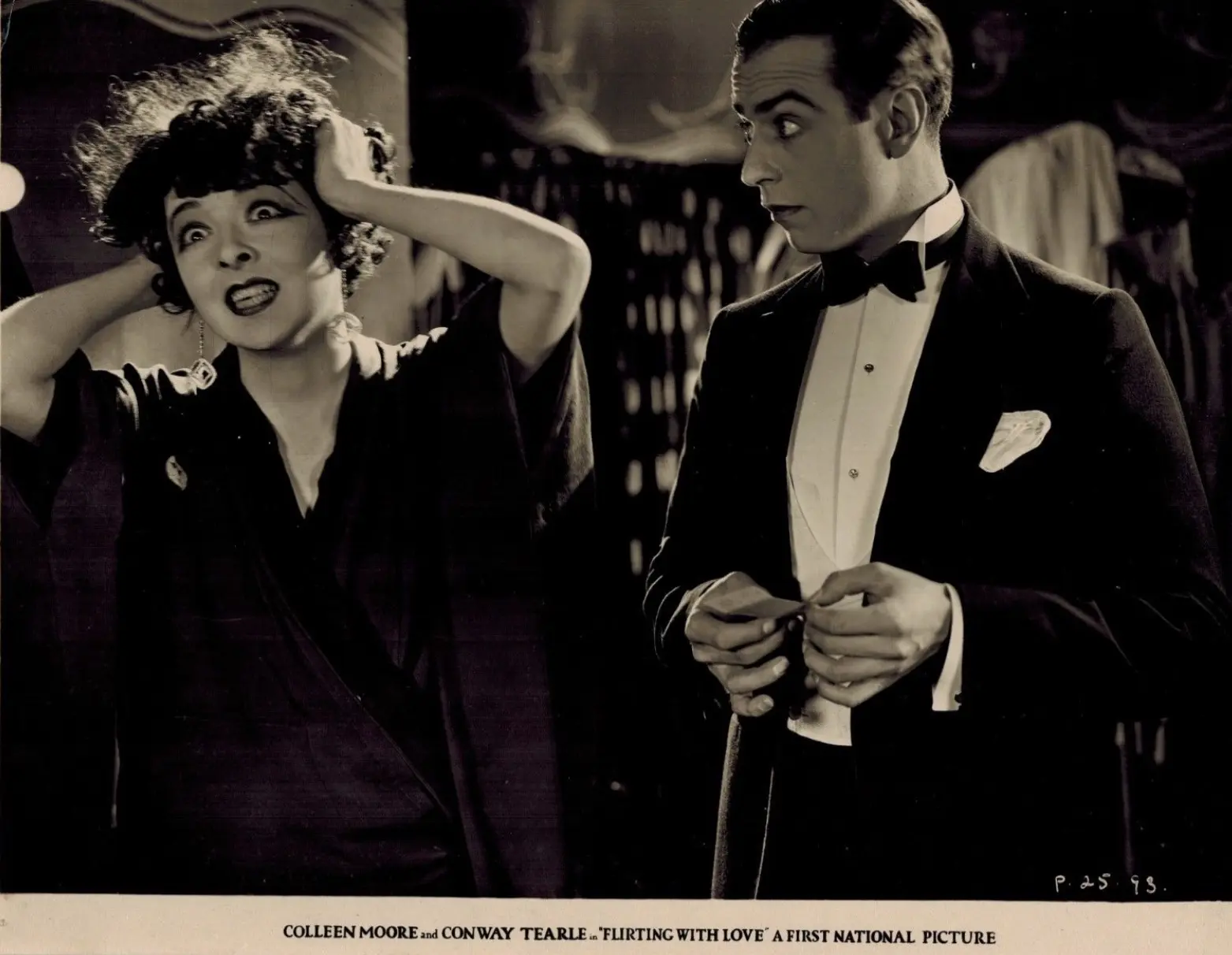
The "Better Plays Society" is clearly a satirical stand-in for the various censorship boards and moral reform groups that were increasingly vocal in the early 1920s. By placing this organization at the center of the conflict, writers Joseph F. Poland and Leroy Scott invite the audience to question the validity of those who claim to protect public virtue. The film suggests that these self-appointed guardians are often disconnected from the very humanity they seek to "improve." This thematic thread resonates with the moral explorations seen in The Evil Thereof, though Flirting with Love chooses the weapon of wit over the heavy-handedness of the sermon.
The brilliance of the screenplay lies in its meta-theatricality. When Cameron casts Gilda in an "improvised production," the film becomes a hall of mirrors. We are watching an actress (Moore) play an actress (Gilda) who is pretending to be an amateur, being cast in a play that is itself a trap. This layer of artifice serves to highlight the performative nature of high society itself. In the world of Lombardi, Ltd., fashion and appearance are the primary modes of communication; in Flirting with Love, the performance is the primary mode of survival.
Technically, the film utilizes the limited visual grammar of 1924 to great effect. The use of lighting to distinguish between the artificial world of the stage and the "real" world of Cameron’s social circles is subtle but effective. There is a crispness to the cinematography that emphasizes the physical comedy—a necessary component of any Colleen Moore vehicle—while also allowing for moments of quiet, emotional intimacy. The direction ensures that the pacing never falters, even when the plot becomes entangled in its own deceptions. It lacks the sprawling, often problematic grandiosity of The Birth of a Nation, opting instead for a controlled, domestic scale that serves the character-driven narrative far better.
The supporting cast, including J.C. Fowler and Winifred Bryson, provides a solid foundation for the central duo. Their presence helps flesh out the social milieu, making the stakes of Gilda’s revenge feel grounded in a recognizable reality. We see the ripples of Cameron’s decisions across the community, which adds a layer of weight to Gilda’s quest. It isn't just about her career; it’s about the culture of suppression that affects everyone in her orbit.
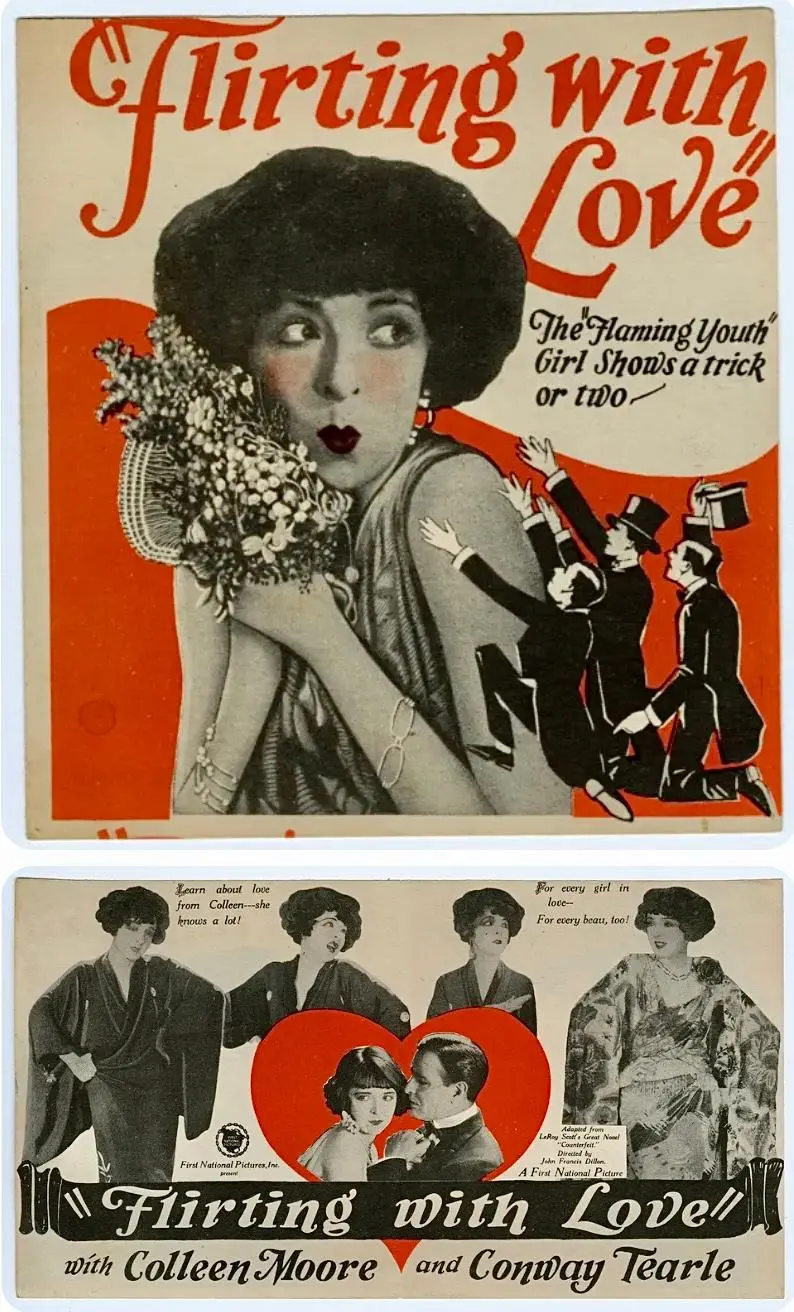
When comparing Flirting with Love to its contemporaries, one notices a distinct lack of the nihilism that would later define the decade's end. It is a film of optimism, suggesting that even the most rigid of moralists can be redeemed through the power of art and affection. While a film like The Border Legion explores the rugged, often violent fringes of society, Flirting with Love finds its drama in the drawing room and the backstage corridor. It shares a certain DNA with The Man from Mexico in its reliance on mistaken identities and farcical timing, yet it maintains a more sophisticated emotional core.
Even in its more dramatic moments, the film avoids the heavy-handed pathos of Her Reckoning or the sensationalism found in The Volcano. Instead, it maintains a level of poise that mirrors Gilda’s own composure. The screenplay understands that the most effective way to dismantle an ego like Cameron’s is not through a direct assault, but through a slow, methodical unraveling of his certainties.
The resolution of the film, where Gilda’s attempt to expose Cameron is derailed by his own counter-plot, is a masterstroke of narrative irony. It suggests that while Gilda was playing a role, Cameron was learning to see the person behind the mask. The "improvised production" serves as a crucible, stripping away the pretenses of both characters. By the time the final title cards roll, the audience is left with the impression that the titular 'flirting' was merely the preamble to a much deeper connection—one based on the mutual recognition of each other’s complexities.
In the broader history of silent film, Flirting with Love stands as a testament to the sophistication of the 1920s comedy-drama. It doesn't rely on the slapstick tropes of A Studio Rube or the simplistic moral binaries of Chains of Evidence. Instead, it offers a nuanced look at the power dynamics of the era, wrapped in a package of delightful performances and sharp writing. For those interested in the roots of the modern romantic comedy, this film is an essential piece of the puzzle, proving that even in 1924, the battle of the sexes was fought with intellect, wit, and a healthy dose of theatricality.
Ultimately, the film's legacy is tied to its ability to remain relevant. While the specific "Better Plays Society" may be a relic of the past, the tension between artistic expression and social regulation remains a contemporary concern. Gilda Lamont’s journey from victim to victor, through the strategic use of her own talent, remains an inspiring narrative of resilience. As we look back at this gem of the silent era, we see more than just a charming romance; we see a vibrant, defiant celebration of the transformative power of the stage.

IMDb 6.1
1931
Community
Log in to comment.