DbcultAccessing Vault...
6.1/10
Senior Film Conservator
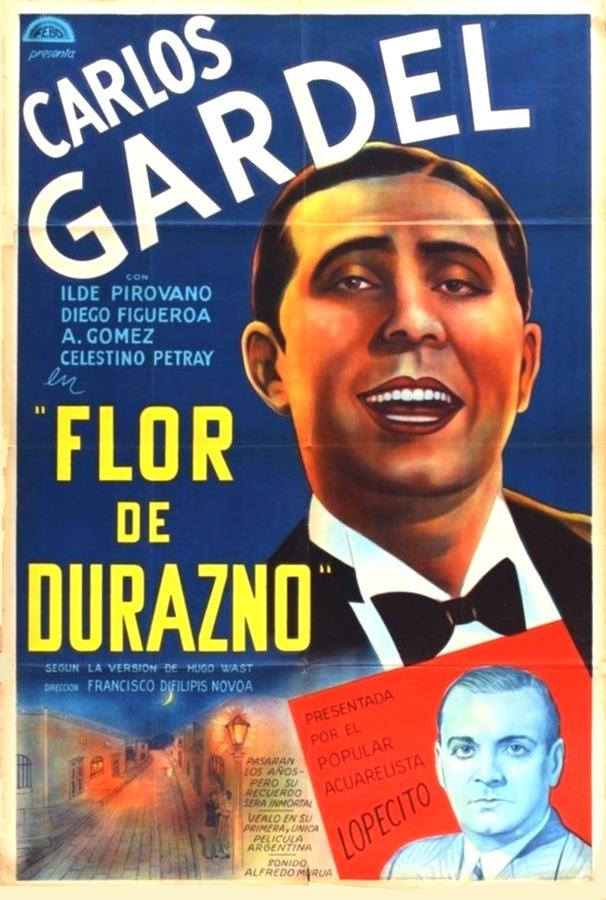
A definitive 6.1/10 rating for a film that redefined the boundaries of cult cinema. Flor de durazno remains a cornerstone of transgressive art.
Peach trees, those promiscuous cousins of almond and rose, bloom early in Córdoba; their petals bruise to the colour of human skin after a slap. In Flor de durazno (1917), director Gustavo Martínez Zuviria understands this chromatic sleight-of-hand and weaponises it. The film’s single surviving 35 mm print—scarred like a cathedral flagstone—still exudes the fragrance of scandal nearly eleven decades later. Watch how Rosa Bozán’s Rina wanders through the orchard: the camera tilts up so that her crinoline dissolves against a sky of arterial magenta, a visual confession that virtue and desire share the same bloodstream.
Fabián—played by Pascual Costa with the brittle vanity of a porcelain saucer—believes courtship is a ledger: gifts given, kisses owed, virginity receipted. His rival, Germán (an electric Carlos Gardel, years before tango immortalised his baritone swagger), treats seduction like a cockfight, all spur and glitter. Between them, Rina is less a woman than a territorial map: mountain ranges of gossip, rivers of entitlement. When pregnancy swells her geography into unchartable terrain, Germán folds the map, pockets his pride, and exits stage left. What remains is a town that smells of altar candles and overripe drupes.
Unlike Hollywood’s fallen-woman cycle—where Magdalenes often migrate to big-city redemption—Flor de durazno imprisons its heroine inside colonial arcades, whitewashed like a sepulchre. Every cutaway to the cathedral’s bell tower feels like a guillotine blade hovering. The intertitles, lettered in florid Spanish that drips with ecclesiastical perfume, call her perdida but never perdonada. The absence of a reformatory or distant aunt’s parlour intensifies the stench of permanence; salvation must bloom here or not at all.
In the era of overstated pantomime, Bozán’s performance is a masterclass in micro-movement. Notice the scene where she learns of Germán’s abandonment: a single tremor ripples from her left eyelid to the lace at her clavicle, nothing more. The camera, perhaps accidentally, lingers three beats too long; those extra seconds transmute private anguish into cosmic indictment. Meanwhile Gardel, already sensing the camera’s love affair with his profile, allows the faintest smirk—half penitent, half proud—to flicker. The result is morally vertiginous: we simultaneously condemn and envy the cad.
Though shot without tinting, surviving prints carry chemical ghosts: amber fringes during dusk scenes, bluish halos around church windows. These defects, married to the peach-blossom motif, gift the film a chromatic aura that no digital restoration could authentically reproduce. One night-interior—rendered by day-for-night trickery—bathes Rina’s confession in lunar teal, turning the priest’s cassock into a slab of night sky. The effect is so eerily modern it could slip unnoticed into a 2020s A24 feature.
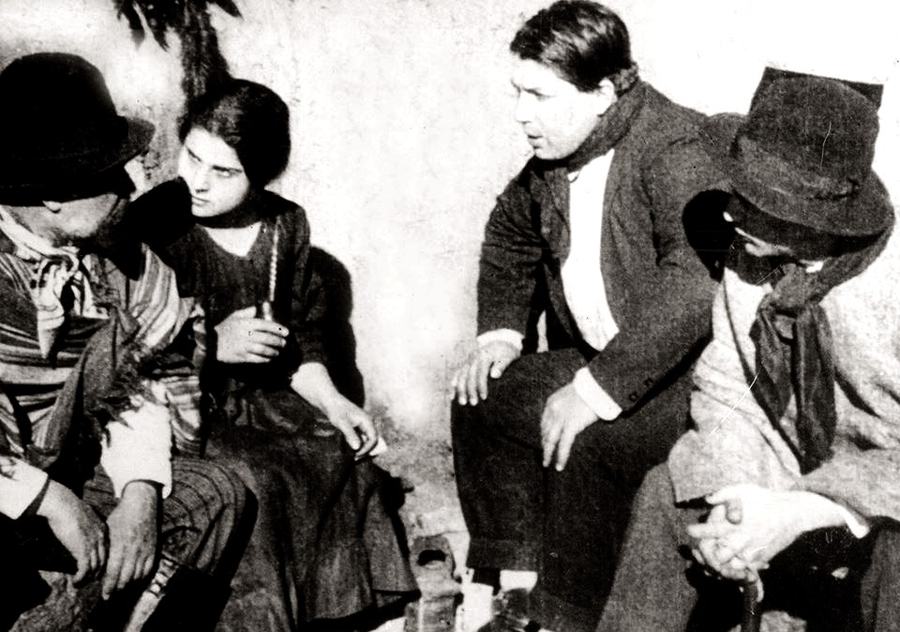
Contemporary exhibitors likely underscored screenings with live milonga or salon waltzes. Imagine Gardel himself—guitar cradled like a lover—strumming chords that anticipate his future tango stardom while audiences watch his onscreen perfidy. That recursive echo—art imitating life imitating art—adds a Möbius-strip frisson to every re-screening. Today, DJs at underground cine-clubs mash Bozán’s luminous despair with neo-cumbia beats, proving that shame, like rhythm, is borderless.
Place Flor de durazno beside The Heart of a Painted Woman (1915) and you notice divergent botanical metaphors. Where the American film decorates its courtesan with hothouse orchids—exotic, purchasable—Martínez Zuviria opts for indigenous peach, humble yet erotically suggestive. Similarly, Alimony (1917) transports its divorceé to Manhattan penthouses, whereas Rina’s geography shrinks to a plaza fountain and back. One offers escapism; the other, claustrophobia as spiritual education.
Written by a male scribe, shot by a male cameraman, exhibited for largely urban male audiences—yet the film’s lingering close-ups on Rina’s torn hem feel like subversive empathy. The camera refuses to pan away during her public shaming; instead it dollies inward until her pores resemble lunar craters. In that intrusive scrutiny, the male authorship paradoxically indicts its own voyeurism. Compare this with National Red Cross Pageant (1917), where female suffering is sanitised into patriotic allegory; here it remains obstinately corporeal.
Only two reels were thought extant until a nitrate bouquet resurfaced in a Montevidean cellar in 1998, fused to Pyotr Velikiy trailers. Restorationists likened peeling them apart to separating communion wafers soaked in wine. The reconstructed 63-minute cut now circulates via 4K DCP; yet each viewing risks further vinegar syndrome, reminding us that cinema, like virtue, is perishable. Archive your guilt, stream the peach blossoms while you can.
To label Flor de durazno a mere cautionary tale is to mistake a cathedral for a storage shed. Yes, it chronicles the patriarchal syllabus: desire, defilement, desertion. Yet its true triumph lies in rendering that syllabus as textured as Cordoban cordovan leather—supple, aromatic, forever imprinted by the hand that wields it. Watch it for Bozán’s minimalist heartbreak, for Gardel’s proto-tango swagger, for the peach petals that drift across the lens like subpoenas from Eden. Watch it because silence, when properly lit, screams louder than Dolby thunder.
IMDb 6.5
1930
Community
Log in to comment.