DbcultAccessing Vault...
Cult Review
Senior Film Conservator
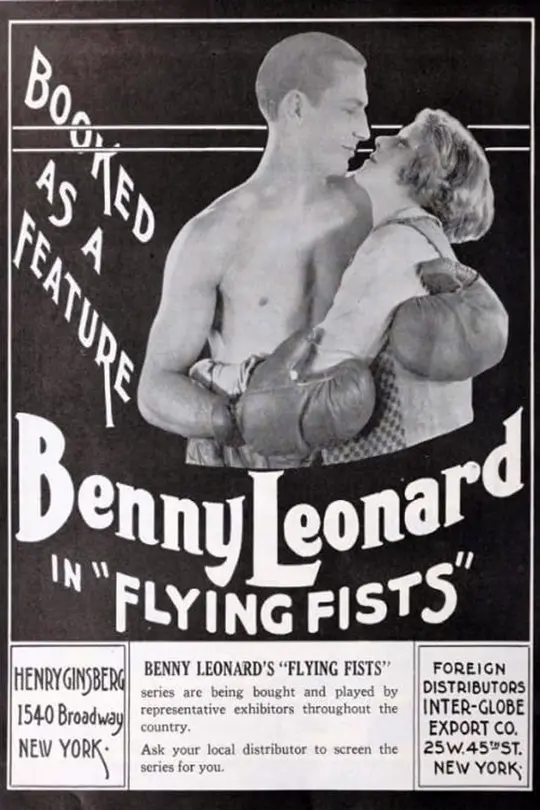
In the annals of early twentieth-century cinema, the intersection of genuine athletic prowess and narrative artifice rarely achieved the harmonic resonance found in Flying Fists. This 1924 series, a collection of six distinct two-reelers, transcends the typical 'sports short' of its era. It represents a pivotal moment where the raw, unscripted violence of the boxing ring was disciplined by the burgeoning grammar of silent film storytelling. Starring the incomparable Benny Leonard—a man whose footwork in the ring was often described as 'poetry in motion'—the series offers a visceral, frame-by-frame deconstruction of the pugilist's journey.
The episodic nature of Flying Fists allows for a rhythmic pacing that a single feature-length film might have struggled to maintain. We begin with 'Breaking In', an introductory movement that establishes the protagonist's naivety and raw potential. Unlike the heavy-handed moralism found in The Evil Thereof, which relied on stark dichotomies of vice and virtue, 'Breaking In' focuses on the physical reality of the body as a tool of labor. Jack Perry and Phil Bloom provide a supporting cast that anchors the drama in a believable, if slightly heightened, reality of the gymnasium culture.
As we transition into 'Hitting Hard' and 'Soft Muscles', the series delves into the physiological and psychological toll of the sport. The latter, in particular, stands as a fascinating counterpoint to the romanticism of The Girl of My Dreams. While that film sought to idealize youth and aspiration, 'Soft Muscles' exposes the fragility of the athlete, highlighting the transient nature of physical perfection. The cinematography here—though constrained by the technology of 1924—manages to capture the glistening sweat and the sagging posture of defeat with a verisimilitude that feels startlingly modern.
Benny Leonard’s performance is the gravitational center of the series. Often, when sports stars transitioned to the screen in the silent era, the results were histrionic or wooden. However, Leonard possesses a naturalistic charisma that rivals the leading men of his day. In 'The Comeback', his portrayal of a fallen idol reclaiming his dignity is nuanced and understated. He doesn't rely on the exaggerated gestures typical of the period, as seen in some of the more theatrical performances in The Misleading Lady. Instead, Leonard uses his eyes and his stance to communicate the internal conflict of a man fighting both his opponent and his own fading legacy.
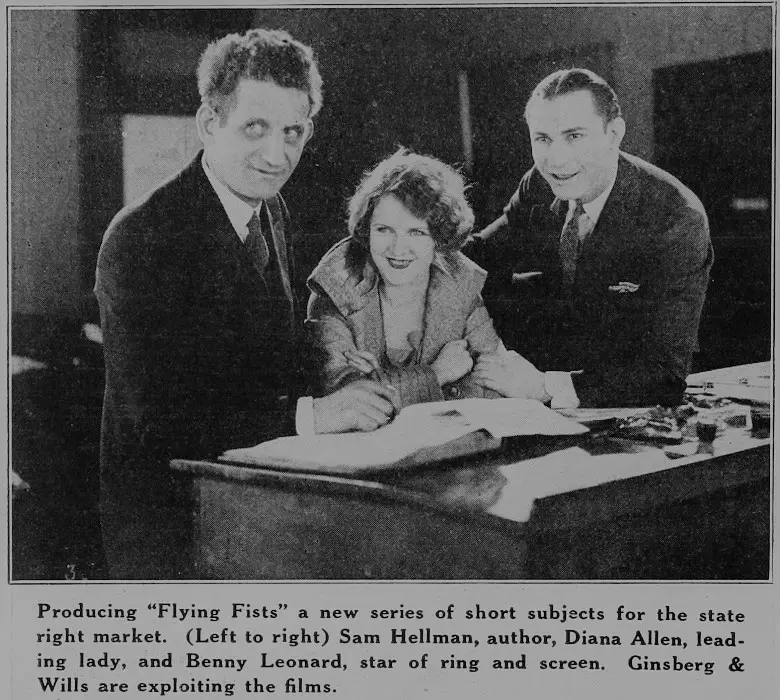
The writing, credited to Sam Hellman and Leonard himself, ensures that the dialogue intertitles are punchy and devoid of the flowery sentimentality that often plagued the works of contemporary directors. There is a lean, muscular quality to the prose that mirrors the action on screen. This isn't the sweeping, problematic epic scale of The Birth of a Nation; rather, it is a focused, intimate look at a subculture, much like the gritty realism explored in The Border Legion.
The series reaches its aesthetic zenith in the final installment, 'The Jazz Fight'. The title itself suggests a fusion of the era's frantic musical energy with the rhythmic exchange of blows. The editing here is remarkably sophisticated for the mid-20s. There is a syncopation to the cuts that mimics the heartbeat of a fighter in the twelfth round. It avoids the static, stage-like presentation found in Lombardi, Ltd. and instead embraces the fluidity of movement. The camera feels like a participant in the ring, ducking and weaving alongside Leonard.
"The Jazz Fight is not merely a sports sequence; it is a choreographic triumph that anticipates the cinematic ballet of Raging Bull by over half a century."
One cannot ignore the contributions of the supporting cast. Alyce Mills and Dora Mills Adams provide a necessary emotional anchor, grounding the high-stakes violence in a domestic reality. Their presence prevents the film from becoming a mere spectacle of brutality, much like the balance achieved in Her Reckoning, where personal stakes elevate the melodrama. Furthermore, the appearance of Tammany Young and Billy Mitchell adds a layer of character-actor depth that was often missing from the more formulaic 'two-reelers' of the time.
When placed alongside other 1920s offerings, Flying Fists stands out for its structural ambition. While The Volcano relied on explosive set pieces and Revelj explored military precision, Flying Fists finds its power in the mundane struggle of the training camp. It shares some of the psychological darkness seen in The Wolf Man (1923), specifically the theme of a man losing control of his base instincts, though here that loss of control is channeled into the disciplined art of the knockout.
In terms of humor, 'The Surprise Fight' offers moments of levity that remind one of the situational comedy in The Man from Mexico. However, the humor in Flying Fists is always subservient to the narrative momentum. It never devolves into the slapstick of A Studio Rube or the chaotic energy of Black and Tan Mix Up. There is a dignity to the proceedings, a sense that we are witnessing the 'sweet science' rather than a mere brawl.
Flying Fists is more than a curiosity for boxing historians; it is a masterclass in serialized storytelling. It lacks the morbid fascination of Life Story of John Lee, but it possesses a far more enduring humanism. The series understands that the fight in the ring is merely a metaphor for the fight outside of it—a struggle for recognition, for survival, and for a legacy that outlasts the final bell.
The production values, while modest, are utilized with maximum efficiency. The lighting in the gym scenes creates a chiaroscuro effect that emphasizes the musculature of the fighters, a technique that would become a staple of the noir genre in the decades to follow. This attention to detail suggests a production team that was not merely looking to capitalize on Benny Leonard's fame, but one that genuinely respected the cinematic medium. This is not the hastily assembled 'chain of events' seen in Chains of Evidence; it is a deliberate, well-crafted piece of art.
For the modern viewer, Flying Fists offers a window into a world where the stakes felt visceral and the heroes were made of flesh, bone, and iron will. It is a testament to the power of the silent image to convey the intensity of physical combat without the need for the roar of the crowd or the thud of the gloves. In the end, Benny Leonard doesn't just win the fights; he wins the audience, proving that true charisma is universal, whether in the center of the ring or the center of the frame.
Film Details: Flying Fists (1924) | Cast: Jack Perry, Benny Leonard, Jean Diamond | Writers: Sam Hellman, Benny Leonard | Genre: Sports Drama / Silent Series
IMDb 6.4
1929
Community
Log in to comment.