DbcultAccessing Vault...
7/10
Senior Film Conservator
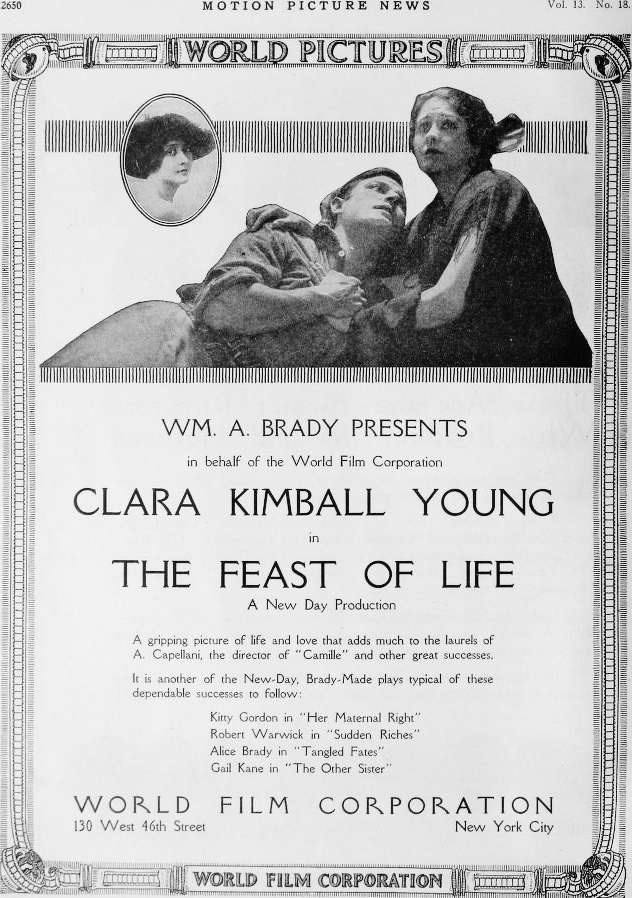
A definitive 7/10 rating for a film that redefined the boundaries of cult cinema. The Feast of Life remains a cornerstone of transgressive art.
Picture the first frame: a horizon so flat it seems sketched by a trembling hand, the sky a bruised peach bleeding into the Florida Straits. This is not the postcard Cuba of chrome-fendered convertibles; it is 1916, the island still a Spanish ghost haunting American neocolonial sugar mills. Director Frank Powell—borrowing the chiaroscuro vocabulary of Body and Soul—lets shadows pool like spilled molasses at the hem of Aurora’s dress. Cinematographer Lucien Andriot’s orthochromatic stock renders Clara Kimball Young’s alabaster skin lunar against the indigo necks of fishermen, a chromatic tension that prefigures the coming clash of classes.
Frances Marion’s screenplay, ribboned with intertitles that read like pressed frangipani between pages of a diary, refuses the moral absolutism of Victorian melodrama. Instead she scripts a palimpsest: every kiss overwritten by a debt, every vow by a vengeance. The result feels closer to Iberian costumbrismo than to the nickelodeon morality plays of its era.
Aurora’s transformation into the tavern dancer “Mariposa de la Luna” is the film’s hinge. Powell shoots the sequence in a single, breathless dolly that glides past decimas sung in decasyllables, past cigar smoke curling like calligraphy, until it lands on Young’s bare shoulder blades shivering under sequins. The camera doesn’t ogle; it memorizes, the way one memorizes the face of a sleeper you know will vanish by dawn. When Pedro—Paul Capellani’s shoulders squared like a ship’s prow—fails to recognize his beloved, the irony slices sharper than any machete: lust becomes the veil, not the mask.
Compare this to the suffragette parade in Your Girl and Mine; both sequences weaponize public spectacle to expose private hypocrisy. Yet where that film marches toward civic triumph, The Feast of Life dances toward personal apocalypse.
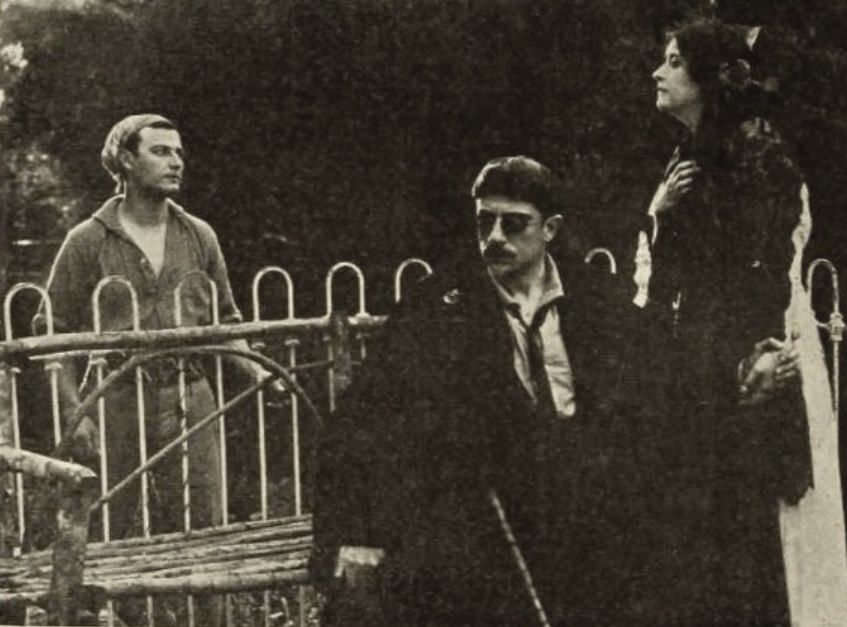
Don Armada’s cataracts are more than medical; they are the film’s moral synecdoche. His milky gaze reflects a colonial elite blind to the cane-field bodies that underwrite his chandeliers. Post-operation, when doctors warn that “any shock may doom him again to night,” the prophecy metastasizes into tragic irony: the shock will not be physical but epistemological—the moment he sees his wife’s infidelity and his own monstrosity.
Powell renders the surgery in a hallucinatory montage—iris shots of scalpels, ether masks, and a crucifix that dissolves into Aurora’s cameo—anticipating the Expressionist surgeries in Homunculus, 1. Teil. Yet unlike that German cyborg parable, the body here remains stubbornly flesh, and flesh remembers every whip of sugarcane.
The assault on the villa—shot over three stormy nights using natural lightning—feels less like a peasant revolt than a pagan fertility rite. Fishermen smear themselves in ash, brandish torches whose flames lick the screen edges, chant a syncopated “¡Ay, Mar!” that merges with thunder. When Pedro’s blade stops millimeters from Armada’s throat upon discovering the man’s blindness, the film pivots from revenge to grace. It is the rare silent moment that needs no intertitle; Capellani’s trembling hand and the tear tracking through Armada’s eye ointment say everything.
Marion’s script weaponizes correspondence. Armada’s interception of Pedro’s letter—ink still wet with brine—recalls the fatal tin soldier in The Riddle of the Tin Soldier, yet here the toy becomes text, and text becomes stiletto. The mise-en-abyme of forged failure—Armada lying that the operation failed—turns the villa into a panopticon where every mirror hides a spy. Aurora’s locked chamber, lit only by a shard of moon through the grille, resembles the convent cells in Locura de Amor, but the mad queen here is patriarchy itself.
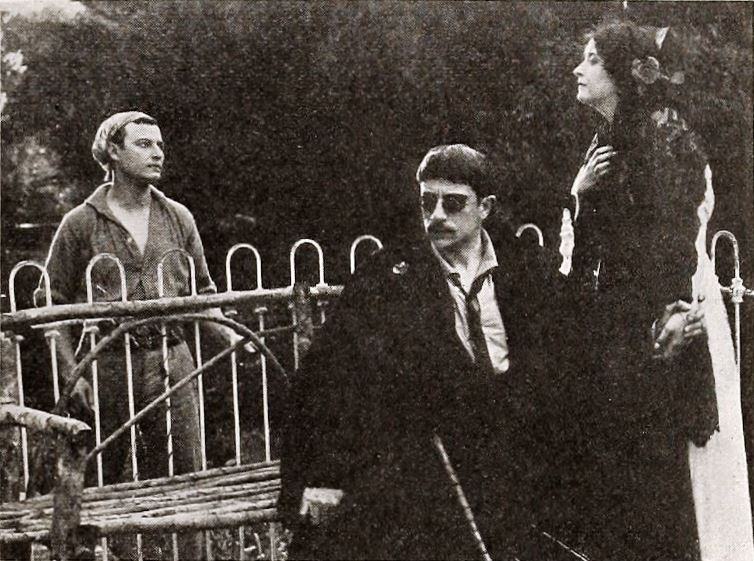
Forgotten today, Young was once America’s highest-paid star. Her Aurora is no wilting lily; she is a huracán in petticoats. Watch the micro-movement when she learns of Celida’s death: pupils dilate, nostrils flare a millimeter, the lace at her throat quivers as if breathed upon by ghosts. It is acting calibrated for the intimate proximity of silent-era close-ups, a lineage that stretches to Renée Falconetti.
The 2023 4K restoration by EYE Filmmuseum lifts the veil of decades. Tints oscillate between cobalt night-for-night and amber candlelight; the Spanish lavender of Aurora’s shawl now breathes. Composer Vera Petrova’s score—flamenco guitar, marimba, and a single, weeping viola da gamba—refuses nostalgic pastiche; instead it dialogues with the flicker, crescendoing at the lovers’ reunion in a major seventh that suspends time.
The last shot: Aurora and Pedro silhouetted against a reef at low tide, waves phosphorescent with microscopic plankton. The camera lingers until the couple becomes mere negative space, a hole punched in the celluloid where the audience can insert their own longing. No iris, no fade—just a hard cut to black, as if the film itself were stabbed and bled out. You exit into the lobby tasting salt on your lips, unsure whether it is tears or the memory of seawater.
In a cinematic year larded with amnesiac ingénues and aristocratic conundrums, The Feast of Life stands as a fevered reminder that love, like sugar, ferments fastest when cut with desperation. Seek it on the largest screen you can find; let its shadows pour over you until you, too, feel the blade of recognition against your own blind spots.
IMDb 6.4
1936
Community
Log in to comment.