DbcultAccessing Vault...
Cult Review
Senior Film Conservator
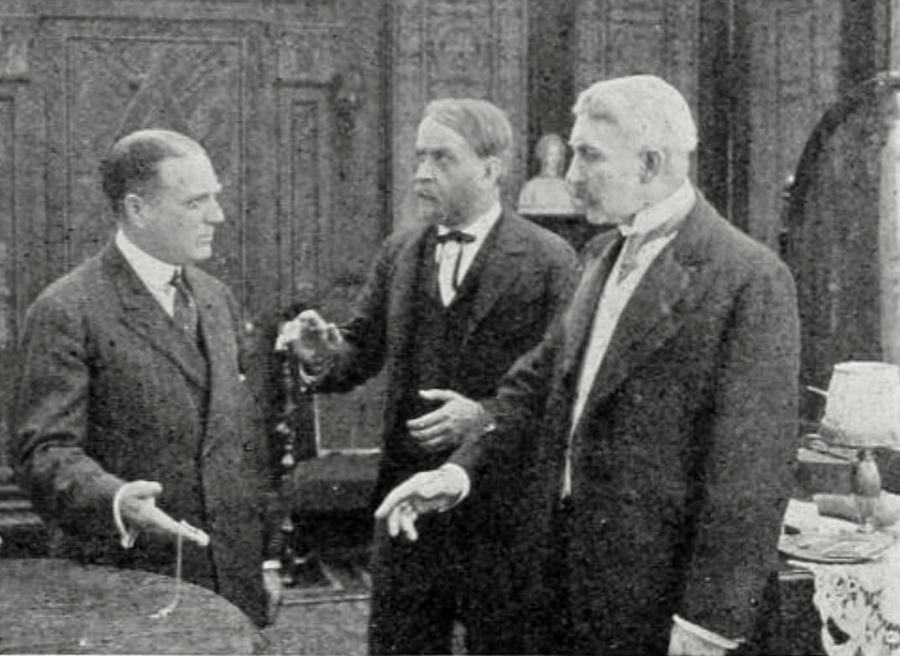
The dawn of the spy thriller in cinema was not a sudden explosion but a gradual crystallization of anxieties surrounding the Great War. The Ivory Snuff Box, released in 1915, stands as a premier example of how early filmmakers utilized the detective trope to navigate the murky waters of international espionage. While contemporary audiences might be accustomed to the gadgetry of modern Bond, this film focuses on the raw, often brutal reality of the 'Great Game.' The narrative doesn't merely present a mystery; it constructs a claustrophobic world where trust is a liability and the most domestic of settings—a honeymoon—is instantly sacrificed for the preservation of state secrets.
Robert Cummings brings a grounded, almost weary intelligence to the role of Richard Duvall. Unlike the theatrical flourishes seen in The Royal Imposter, Cummings operates with a quiet efficiency that mirrors the professionalization of police forces during the early 20th century. His Duvall is a man of action, certainly, but his greatest weapon is his capacity for endurance—a trait that becomes agonizingly central during the film’s controversial third act.
One of the most striking elements of the film is the setting of Dr. Hartmann’s sanitarium. In the lexicon of early cinema, the sanitarium often served as a liminal space where the boundaries of science and malice blurred. Here, Holbrook Blinn’s portrayal of Dr. Hartmann provides a chilling blueprint for the cinematic 'mad scientist' spy. Hartmann is not merely a thief; he is a technician of pain. The sanitarium serves as a microcosm of the war-torn European continent—a place where people are stripped of their identities and subjected to the whims of an authoritarian intellect. This thematic depth elevates the film beyond the simple 'find the MacGuffin' plot found in contemporaries like The Love Route.
The use of the ivory snuff box as the central object of desire is a masterstroke of symbolic writing. It represents the old world—ornate, fragile, and hiding secrets beneath a polished surface. The revelation of the 'double top' and the numerical cipher within reflects a world that was becoming increasingly codified and abstract. We see a shift from physical combat to information warfare, a transition that mirrors the real-world evolution of intelligence gathering during the 1910s.
Alma Belwin’s Grace Ellicot is far from the 'damsel in distress' stereotype that plagued much of silent-era melodrama. Her willingness to enter the lion's den of the sanitarium demonstrates a proactive heroism that rivals Duvall's. Her presence in the film provides the emotional core, particularly during the harrowing torture sequences. The camera lingers on her face as she is forced to witness Duvall’s agony, turning the audience into secondary voyeurs of his pain. This psychological layering is significantly more sophisticated than the straightforward romantic arcs in Love Everlasting.
The chemistry between Belwin and Cummings is palpable, making the interruption of their honeymoon feel like a genuine violation rather than a mere plot device. Their relationship is the anchor in a sea of shifting allegiances. When we compare this to the familial tensions in The Price, we see a more globalized conflict where the personal is constantly being subsumed by the political.
Visually, The Ivory Snuff Box utilizes the limited technology of 1915 to create maximum atmosphere. The lighting in the London Embassy scenes, contrasted with the harsh, clinical brightness of the Brussels sanitarium, creates a visual shorthand for safety versus peril. The direction (often credited to Maurice Tourneur’s influence on the studio's aesthetic) emphasizes depth of field, allowing the viewer to track the movements of spies in the background of seemingly innocent conversations. This technique adds a layer of paranoia that is essential for a successful thriller.
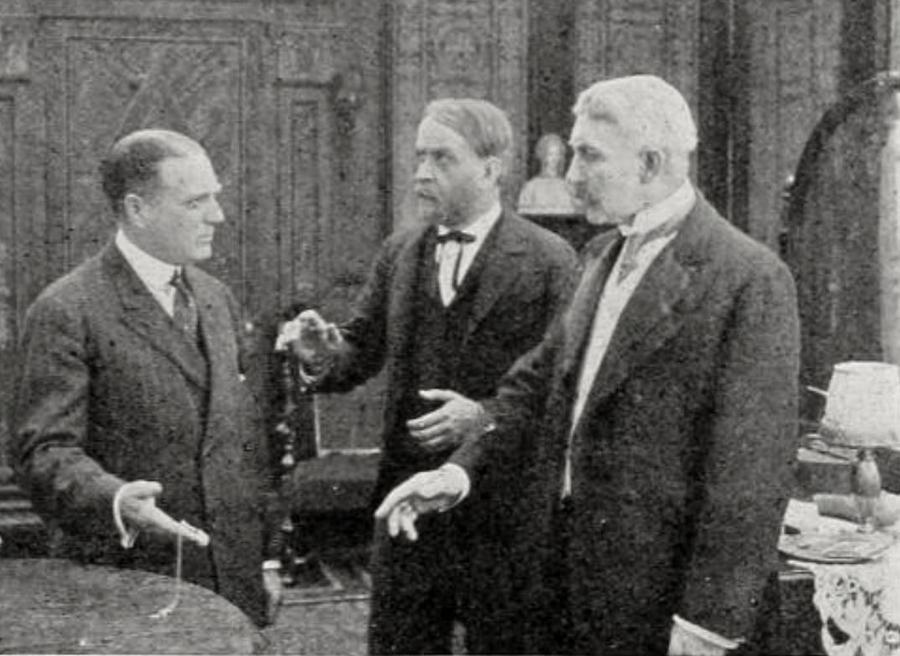
The pacing of the film is remarkably modern. It avoids the static, stagey feel of many early features, opting instead for a rhythmic editing style that accelerates as Duvall gets closer to the truth. The sequence aboard the boat for Antwerp, featuring the luggage search and the 'rice powder' red herring, is a masterclass in building suspense through mundane objects. It evokes a similar sense of environmental dread to that found in Dr. Mawson in the Antarctic, though the threat here is human rather than elemental.
Perhaps the most discussed aspect of this film is the torture sequence. For 1915, the depiction of Hartmann’s methods was visceral. It forces the audience to confront the ugly reality of espionage—that it is a business of bodies as much as it is a business of brains. Duvall’s refusal to break, followed by his clever substitution of the numbers, provides a cathartic payoff. It suggests that while the enemy may control the body, the mind remains the final frontier of resistance. This theme of mental fortitude is a common thread in films like Legion of Honor, where duty to the state is the ultimate moral imperative.
The 'double top' of the snuff box is more than just a clever hiding place; it is a metaphor for the film itself. On the surface, it is a detective story; beneath that, it is a war film; and at its deepest level, it is a study of human resilience. The numerical cipher—a series of abstract digits—represents the new language of the 20th century, where power is no longer just about territory, but about information. This transition is also explored in different contexts in The Boss, which looks at power through a more localized, political lens.
To fully appreciate The Ivory Snuff Box, one must view it alongside other works of the era. While Parsifal dealt in myth and Madame Butterfly in operatic tragedy, this film dealt in the immediate, terrifying 'now.' It lacks the historical distance of Julius Caesar or the grandiosity of The Colosseum in Films. Instead, it offers a gritty, street-level view of a world on the brink of collapse. The inclusion of a German spy as the antagonist was a bold and timely choice that reflected the burgeoning anti-German sentiment of the time, yet Hartmann is written with a complexity that avoids mere caricature.
In terms of genre evolution, the film bridges the gap between the atmospheric mystery of The Face in the Moonlight and the more visceral horror-thriller elements that would later define films like The Monster and the Girl. It understands that the greatest fear is not the supernatural, but the systematic application of human cruelty in the name of a cause.
As the film concludes with Duvall and Grace finally embarking on their delayed honeymoon, there is a sense of relief, but also a lingering shadow. They have seen behind the curtain of international diplomacy; they have felt the touch of the interrogator's hand. The ivory snuff box may have been returned, but the innocence of the couple—and by extension, the audience—has been irrevocably lost. This loss of innocence is perhaps the most enduring theme of the 1915 cinematic landscape, captured perfectly in the silent, stoic performances of its leads.
For the modern cinephile, The Ivory Snuff Box is an essential watch. It is a reminder that the grammar of the thriller—the MacGuffin, the ticking clock, the double-cross—was being written over a century ago with precision and passion. It stands as a testament to the power of silent cinema to convey complex geopolitical tensions through nothing more than a furrowed brow, a hidden hat, and a small, ivory box. Much like the vengeful spirits in The Hindu Nemesis or the rugged survivalism in The Trail of the Lonesome Pine, this film explores the darker impulses of the human condition with a frankness that still resonates today.
The portrayal of Dr. Hartmann by Holbrook Blinn remains one of the most underrated villainous turns of the silent era. His ability to convey menace through stillness is a masterclass in screen acting that should be studied by anyone interested in the evolution of cinematic performance. The film's structural integrity, despite its age, proves that a well-crafted script is timeless.

IMDb —
1924
Community
Log in to comment.