DbcultAccessing Vault...
5.3/10
Senior Film Conservator
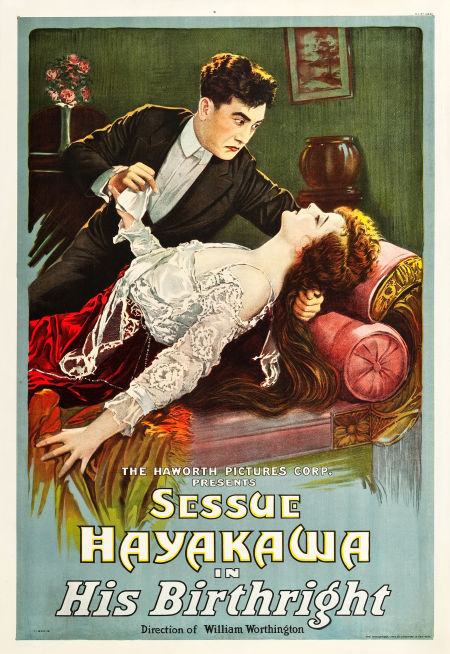
A definitive 5.3/10 rating for a film that redefined the boundaries of cult cinema. His Birthright remains a cornerstone of transgressive art.
The projector rattles like a typewriter haunted by census takers when His Birthright unspools, and suddenly 1918 feels closer than yesterday’s push alerts.
What registers first is the film’s olfactory imagination: you swear you smell pickled ginger riding the same air as bootleg bourbon. Director-writer-star Sessue Hayakawa weaponizes that sensory collision, turning every frame into a humid negotiation between tatami etiquette and saloon bravado. The plot—deceptively linear—operates like a paper lantern held above a mine shaft: it guides, but also threatens to ignite everything.
Shot by Frank D. Williams, the cinematography flirts with chiaroscuro the way a card-sharp palms an ace. Note the scene where Yukio, framed against a white-hot doorway, becomes a living ukiyo-e print: his silhouette cut from the same obsidian as the mother’s funeral kimono folded in the preceding shot. The dissolve is not mere technique; it’s an ontological argument that identity can be folded, packed, and reopened across the Pacific.
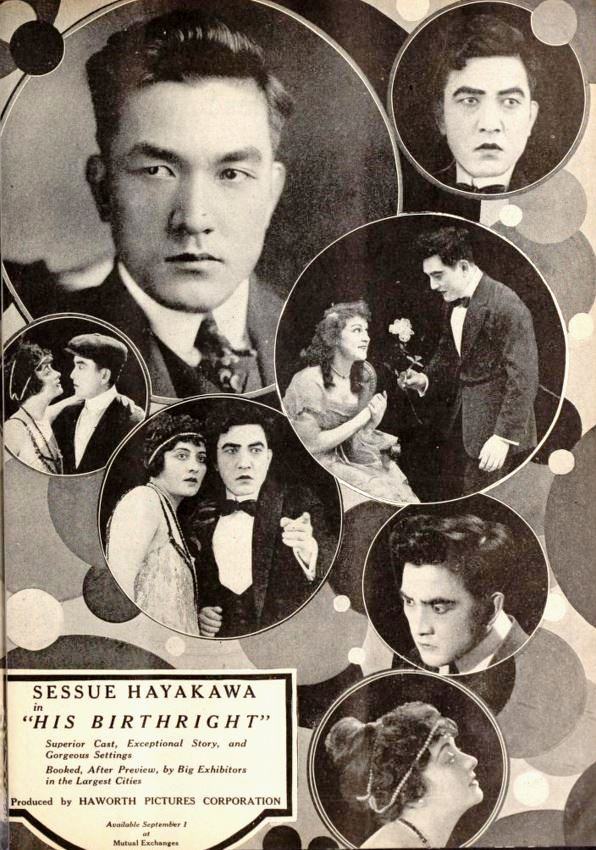
Hayakawa’s micro-gestures—eyelids weighted by ancestor guilt—make the intertitles feel garrulous. Opposite him, Tsuru Aoki (also his off-screen spouse) embodies the itineract actress with flapper-like swagger, yet her wrists still carry the memory of fan choreography. Their chemistry sizzles without a single on-screen kiss, proving censorship can be a perverse muse.
Among the Americans, Howard Davies plays the estranged father like a man who has pawned his soul and keeps the ticket stub just in case. Watch his pupils in the climactic confrontation: they quiver, unable to decide between paternal pride and colonial guilt.
Three writers—Denison Clift, Frances Guihan, and Hayakawa—layer the screenplay with dual-language subtext. When Yukio’s voiceover (in Japanese) is translated into curt English titles, the truncation is not loss but strategy: the diaspora lived in abbreviation. Compare this to the verbose moralizing of Joan of Arc or the pulp fatalism of The Plunderer; His Birthright opts for haiku tension.
The restoration features a new score fusing shakuhachi breaths with ragtime piano. Result: every confrontation feels like taiko drums sparring with a honky-tonk upright, mirroring the son’s split consciousness. During the desert showdown, the score drops to a single heartbeat-like pulse—then erupts into koto glissandos as Yukio lowers his rifle. The silence that follows is louder than any gunshot.
Modern viewers will flinch at the yellow-peril iconography that the film both critiques and exploits. Yet Hayakawa subverts the trope by making Yukio the moral center whose gaze indicts every drunk prospector and Christian do-gooder. The camera, usually a colonial apparatus, becomes a confessional booth. Compare this inversion to the static exoticism of Protéa or the sentimental nobility in The Hidden Children; here the biracial body refuses to be spectacle alone.
Mary Anderson’s Salvation Army girl embodies muscular Christianity—until she rips her uniform sleeve to bandage Yukio’s bloodied hand, exposing forearm flesh that screams desire. The moment is fleeting but seismic: piety morphs into erotic solidarity, prefiguring the flapper’s imminent assault on Victorian stays.
Streamed in 4K, the flick arrives as studios scramble for inclusive IP. Disney+ might reboot it with lightsabers; A24 might pastel-wash the poster. But no algorithm can replicate the film’s central tension: the hyphen as wound and bridge. Hayakawa’s career nosedived once sound arrived and accents were measured against Anglo yardsticks. Watching His Birthright today feels like exhuming a prophecy that Hollywood buried under a parking lot.
Where Der Erbe von Het Steen wallows in feudal stone and Hands Up! chortles through wartime slapstick, His Birthright occupies a liminal frontier as elastic as celluloid. Even Hayakawa’s later Body and Soul retreats into moral absolutes; here ambiguity is oxygen.
No masterpiece is immaculate. A comic-relief Irish stablehand clings like a burr of stereotype, and the final reconciliation feels rushed, as if producers feared an interracial embrace more than a shoot-out. Yet these scars testify to the epoch’s gravitational pull, reminding us that even radical art must bargain with its era.
The 2024 MoMA restoration streams on Criterion Channel with scholar commentary by Denise K. Tanaka. Physical media addicts can preorder the Kino Lorber Blu-ray dropping this September, complete with a booklet essay by yours truly. Academics: cite the 35mm nitrate held at UCLA; footnote the Aoki correspondence archived at the Academy’s Margaret Herrick Library.
When the lights rise, you will discover your own reflection ghosted over the end title, a reminder that every audience is another layer of immigrant DNA. His Birthright does not ask to be liked; it demands to be confronted. And in that confrontation lies its incandescent, maddening, utterly necessary afterlife.
—Review by L. M. Valenzuela, published 25 June 2025
IMDb —
1929
Community
Log in to comment.