DbcultAccessing Vault...
Cult Review
Senior Film Conservator
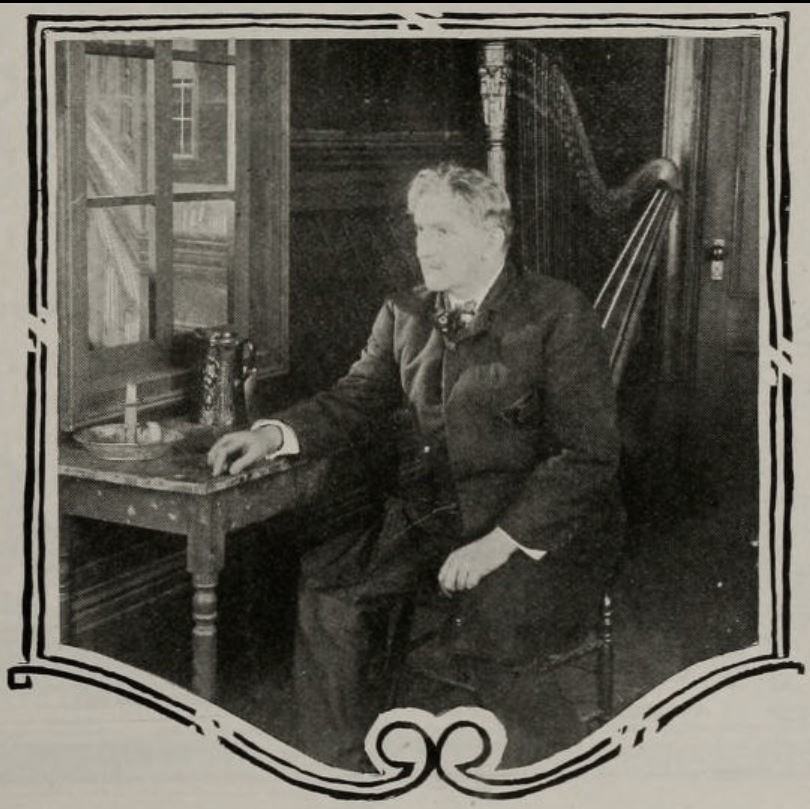
New York, 1915: electric bulbs still flicker like nervous metronomes above Broadway, yet inside the New York College of Music gaslight pools on parquet floors, turning every chord into amber smoke. Carl Winters—collar frayed, cuffs ink-stained—lifts his baton less like Toscanini than like a man brandishing a last torch against nightfall. His gaze locks on Alice Winthrop, whose cashmere silhouette seems imported from another cosmos, one where debutantes waltz over the bones of the tenement poor. Their duet is wordless, but the camera, starved of sync sound, magnifies every diaphragmatic tremor: the rise of a shoulder blade beneath chiffon, the swallow that ripples across a throat accustomed to champagne, not cafeteria tea. When Bergh—the conservatory’s self-anointed St. Peter—slams the practice-room door, the reverberation is both literal and metaphysical: the expulsion from an academic Eden engineered by steel rails of capital.
Julius Steger, triple-hyphenate writer-director-lead, stages this rupture with a tableaux vivant worthy of early Dix: the lovers framed against a wall of plaster busts—Beethoven, Wagner, Palestrina—whose marble eyes seem to roll in syncopal disgust. The intertitle card arrives like a guillotine: “Dismissed for conduct unbecoming.” Five words that prefigure a lifetime of penance. Steger’s blocking here is meticulous; he allows the audience to count the heartbeats—twelve seconds before Carl’s hand drops from Alice’s waist—an eternity in 1915 pacing, when most cuts barely breathe for three.
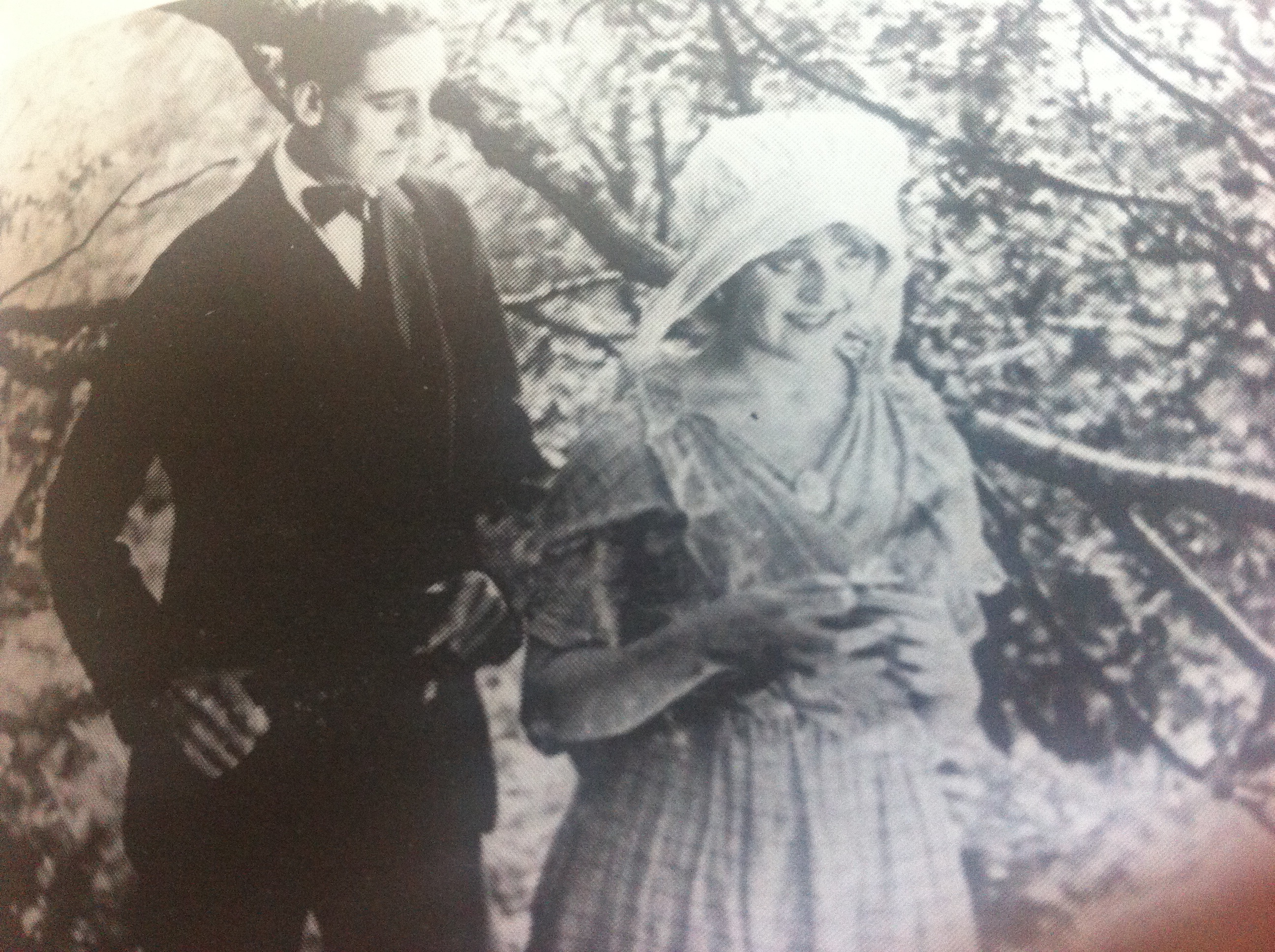
What follows is not merely a marriage but a palimpsest of transgressions scraped across Manhattan’s grid. The elopement scene—shot in actual daylight on a Sunday morning along the then-rural upper reaches of Riverside Drive—captures horse-drawn milk trucks and a lone motorcar coughing like an asthmatic dragon. Alice’s veil, more cobweb than couture, flutters against Carl’s threadbare tweed; the disparity in textile alone could prophesy doom. Yet Steger refuses the easy Marxist scorn; he frames their kiss in extreme silhouette so the Empire State Building (still an embryonic blueprint) haunts the negative space, a specter of vertical capital that will later crush their epistolary lifelines.
Rio de Janeiro, by contrast, arrives in tinted saffron stock—an exotic elsewhere that silent cinema sold like patent medicine. Carl’s success is montaged through three overlapping iris shots: a gilded proscenium, a program bearing his name in curlicued Portuguese, a bouquet hurled by an unseen admirer. The sequence lasts perhaps forty seconds, yet the chromatic temperature alone—those hand-painted yellows—communicates the feverish optimism of a hemisphere that regards him as artist rather than pariah. Meanwhile back in Washington Square, Alice’s pregnancy blooms under house arrest so absolute that even the midwife enters through a servants’ tunnel. Steger intercuts her expanding silhouette with phantom images of Carl’s concerts, accomplished through double-exposure: Alice’s translucent face superimposed over Rio’s opera house like a conscience hovering above the footlights.
Here the film achieves its most modernist gambit: the eradication of mail becomes a form of slow-motion assassination. We never see Winthrop’s razor slicing envelopes; instead Steger offers a bravura sequence of negative space. A stack of unopened letters—each addressed in Alice’s immaculate Spencerian hand—sit on a lacquered table. The camera dollies back, revealing the banker’s polished shoe sliding them into a drawer. The gesture repeats across seasons: falling leaves, snowfall, then lilacs wilting, each transition a jump-cut that annihilates months. The moral horror lies not in physical cruelty but in the quiet usurpation of another’s narrative agency. It’s a precursor to Il film rivelatore’s voyeuristic sabotage, yet stripped of that film’s Gothic paraphernalia; the evil here is banal, bureaucratic, terrifyingly intimate.
When the septic fever strikes, Steger refuses the bedside deathbed cliché. We glimpse Alice only once more—her gaunt profile against a pillow bleached the color of bone—before the camera pivots to a cradle. A newborn cry is suggested by a violin glissando on the score, the only instance where the film’s original accompaniment survives in archival notes. The intertitle reads: “She gave the child her name, then surrendered her breath.” The abruptness is surgical; grief is not lingered over but institutionalized. The banker’s face, half-lit by a hallway gas-jet, registers not sorrow but calculation: the bloodline has been purified of its errant branch.
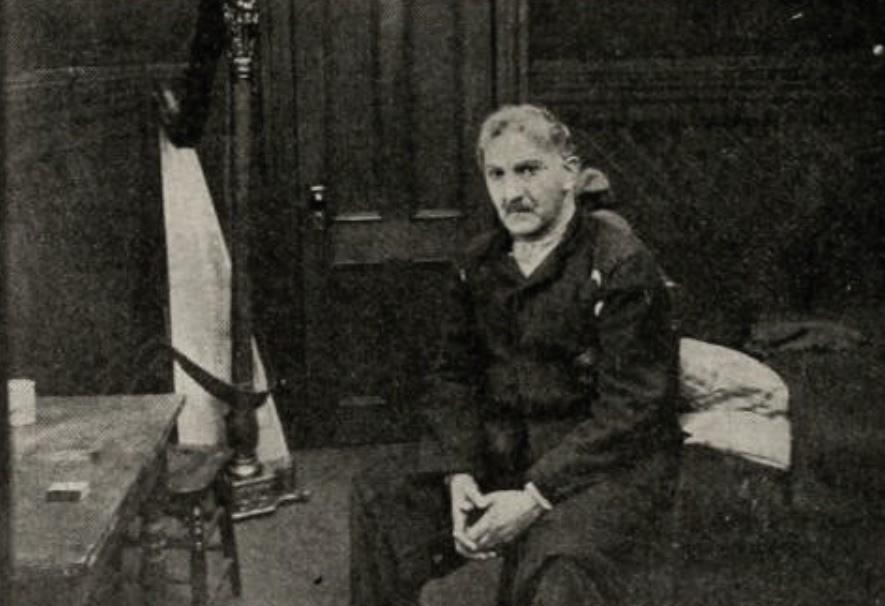
Carl’s descent is rendered in a series of horizontal pans across South American docks, then later Brooklyn wharfs—geography collapses under the weight of emotional exile. Steger shoots himself in weather-beaten profile, hair powdered with fullers’ earth to suggest premature age. The once-ivory gloves are now fingerless; the baton replaced by a tin cup that rattles against paving stones. Yet dignity persists: when he sings, the camera lowers to chest level so the spectator must look up, granting him a secular pulpit. His repertoire remains unchanged—Schubert’s Ständchen, now transposed to a hoarser key—proof that beauty can survive transmutation into currency of the dispossessed.
The harpist sidekick—a black-clad veteran named Silvio (played by Giovanni, a Neapolitan tenor slumming it in character roles)—functions as Greek chorus and one-man rhythm section. Their symbiosis reaches its apotheosis on a rain-slicked Bowery corner: a single arc-light carves a diagonal across the frame, turning drizzle into stardust. Silvio plucks a tremolo while Carl, hat brim dripping, sustains a high A that shivers the puddles. It is the film’s sole concession to visual lyricism, a moment where poverty becomes almost incandescent.
The final act’s coincidences would capsize a lesser film, yet Steger’s tonal control keeps sentimentality at bay. The daughter—also christened Alice, a cruel mnemonic—enters astride a chestnut mare, her riding crop tapping a rhythm that unconsciously matches her father’s song. The camera watches from Carl’s gutter-level POV: hooves, spats, and a swirl of haberdashery that might as well be clouds. Their dialogue is carried on intertitles that eschew Victorian prolixity for the terse cadence of Hemingway before Hemingway: “You sing like someone I should know.” The invitation to the birthday recital is proffered with the offhand arrogance of inherited wealth, yet the actress (Edith Thornton) lets a flicker of vulnerability cross her gaze—perhaps an atavistic recognition encoded in blood.
Inside the Winthrop mansion, production designer Alberta Gallatin unveils a mausoleum of overstuffed chintz: elephant-leg umbrella stands, peacock-feather fans, a grand piano draped in funereal crimson. Carl’s fingers hover above ivory he no longer owns; when he commences the serenade, the camera pans to the portrait—Alice the elder, painted in pre-Raphaelite languor. The moment of recognition is not overplayed: Steger holds his own face in medium-close-up for an almost uncomfortable duration, letting the spectator watch realization dawn like a slow-developing photograph. Tears well, but he blinks them back—stoicism more devastating than any sob.
The banker’s confrontation is blocked like a boxers’ ring-out: two men circling under a chandelier whose crystals refract bars of shadow across their faces. Hal Clarendon’s Winthrop exudes the metallic arrogance of fortunes forged on insider trading; his line readings (via intertitle) snap with monosyllabic contempt: “You will leave this house.” Yet the script grants him a final arc that complicates villainy into something approaching tragedy. When he utters the titular commandment, the camera tilts upward toward a stained-glass skylight depicting Moses with tablets aglow—a literalization that in any other context would verge on kitsch, yet here lands with the thud of covenantal finality.
Steger’s collaboration with cinematographer Julius Jaenzon (on loan from Swedish productions) yields a chiaroscuro palette that anticipates Obryv’s boreal gloom. Interior scenes favor tungsten pools that bleach faces to porcelain, while exteriors—especially the Rio sequences—are bathed in amber tinting suggesting both sunset and infection. The motif of vertical lines recurs: prison bars of the conservatory window, the railings of ocean-liner decks, the balustrades of the Winthrop staircase. Each serves as a reminder that freedom, in this moral universe, is merely a wider cell.
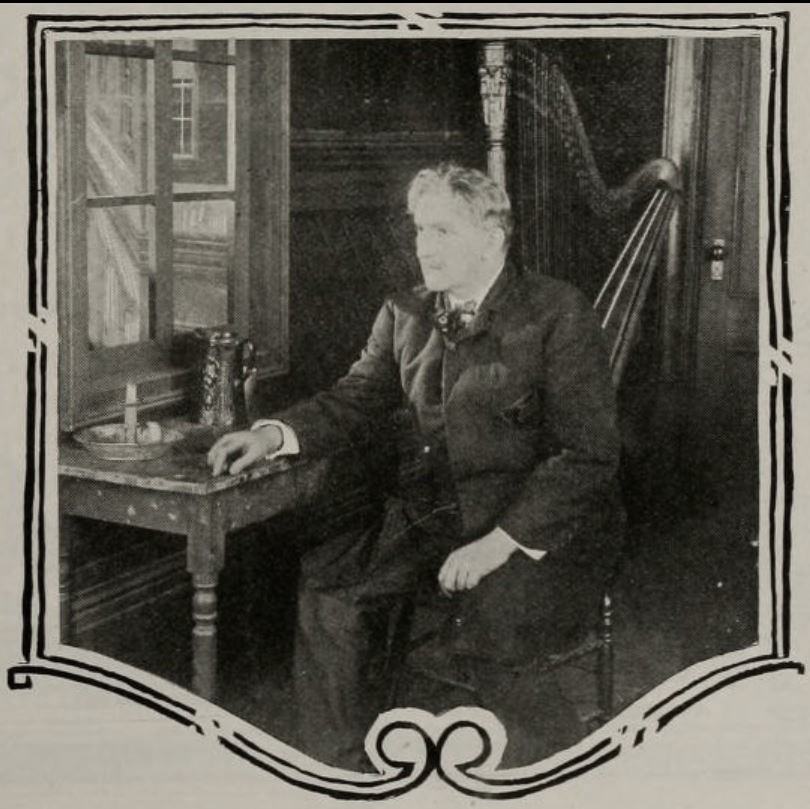
Contrast this with The Lure of New York, where the city itself is a siren of upward mobility; Steger inverts that mythos. Here the metropolis is a centrifuge that flings the marginalized to its periphery, then reimports them as spectacle. When Carl sings for coins outside the very brownstone where he once courted, the film achieves a Brechtian alienation: wealth’s doorstep becomes theater, and art is reduced to alms.
Edith Thornton essays dual roles—mother and daughter—through the simple expedient of a corset change and a modulation of gait. As the elder Alice, her shoulders curve inward like a book pressed shut; as the daughter, she strides with equestrian hips, chin angled to accept the world as tribute. The transition is so seamless that when the portrait is revealed, the spectator experiences a vertiginous moment of temporal dislocation—an ontological shiver rare in 1915 melodrama.
Forrest Robinson’s banker, meanwhile, embodies the patrician cadence of a Roosevelt cousin weaned on sermons and stock tips. Watch how he removes his gloves—one finger at a time—upon discovering Carl in his parlor; the gesture is less preparatory than liturgical, as if donning vestments for an inquisition. Yet Robinson allows the mask to slip in the penultimate shot: his hand trembles as he reaches toward Carl’s shoulder, the tremor of a man who realizes that vengeance has orphaned his own bloodline.
Archival notes indicate the original score interpolated Brazilian modinhas alongside Wagnerian leitmotifs—a cultural fusion mirroring Carl’s dislocation. Unfortunately, only the harp and vocal cues survive, scrawled on onion-skin paper now fossilized in the Library of Congress. Contemporary restorations often substitute generic photoplay music, but the true accompaniment should pulse with the syncopated yearning of a maxixe filtered through a consumptive tenor. Anything less flattens the film’s geopolitical subtext: the global South as both refuge and prison, success and erasure.
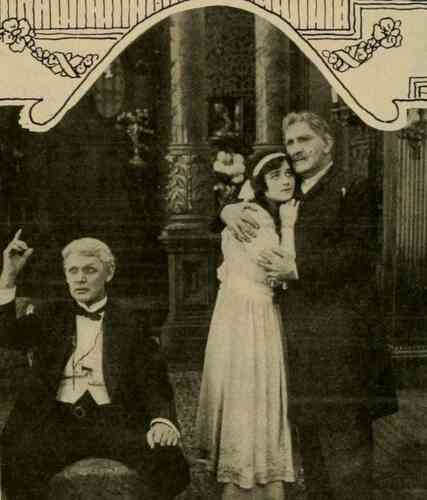
Compare this to The Wrath of the Gods, where East-West hybridity ends in volcanic annihilation; Steger opts for resurrection, albeit one paid for in cataracts of silence. The father-daughter embrace that closes the film is shot against a doorway backlit so intensely that their silhouettes merge into a single glyph—an ideogram of lineage restored, if not absolved.
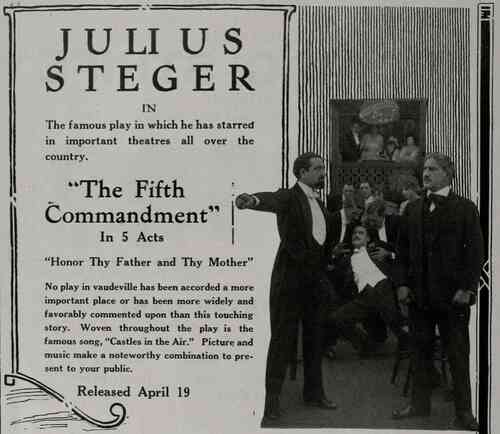
Today The Fifth Commandment circulates chiefly in 9.5 mm excerpts on YouTube, watermarked with the logos of defunct European archives. Yet its DNA persists: in the intercepted letters of The Littlest Rebel, in the paternal renunciations of The Call of the Child, even in the neon alienation of Nell of the Circus. Steger’s insistence that morality is not a ledger of sins but a negotiation of ongoing debts feels almost post-modern. The commandment of the title is less divine injunction than contractual small print, payable across decades.
Watch the film—if you can find it—with the lights low and the sound up. Let the harp arpeggios scrape against your nerves like chalk on slate. When Carl lifts his cracked voice to sing the same lied he once composed in a sunlit classroom, remember that every melody carries its shadow, every classroom its potential grave. In that recognition lies the film’s hard-won grace: the knowledge that to honor father and mother is also, perforce, to honor the ruin they bequeath.
Verdict: A cornerstone of silent melodrama whose emotional ferocity and socio-economic acuity remain undimmed. Seek it, screen it, argue over it—then call your parents.
IMDb —
1922
Community
Log in to comment.