DbcultAccessing Vault...
8.2/10
Senior Film Conservator
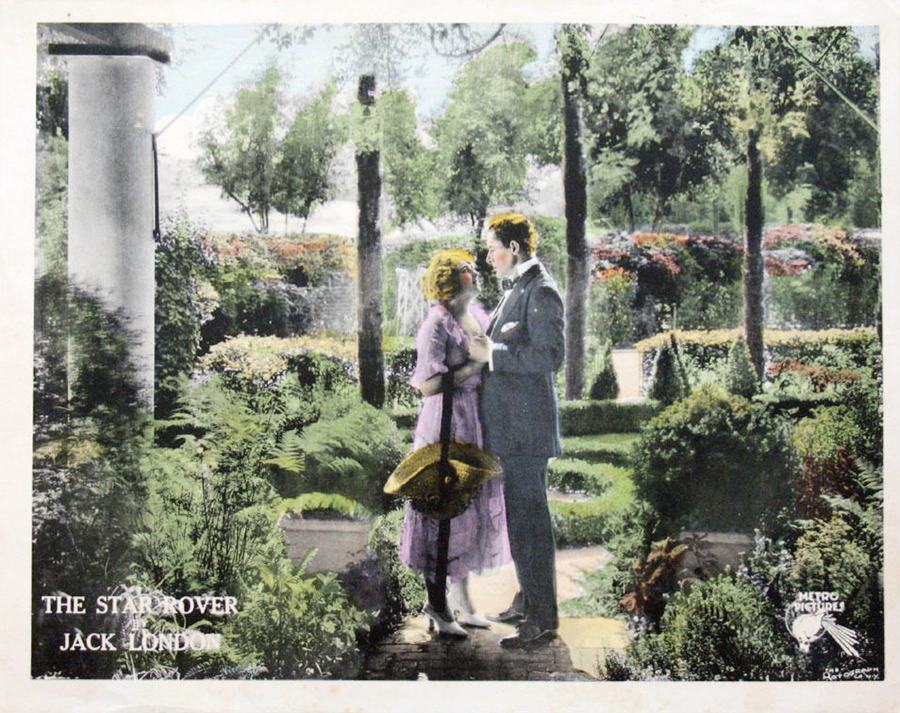
A definitive 8.2/10 rating for a film that redefined the boundaries of cult cinema. The Star Rover remains a cornerstone of transgressive art.
The 1920 adaptation of Jack London’s The Star Rover stands as a monumental anomaly in the landscape of early American cinema. While many of its contemporaries were preoccupied with the domestic trivialities seen in films like What Every Woman Wants, director Edward Sloman and screenwriter Albert S. Le Vino dared to venture into the esoteric. This is not merely a story of incarceration; it is a cinematic treatise on the fluidity of time and the resilience of the human psyche when pushed to the precipice of annihilation.
The film opens with a suffocating intimacy. We are introduced to Darrell Standing, played with a visceral, haunting intensity by Jack Carlyle. Standing is a man condemned, yet his crime is secondary to the psychological warfare waged against him by the prison authorities. The use of the 'straitjacket' is depicted with a gritty realism that predates the more stylized horrors of later decades. Here, the jacket is a character in itself—a canvas of canvas and cord that seeks to erase the individual. In this regard, the film shares a thematic kinship with the legal cynicism found in The Edge of the Law, though it pivots toward a much more celestial resolution.
Carlyle’s performance is a revelation of silent-era physicality. Without the benefit of spoken dialogue, he conveys the agonizing transition from physical resistance to spiritual surrender. His eyes, often captured in tight, claustrophobic close-ups, become the windows through which the audience witnesses the fracturing of reality. This isn't the melodramatic posturing often associated with the era; it is a restrained, almost modern portrayal of suffering that mirrors the social outcasts depicted in Outcast.
The true brilliance of The Star Rover lies in its visual representation of Standing’s astral travels. When he learns to 'die' within the jacket, the film sheds its monochromatic gloom for a series of historical vignettes that are breathtaking in their scope. Unlike the literal historical documentation found in Pristiganeto na bulgarskata delegatziya ot konferentziuata v Parizh, Sloman’s film uses history as a subjective playground. We see Standing as a Roman soldier, a Norseman, and a wanderer in the desert. These sequences provide a necessary juxtaposition to the stasis of the prison cell, offering the audience a sense of vertigo-inducing scale.
The production design for these 'past lives' is surprisingly lavish. While it may not reach the sheer scale of Ali Baba and the Forty Thieves, there is an artisanal quality to the sets and costumes that grounds the fantasy. The transition between these worlds is handled with a sophistication that suggests a deep understanding of montage. The film doesn't just cut from the cell to the past; it bleeds into it, suggesting that the past is always present, lurking just beneath the surface of our current suffering.
Jack London’s source material was a radical work of social commentary, and the film retains much of this bite. It critiques the 'eye for an eye' mentality found in The Feud or the rigid societal structures of Laws and Outlaws. Standing is a martyr for the mind, a figure who proves that while the body can be broken, the soul is an unmappable territory that no warden can truly govern. The supporting cast, including Thelma Percy and Courtenay Foote, provide solid anchors for these disparate timelines, though the film remains firmly centered on Carlyle’s transformative journey.
One cannot help but compare the film's depiction of conflict to the more direct war narratives like Battaglia dall'Astico al Piave. While the latter focuses on the external mechanics of war, The Star Rover internalizes the battle. Every struggle Standing faces in his past lives is a reflection of his current fight for sanity. This thematic depth elevates the film beyond a simple adventure story. It is a precursor to the psychological thriller, a genre that would not fully mature for several more decades.
Visually, the film employs a masterful use of light and shadow. The prison scenes are drenched in deep blacks and harsh, high-contrast whites, emphasizing the bars and the texture of the stone walls. This chiaroscuro effect creates a sense of dread that is almost tactile. In contrast, the 'rover' sequences are often flooded with light, using softer focus and more expansive framing. This visual dichotomy serves the narrative perfectly, reinforcing the theme of liberation. It is a far more complex visual language than that found in Passers By, which relies on more conventional staging.
The editing, too, deserves commendation. The way the film intercut between the agonizing physical reality of the jacket and the ethereal freedom of the past lives is rhythmic and propulsive. It creates a tension that is rarely found in silent cinema. Even when the pace slows to accommodate the philosophical musings of the script, there is an underlying sense of urgency. The film understands that for Standing, every second in the jacket is an eternity, and the editing reflects this temporal distortion.
At its core, The Star Rover is a film about the search for meaning in a meaningless environment. It grapples with the concept of sin and redemption, much like The Seventh Sin or the tragic overtones of Unsühnbar. Standing is not an innocent man in the traditional sense, but his punishment is so disproportionate that he becomes a figure of saint-like endurance. His 'rover' experiences are not just escapes; they are lessons in the human condition, teaching him (and the audience) that the spirit is refined through fire.
This moral weight is what distinguishes the film from more whimsical fantasy fare like Aladdin's Other Lamp. While both films deal with the extraordinary, The Star Rover keeps its feet firmly planted in the muck and blood of reality. The fantasy here is a survival mechanism, a desperate clawing at the walls of existence. It is this grit that makes the eventual 'victory' of Standing’s spirit so resonant. It is The Sting of Victory personified—a triumph that comes at the ultimate cost of the physical self.
Reviewing The Star Rover today requires one to look past the technical limitations of 1920 and see the burning ambition underneath. It is a film that refuses to be categorized. Is it a prison drama? A historical epic? A metaphysical fantasy? It is all of these and more. Like the peril depicted in Katastrofen i Kattegat, the danger in this film is ever-present, but the escape is internal.
The film’s ending is a haunting, beautiful sequence that lingers long after the screen goes dark. It suggests a finality that is also a beginning, a concept that mirrors the cycle of life and death Standing has just traversed. In a world of disposable entertainment, The Star Rover remains a challenging, provocative piece of art. It reminds us that cinema, even in its infancy, was capable of exploring the deepest recesses of the human heart. It is a testament to the power of imagination—the only force capable of breaking the strongest chains.
Final Verdict:
An essential viewing for those who believe cinema should be more than mere diversion. The Star Rover is a profound, albeit harrowing, exploration of the infinite within the finite. It is a silent masterwork that continues to shine with a dark, brilliant light.
IMDb 5
1931
Community
Log in to comment.