DbcultAccessing Vault...
Cult Review
Senior Film Conservator
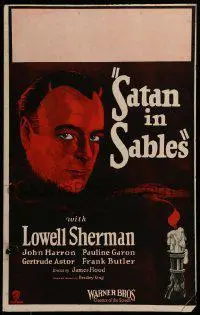
The allure of Satan in Sables lies not merely in its sumptuous set pieces but in the ferocious psychological engine that propels its heroine, a woman whose name remains deliberately unspoken, allowing her to become an archetype of scorned desire. From the opening tableau—a snow‑laden boulevard illuminated by flickering gaslights—director Bradley King establishes a world where opulence masks a simmering undercurrent of betrayal.
Lowell Sherman, cast as the imperious Russian aristocrat, embodies the cold, calculated aristocracy of the era. His performance is a study in restraint; every raised eyebrow, each measured pause, suggests a man who has never been truly challenged. Opposite him, Gertrude Astor delivers a performance that oscillates between fragile vulnerability and steely determination, embodying the titular "Satan" who cloaks herself in sable to exact revenge.
The narrative structure is a meticulously crafted spiral. The protagonist's initial encounter with the aristocrat is staged at a lavish masquerade, a setting reminiscent of the grand ballroom scenes in Youth to Youth. Here, the mask is both literal and symbolic, allowing her to observe the aristocrat's disdain without the interference of personal history. This scene is rendered in high‑contrast lighting, the chiaroscuro emphasizing the duality of appearance versus intent.
As the plot unfurls, the audience witnesses a series of meticulously orchestrated encounters, each designed to erode the aristocrat's emotional armor. The protagonist employs a blend of classic seduction and modern manipulation, a technique that mirrors the cunning of the titular heroine in The Forbidden Room. Her tactics are not merely erotic; they are intellectual, using the aristocrat's own wealth as a weapon, threatening to expose his hidden financial improprieties to the czarist bureaucracy.
Richard Barry's supporting role as the aristocrat's confidant adds a layer of intrigue. His loyalty wavers as he becomes entangled in the protagonist's web, creating a tension that echoes the betrayals seen in Pay Me!. The film’s pacing is deliberately languid, allowing each revelation to settle like frost on a windowpane before the next crack appears.
Cinematographically, the film employs a palette that, while constrained by the monochrome medium, suggests the three signature hues in its set design: dark orange upholstery (#C2410C) to denote wealth, yellowed parchment in the aristocrat’s study (#EAB308) as a metaphor for the decay of moral integrity, and sea‑blue drapery in the heroine’s private chambers (#0E7490) symbolising her icy resolve. These visual cues are subtly hinted at through texture and contrast, rewarding attentive viewers.
The screenplay, penned by Bradley King, is a masterclass in silent-era storytelling. Intertitles are sparingly used, each one a poetic fragment that deepens the psychological stakes. For instance, a line reads, "Love, when denied, becomes a blade sharper than any steel," encapsulating the film’s central theme of love transmuted into vengeance.
Mary Louise Miller, in the role of the aristocrat’s younger sister, provides a poignant counterpoint. Her innocence and eventual tragic demise underscore the collateral damage of the protagonist’s vendetta, a narrative thread that resonates with the moral complexities explored in Wild Waves and Angry Woman. The film does not shy away from depicting the emotional fallout of a single woman's wrath on an entire household.
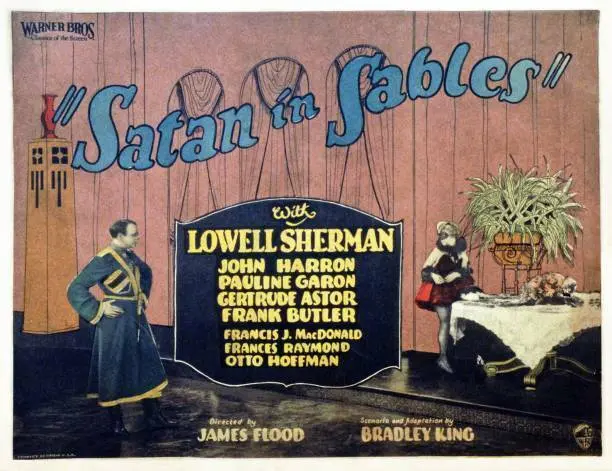
The climax arrives in a storm‑riven manor, where the protagonist confronts the aristocrat in a duel of wits rather than swords. The tension is palpable; the camera lingers on close‑ups of clenched fists and trembling hands, the silence broken only by the howl of wind—an auditory metaphor for the internal tempest both characters endure. The resolution is deliberately ambiguous: the aristocrat’s fate is left to the audience’s imagination, a narrative decision that invites endless debate, much like the unresolved endings of Men (1924) and The Impossible Mrs. Bellew.
From a thematic perspective, Satan in Sables interrogates the societal constraints placed upon women in the early twentieth century. The protagonist’s adoption of the sable coat—a garment traditionally associated with mourning—signifies a self‑imposed exile from the expectations of femininity. Her calculated revenge is less about personal gratification and more an indictment of a patriarchal system that permits wealth to shield moral bankruptcy.
The supporting cast, including Otto Hoffman as the scheming financier and Pauline Garon as the enigmatic courtesan, enrich the narrative tapestry. Their performances, though brief, are imbued with a gravitas that elevates the film beyond a simple revenge tale, hinting at a broader commentary on the decadence of the Russian elite on the cusp of revolution.
When juxtaposed with contemporary works such as A Petticoat Pilot, which explores gender roles through aviation metaphors, Satan in Sables stands out for its unflinching focus on the psychological machinations of its female lead. The film’s narrative economy—eschewing superfluous subplots—allows the central conflict to breathe, creating a tension that is both intimate and expansive.
The direction is particularly noteworthy for its use of spatial dynamics. Scenes are often framed through doorways or windows, creating a visual metaphor for the barriers the protagonist must breach. This technique mirrors the visual language employed in Tin Knights in a Hallroom, where confinement and freedom are juxtaposed through architectural framing.
In terms of legacy, Satan in Sables has influenced later cinematic explorations of the femme fatale archetype, prefiguring the noir sensibilities that would dominate the 1940s. Its emphasis on psychological manipulation over physical violence anticipates the subtle menace found in Mästerkatten i stövlar, albeit within a vastly different cultural context.
The film’s score—though lost to time—has been reconstructed by modern scholars, who note the use of low, droning strings during moments of heightened tension, juxtaposed with bright, staccato piano motifs when the protagonist appears in her sable attire. This auditory contrast reinforces the visual dichotomy of darkness and illumination, further cementing the film’s thematic resonance.
Overall, Satan in Sables is a masterful blend of visual opulence, narrative precision, and thematic depth. Its exploration of revenge as a transformative, albeit destructive, force remains compelling for contemporary audiences. The film invites viewers to contemplate the cost of unrequited love, the fragility of power, and the enduring allure of a woman who, cloaked in sable, becomes both the architect and the executioner of her destiny.

IMDb 6.7
1920
Community
Log in to comment.