DbcultAccessing Vault...
Cult Review
Senior Film Conservator
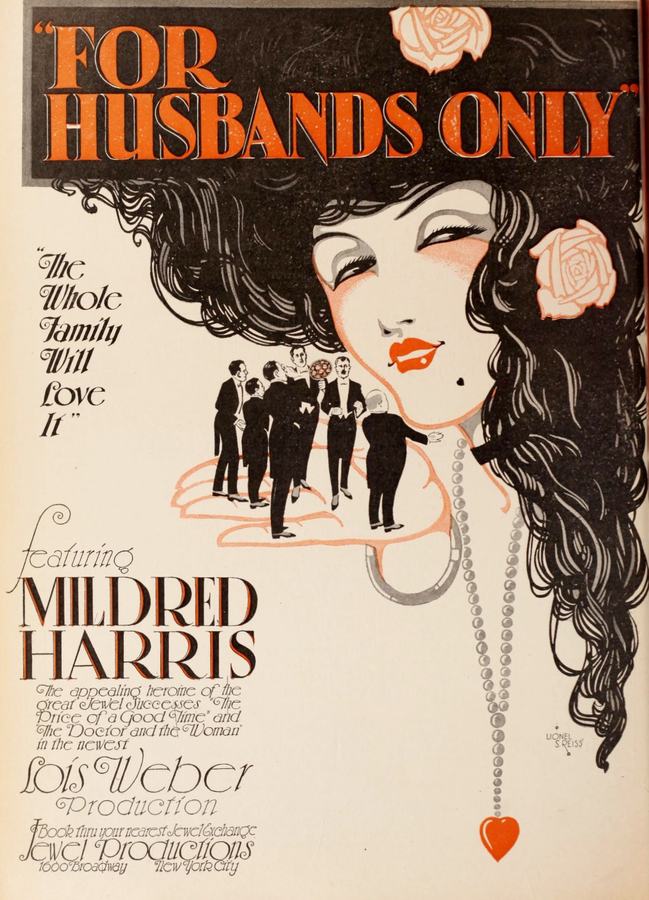
In the annals of early cinema, few voices resonated with the profound social consciousness and narrative daring of Lois Weber. Her 1918 silent drama, For Husbands Only (slug: for-husbands-only), stands as a testament to her singular vision, a film that peels back the layers of marital expectation and psychological manipulation with a surgeon's precision. Far from a simple domestic drama, this picture plunges into the murky waters of desire, deception, and the fragile nature of perception, all orchestrated through a narrative device that was audacious for its time and remains compelling today. It’s a work that challenges its audience to look beyond the surface, to question the very foundations upon which relationships are built, and to ponder the power of external forces to corrode even the most seemingly stable unions. This isn't just a film; it's a profound cinematic inquiry into the human heart's susceptibility to influence, a narrative woven with threads of intrigue and emotional vulnerability.
At the core of For Husbands Only lies an ingenious, almost Machiavellian plot conceived by a determined suitor. This isn't a tale of overt abduction or physical coercion; rather, it’s a sophisticated campaign of psychological warfare. The suitor, consumed by an unrequited passion for a married woman, devises a scheme of remarkable subtlety and cruelty. He doesn't confront the husband directly in a duel of wills; instead, he crafts an elaborate theatrical presentation, a play designed to be a mirror, albeit a distorted one, of the husband's own marriage. The brilliance—and the horror—of this strategy lies in its insidious nature: the husband is not merely an audience member, but an unwitting participant in a drama that is, in essence, his own life laid bare. Each scene on the stage is meticulously curated to evoke specific memories, to highlight perceived flaws, and to amplify unspoken anxieties within his marital bond. The objective is not to reveal new truths, but to reframe existing ones, to manipulate the husband's perspective until he himself concludes that his marriage is untenable, thereby willingly relinquishing his wife. This narrative structure allows Weber and co-writer G.B. Stern to explore the deep psychological impact of manipulated reality, a theme that resonates profoundly even a century later. It’s a high-stakes gamble, reminiscent of the moral quandaries explored in films like Gambling Inside and Out, but here, the stakes are not monetary, but the very fabric of human relationships, meticulously unraveled by a cunning rival. The film becomes a masterclass in how perception can be weaponized, turning a man's own memories against him in a bid for another's affections.
To discuss For Husbands Only without acknowledging Lois Weber's pivotal role would be a disservice to cinematic history. As one of the most prolific and respected directors of the silent era, Weber was a trailblazer, not just as a woman in a male-dominated industry, but as an artist committed to using film as a vehicle for social commentary and psychological exploration. Her films often tackled controversial subjects—abortion, birth control, capital punishment, and in this case, the complexities of marital fidelity and manipulation—with a nuanced hand and a deep sense of moral inquiry. She possessed an unparalleled ability to imbue her narratives with a quiet intensity, relying on visual storytelling and the expressive power of her actors to convey profound emotional states. With For Husbands Only, Weber masterfully employs the 'play within a play' device, a narrative strategy that could easily become unwieldy, but in her hands, it serves to heighten the tension and deepen the psychological impact. The film becomes a meta-commentary on storytelling itself, questioning how narratives, whether on stage or in life, shape our understanding of reality. Her direction here is subtle yet powerful, guiding the audience through the husband's agonizing realization without resorting to overt melodrama, a common pitfall of the era. Her work stands in stark contrast to more sensationalist fare, aligning more with the thoughtful introspection found in films like The Saintly Sinner, which also delved into the hidden complexities of human morality. Weber's directorial choices consistently demonstrate a profound understanding of human nature, making her films not just entertaining, but intellectually stimulating and emotionally resonant. Her ability to craft such a layered narrative, demanding both intellectual engagement and emotional empathy from the viewer, solidified her reputation as a true auteur of her time, pushing the boundaries of what silent cinema could achieve.
The success of a silent film, particularly one as psychologically intricate as For Husbands Only, hinges almost entirely on the expressiveness and conviction of its cast. Kathleen Kirkham, as the wife, embodies a quiet dignity, her character often the object of desire and the fulcrum around which the drama revolves. While her agency might appear limited by the plot's design, her very presence and the perception of her by the two men drive the narrative forward. Her nuanced expressions convey a woman caught in a silent battle, her fate seemingly decided by external forces, yet her inner strength subtly shines through. Lew Cody, portraying the husband, delivers a performance of remarkable vulnerability and gradual awakening. His journey from unsuspecting spouse to a man grappling with a shattered perception of his own life is rendered with compelling nuance. Cody must convey a spectrum of emotions—bewilderment, recognition, anger, despair—all without the aid of spoken dialogue, relying instead on gesture, facial expression, and the subtle shifts in his posture. It is a masterclass in silent film acting, making his character's internal turmoil palpable to the audience. Mildred Harris, though perhaps in a smaller role, often brought a captivating presence to the screen in her contemporaneous films, and her contribution here, alongside Esther Ralston, Fred Goodwins, and Henry A. Barrows, rounds out a cast capable of conveying the intricate emotional landscape Weber envisioned. These actors were tasked with communicating profound internal conflicts through external means, a challenge they met with commendable skill, allowing the audience to fully invest in the unfolding emotional peril, much like the intricate dangers depicted in The Hand of Peril. Their collective ability to project deep psychological states without a single spoken word is a testament to their talent and Weber's astute direction, transforming a deceptively simple premise into a rich tapestry of human emotion and conflict.
For Husbands Only delves into themes that remain strikingly relevant. At its core, it's an exploration of the fragility of perception and the power of narrative to shape reality. The suitor doesn't invent events; he merely recontextualizes them, twisting the husband's memories against him. This raises uncomfortable questions about how much of our understanding of our own relationships is truly objective, and how susceptible we are to external influence. The film also examines the societal pressures surrounding marriage in the early 20th century. While the title itself, "For Husbands Only," might suggest a didactic tone aimed solely at male audiences, Weber's nuanced approach reveals the complexities faced by all parties in a marital contract. It’s a commentary on fidelity, trust, and the often-unspoken expectations that can lead to resentment and disillusionment. The film subtly critiques the patriarchal assumptions of the era, where a woman could be seen as an object to be won or relinquished, rather than an active participant in her own destiny. In this regard, it shares a thematic thread with other films that interrogated societal roles and expectations, such as Wild Women, though Weber’s approach is notably more introspective and psychologically driven. The film forces us to confront the uncomfortable truth that our personal histories, particularly within relationships, are often subjective constructs, vulnerable to external interpretation and manipulation. It's a powerful reminder that the stories we tell ourselves, and the stories others tell about us, can profoundly impact our reality, making this film a timeless exploration of identity and interpersonal dynamics.
The screenplay, co-written by Lois Weber herself and G.B. Stern, is a marvel of intricate plotting. It constructs a narrative that is both linear in its progression of the husband's experience and cyclical in its revisiting of his past through the theatrical lens. The pacing is deliberate, allowing the psychological tension to build gradually, rather than relying on rapid-fire events. This measured approach ensures that each revelation, each moment of recognition for the husband, lands with maximum impact. The film's visual language, characteristic of Weber's style, is employed to underscore the narrative's themes. Close-ups are used sparingly but effectively to emphasize emotional states, while the juxtaposition of the theater stage and the husband's internal world creates a powerful sense of disorientation. The use of lighting, even in its early silent film incarnation, would have been crucial in differentiating between the 'reality' of the theater and the 'reality' of the husband's memories, further blurring the lines of what is true and what is constructed. This sophisticated narrative construction positions For Husbands Only as a significant work in the development of cinematic storytelling, demonstrating how film could move beyond simple spectacle to engage with complex psychological dramas. It speaks to the enduring power of a well-crafted story to provoke thought and emotion, much like the dramatic tension found in Five Nights, which similarly explores intense emotional situations over a confined period. The meticulous attention to detail in the script ensures that every scene, every intertitle, contributes to the overarching design of psychological persuasion, making the audience complicit in the husband's unfolding torment and deepening the film's immersive quality. It is a testament to the power of narrative as both a mirror and a weapon.
While For Husbands Only might not be as widely known today as some of its silent film contemporaries, its significance cannot be overstated. It is a powerful example of Lois Weber's ability to transcend the technical limitations of her era to deliver a profoundly psychological and socially relevant narrative. The film's innovative use of a play-within-a-film to explore internal conflict and manipulation predates many similar narrative devices in later cinema. It serves as a reminder of the artistic ambition and intellectual depth present in early Hollywood, often overlooked in favor of more commercially driven productions. For students of film history, and indeed for anyone interested in the evolution of storytelling, For Husbands Only offers invaluable insights into the craft of silent cinema and the enduring power of a well-told, thought-provoking story. Its examination of marital dynamics, the vulnerability of human perception, and the insidious nature of manipulation continues to resonate, proving that true artistry transcends time and technological advancements. It is a film that demands rediscovery, a quiet masterpiece that speaks volumes about the human condition, inviting us to reflect not just on the characters' predicaments, but on the delicate balance of truth and illusion in our own lives.
In an era where cinema was still finding its voice, Lois Weber provided a powerful, articulate one. For Husbands Only is more than just a historical artifact; it is a living document of cinematic ingenuity and a poignant exploration of the human heart's intricate workings. It’s a film that, despite its silent nature, speaks volumes, challenging its audience to consider the unseen forces that shape our choices and the narratives we construct about our own lives. Its influence, though perhaps subtle, can be traced through subsequent films that dared to delve into the psychological underpinnings of human relationships, solidifying its place as an important, albeit often unsung, work in the tapestry of world cinema. It truly is a film that, once seen, leaves an indelible mark, prompting reflection on the very nature of persuasion and the delicate architecture of trust within a marriage. Its boldness in tackling such a complex premise with such elegance and psychological depth ensures its enduring relevance, cementing its status as a cornerstone of early cinematic artistry and a testament to Weber's unparalleled genius.
IMDb 5.8
1913
Community
Log in to comment.