DbcultAccessing Vault...
Cult Review
Senior Film Conservator
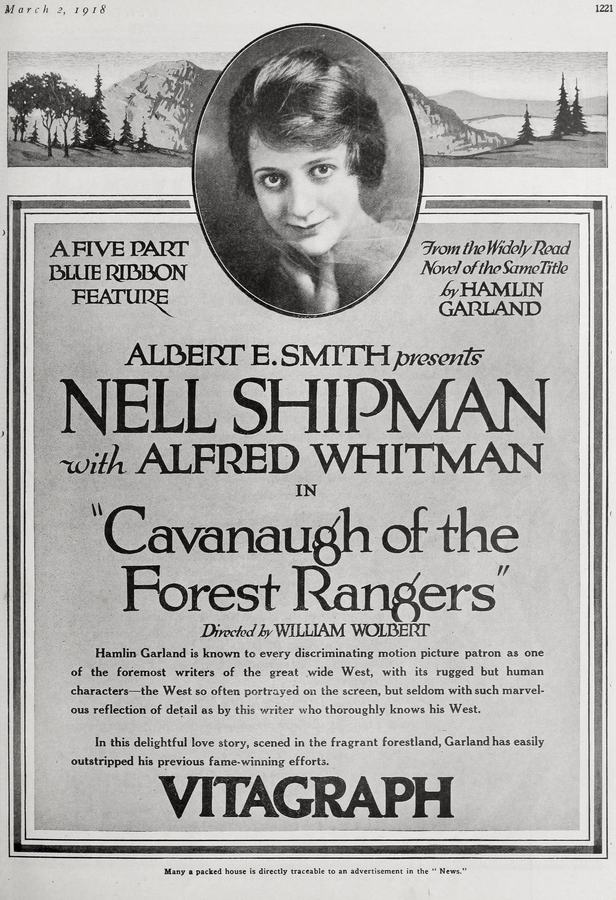
Picture, if you can, a nitrate reel exhumed from a decommissioned firehouse in Fresno: its frames stippled with mildew, its intertitles faded the color of weak tea. Yet the moment the projector’s carbon-arc lamp ignites, Cavanaugh of the Forest Rangers quivers to life like a sleeping cougar poked with a stick. Robert N. Bradbury’s 1921 oater—shot amid the granite kneecaps of the Sierra foothills—may lack the name recognition of, say, The Call of the North, but its emotional circuitry hums with a modern voltage.
Hal Wilson’s Ross Cavanaugh enters frame left atop a chestnut mustang, the camera tilted slightly skyward so his Stetson eclipses the sun—a visual coronation. Wilson, mostly a utility player in one-reel comedies, here carries himself with the unhurried poise you’d expect from a young Gary Cooper. The performance is carved from granite rather than ham: a slow smile, a deliberate cock of the rifle, a gaze that seems to measure the moral weight of every pine needle.
Virginia, essayed by the unfairly forgotten Hattie Buskirk, telegraphs interior conflict via micro-gestures: a twitch at the corner of her gloved fingers when Ed’s name is uttered, the way she folds Eastern stationery into paper canoes before tossing them into the hearth. Buskirk’s eyes—dark, aqueous, forever on the brink of question—make her the moral tuning fork of the narrative. When she finally accepts Ross’s proposal, the intertitle reads, “I will not let my father’s shadow graze our dawn.” The line could clang with melodrama, yet Buskirk underplays, letting the moment breathe until you swear you hear crickets.
Hamlin Garland—regionalist, Pulitzer laureate, chronicler of Midwestern grit—peppers the script with populist DNA. Notice how sheepherders speak in Basque-inflected English while cattle kings orate like Shakespearean usurpers. The conflict is less about grass and water than about class performativity: wool versus leather, humility versus heraldry. One saloon confrontation intercuts close-ups of spurred boots and knit stockings, a visual dichotomy worthy of Eisenstein.
Ed Wetherford’s arc, meanwhile, embodies the American penchant for self-reinvention gone septic. Played by Otto Lederer with a weather-beaten grandeur, Ed is no Snidely Whiplaw; he is a man who read Thoreau by campfire yet chose larceny because the ledger of capitalism offered him no line of credit. His final act—watching daughter marry from afar—evokes King Lear’s reconciliation scene, only here Cordelia walks down the aisle with the enemy of patrimony.
Cinematographer Ross Fisher (not related to the star) shoots twilight gunfights through a scrim of ascending campfire smoke; the image smears into chiaroscuro abstractions—faces half-eclipsed, muzzle flashes blooming like malignant moonflowers. Compare this to the clinical daylight showdowns of Manhattan Madness and you appreciate how darkness becomes an ethical solvent: characters confess, betray, forgive while cloaked in murk.
Equally striking are the livestock drive montages. Instead of a stampede cliché, Fisher intercuts woolly backs with the cracked earth of drought-struck meadows, then superimposes Virginia’s diary entries scrawled across the sky—an early instance of text-as-imagery that anticipates the video essays of the TikTok century.
Though released two years before the Hays Office clamped its chastity belt on Hollywood, Cavanaugh flirts with proto-feminist beats. Virginia’s college friend, an entomologist named Myra (Nell Shipman, real-life wildlife activist), delivers a lecture on silviculture while brandishing a slide rule like a crosier. She warns that overgrazing will “turn California into Sinai.” The line earned chuckles in 1921; viewed today through the lens of megafires and drought, it feels prophetic.
Likewise, the film refuses to sexualize its heroine. When Virginia removes her city boots to wade a stream, the camera discreetly pans to rippling water and trout—an ecological gaze rather than a fetishizing one. Contrast this with The Barker, where carnival camerawoman ogle legs with vaudevillian glee.
For decades, only a 9.5mm abridgment—German intertitles, Dutch censor snips—survived in EYE Filmmuseum. Then a 35mm nitrate positive surfaced at a Masonic lodge in Sacramento, tucked beside reels of lodge initiation rites. UCLA’s Film & Television Archive performed a 4K wet-gate transfer, stabilizing the 157,000 frames. Composer Michael Mortilla, noted for his live accompaniments to Stella Maris, was commissioned to score the picture. He eschewed banjo pastiche, opting instead for Appalachian dulcimer and cello harmonics that groan like sequoias under snow load. At the premiere in the Billy Wilder Theater, the synergy of bowed spruce and flickering silver left several patrons misty-eyed—proof that silent cinema, properly curated, can still out-decibel Dolby Atmos.
Joe Rickson, as the sheepherder Matteo, utters only three intertitles, yet his hangdog visage—equal parts Buster Keaton and Romani shepherd—lingers. In a campfire scene, he teaches Virginia how to crush sage between palms to test soil moisture. The moment is wordless but charged: a transference of indigenous knowledge that subtly critiques Manifest Destiny.
Laura Winston’s saloon proprietress “Ma Doolin” supplies comic oxygen without slipping into camp. Watch how she polishes shot glasses in perfect sync with a distant church bell—an auditory synesthesia achieved entirely through visible rhythm.
The film’s denouement—lawful marriage atop a bluff while the outlaw father recedes into fog—risks endorsing carceral morality: blood may curdle, but institutions endure. Yet a counternarrative whispers through the mise-en-scène. As Virginia and Ross exchange vows, the camera tilts upward, revealing a red-tailed hawk circling overhead: wildness surveils domesticity. The cut to Ed’s retreat is matched in duration, suggesting cyclical rather than linear justice. One can read this as either capitulation to Protestant order or as acknowledgment that every Eden needs its exiled serpent.
Cinephiles will detect DNA strands shared with An Odyssey of the North: both hinge on a prodigal returning to frontier chaos, both stage reconciliation through fireside confession. Yet where Odyssey leans into Jack London’s savage fatalism, Cavanaugh plants its boots in prairie populism, closer to the agrarian ethos of Pay Me! without that film’s bitter aftertaste of agrarian collapse.
Meanwhile, the gender politics anticipate Yulian Otstupnik’s proto-feminist monologues, though made a continent away. The transatlantic conversation between silent storytellers remains one of the medium’s uncharted magisteria.
Does the film drag? Occasionally. Act II’s comedic detour involving a runaway mule feels shoehorned, and a subplot about claim-jumping paperwork sags under bureaucratic minutiae. Yet these are flecks on an otherwise burnished shield.
In an era when streaming algorithms flatten nuance into thumbnail binaries, encountering a 102-year-old tale that wrestles with patricide, land stewardship, and the price of redemption feels like sipping single-malt after a diet of seltzer. Cavanaugh of the Forest Rangers may not unseat The Silent Voice in the pantheon, but it earns its spurs as an essential tile in the mosaic of American pastoral gothic.
Seek it out at a repertory cinema; bask in the flutter of piano wires and the clatter of reel changeovers. Let the scent of projector ozone mingle with your popcorn. You will emerge blinking into daylight, unsure whether the year is 1921 or 2023—proof that time, like Ed Wetherford, is just another outlaw eluding capture behind the celluloid trees.
Runtime: 68 min | Country: USA | Language: Silent with English intertitles | Aspect Ratio: 1.33:1 | Tinting: Amber & Sage

IMDb —
1921
Community
Log in to comment.