DbcultAccessing Vault...
7.2/10
Senior Film Conservator
A definitive 7.2/10 rating for a film that redefined the boundaries of cult cinema. Vaudeville remains a cornerstone of transgressive art.
In the annals of early animation, certain works stand as luminous beacons, illuminating the path for future cinematic artistry. Max Fleischer’s 'Vaudeville', a charming relic from an era brimming with innovation, is undeniably one such piece. More than just a collection of animated vignettes, this film serves as a vibrant time capsule, meticulously preserving the effervescent spirit of a bygone entertainment epoch. It’s a testament to the enduring appeal of variety acts and the nascent power of the moving image to capture and reimagine them. The film doesn't merely present a series of performances; it encapsulates the very essence of vaudeville – its spectacle, its charm, its gentle absurdity – all filtered through the pioneering lens of Fleischer's distinctive animation style. For anyone seeking to understand the foundational elements of cartooning and its symbiotic relationship with popular culture, 'Vaudeville' offers a compelling, delightful entry point.
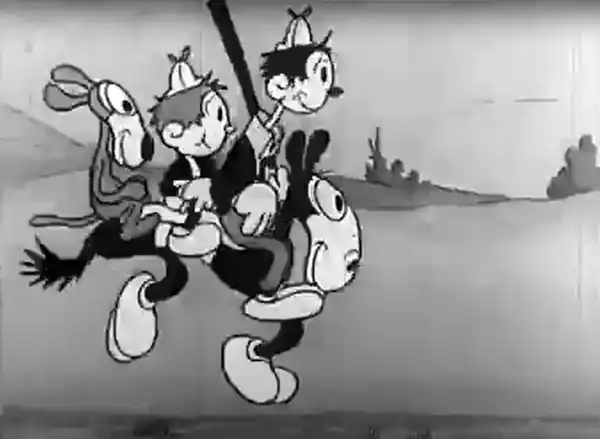
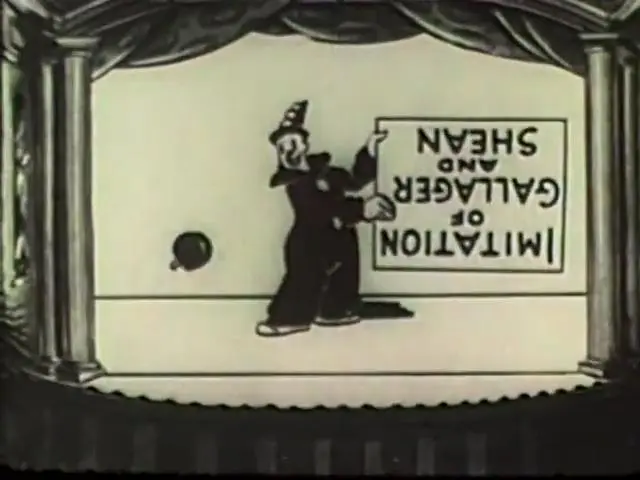
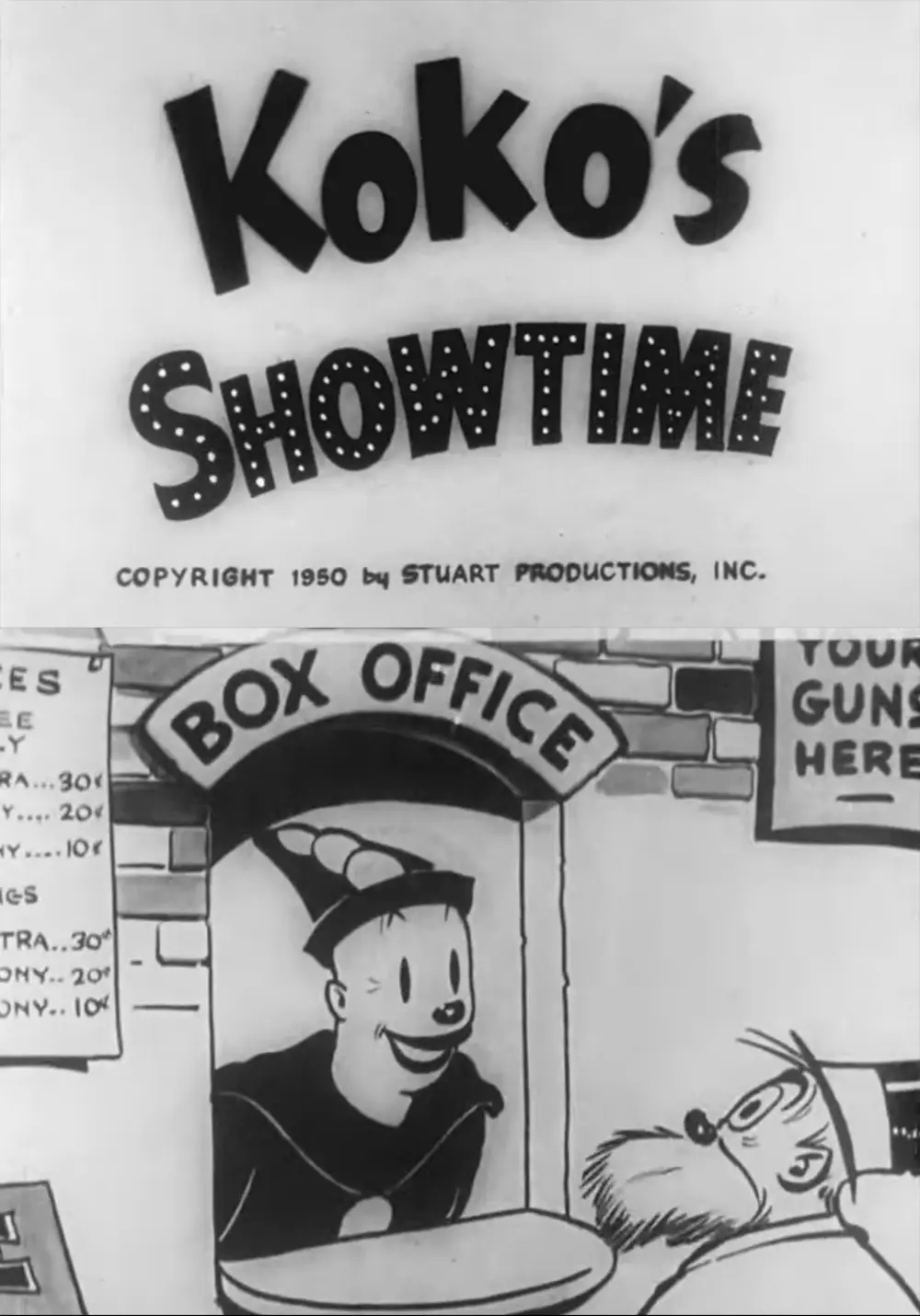
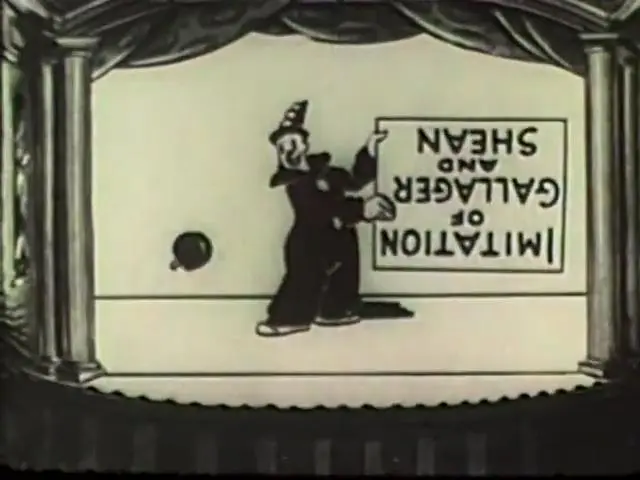
The film immediately immerses its audience in the theatrical ambience, eschewing verbose exposition for immediate visual engagement. We are introduced to Ko-Ko, the animated clown who would become a recurring figure in Fleischer’s early works, here assuming the mantle of a genial host. Ko-Ko, with his distinctive rubber-hose limbs and expressive visage, embodies the playful spirit of the era, a kind of animated master of ceremonies whose very presence promises delightful diversions. His role is less about direct narration and more about setting a mood, a silent usher guiding us through the forthcoming wonders. This approach, favoring visual storytelling and character presence over dialogue, was a hallmark of silent cinema and early animation, demanding a different kind of engagement from its viewers. The genius lies in how Fleischer manages to infuse Ko-Ko with personality even without spoken words, relying purely on movement and simple, yet effective, character design. It’s a masterclass in non-verbal communication, a skill that many contemporary filmmakers could still learn from.
The first act to grace Ko-Ko’s stage is a breathtaking display of rope tricks, an acrobatic marvel that translates surprisingly well into the animated medium. A lithe performer, rendered with Fleischer’s characteristic fluidity, ascends a rope, twisting and contorting their body into a series of improbable shapes. The animation here is particularly noteworthy for its ability to convey both the physical strain and the effortless grace inherent in such an act. Each swing, each knot, each moment of suspended animation is imbued with a sense of dynamic energy, a testament to the animators’ keen observation of human movement. The illusion of height and danger, crucial to the appeal of live rope acts, is expertly maintained through clever staging and exaggerated movement, a luxury animation affords over live performance. Unlike the raw, often gritty reality captured in films like The Essanay-Chaplin Revue of 1916, which grounds its humor in human foibles, 'Vaudeville' elevates its performers to a realm of almost supernatural agility. The rope artist in 'Vaudeville' isn't just a performer; they are an abstract representation of human potential, unburdened by the very real dangers of a live stage. The simplicity of the background ensures that all focus remains on the performer, allowing their animated form to truly captivate. The subtle details, like the sway of the rope or the shifting shadows, contribute immensely to the overall immersive experience, drawing the viewer deeper into this fantastical interpretation of a classic vaudeville staple. It highlights how early animators weren't just mimicking reality, but actively enhancing and stylizing it for maximum visual impact.
Following the aerialist, the stage transforms to accommodate an equestrian act, a spectacle of refined power and control. Horses, traditionally symbols of untamed nature, are presented here as creatures of exquisite discipline, moving in perfect synchronicity with their riders. The animation captures the stately grace of these animals, their powerful musculature rendered with a surprising degree of realism for the period, yet still imbued with that distinct Fleischer charm. The riders, in turn, demonstrate a masterful command, guiding their steeds through intricate formations and elegant maneuvers. This act speaks to a different facet of vaudeville’s appeal: the blend of human skill with animal prowess, creating a harmonious visual symphony. It’s a performance that evokes the grandeur of the circus, yet scaled for the intimate theatrical setting. The challenge for animators was to convey the weight and majesty of the horses without losing the fluid, cartoonish quality that defined the studio's output. They succeed admirably, creating a sense of both awe and lightheartedness. In contrast to the often grim or morally complex narratives found in silent dramas like God's Law and Man's or A Soul Enslaved, 'Vaudeville' offers pure, unadulterated visual pleasure. There are no heavy themes, no moral quandaries, just the simple, undeniable beauty of performance. This segment, in particular, showcases the animators' ability to render complex motion, from the subtle shifting of a horse’s weight to the precise movements of a rider, all within the confines of a nascent art form. It's a delightful example of how early animation could capture the thrill of a live show and present it to a wider audience, transcending geographical and financial barriers that often limited access to such spectacles.
Perhaps the most charming and overtly whimsical act is the segment featuring trained seals. These sleek, intelligent creatures navigate a watery stage, balancing balls on their noses, leaping through hoops, and performing various endearing antics. The animators imbue the seals with distinct personalities, making them more than mere props; they are characters in their own right, their playful expressions and clumsy-yet-graceful movements eliciting genuine delight. This act taps into the universal appeal of animal performances, a staple of vaudeville and circus alike, but with the added charm of animation’s inherent ability to exaggerate and personify. The challenge of animating water, a notoriously difficult element, is tackled with surprising effectiveness for the era, creating ripples and splashes that add to the authenticity of the aquatic setting. The seals’ antics provide a welcome comedic interlude, a lighter touch after the more formal displays of human and equestrian skill. This sense of innocent fun stands in stark contrast to the dramatic intensity of films like The Witching Hour, which delved into psychological suspense and the supernatural. Instead, 'Vaudeville' embraces a simpler, more direct form of entertainment, focusing on pure, unadulterated joy. The seals, with their big, expressive eyes and comical flippers, are master entertainers, demonstrating a level of charm that transcends the limitations of early animation. Their segment is a beautiful example of how animation can bring impossible feats to life, allowing animals to perform with a precision and personality that might only be hinted at in a live show. It reminds us of the sheer delight that early audiences must have felt watching these animated wonders unfold before their eyes, a precursor to the beloved animal characters that would populate cartoons for decades to come.
The grand finale of Ko-Ko’s revue is, fittingly, an act of stage magic. A magician, with all the requisite flair and mystery, takes center stage, performing a series of illusions that confound and delight. This is where animation truly shines, as the medium itself is inherently capable of magic. Objects disappear and reappear, figures transform, and the impossible becomes commonplace with a mere flick of the animator’s pen. The film’s ability to depict these illusions, unconstrained by the physical limitations of a live stage, makes for a truly captivating experience. The animated magician isn't just performing tricks; they are literally bending reality, a visual metaphor for the very act of animation itself. This segment is a celebration of illusion, both within the narrative of the film and as a foundational principle of the cinematic art form. The delightful absurdity of the magic, where logic is gleefully discarded, offers a stark contrast to the more grounded, albeit still adventurous, narratives of films such as Ruth of the Rockies or A Motorcycle Adventure, which relied on physical stunts and real-world perils. Here, the only limit is imagination. The clever use of visual gags and impossible transformations solidifies Fleischer’s reputation as a master of cartoon physics. The magician's tricks are not just about wonder; they are about the playful subversion of expectation, a characteristic that would define much of animation's golden age. This final act serves as a powerful reminder of how animation, from its very inception, was uniquely positioned to explore the realms of fantasy and the impossible, offering audiences a kind of spectacle that no other medium could truly replicate.
While Max Fleischer is listed in the cast, his true role in 'Vaudeville', as with many early Fleischer Studios productions, transcends mere performance; he was the visionary behind the entire animated spectacle. His pioneering use of the Rotoscope, a technique that allowed animators to trace over live-action footage, brought an unprecedented level of fluidity and realism to animated movement. Although not explicitly detailed in the plot summary, it’s highly probable that elements of this technique contributed to the lifelike grace of the rope artist and the equestrian act, lending a certain gravitas to the fantastical. This innovation set Fleischer apart from many of his contemporaries, allowing his characters to move with a naturalism that was revolutionary for its time. The film’s aesthetic, characterized by its bold lines and often minimalist backgrounds, focuses intently on the performers, ensuring that the audience's attention remains undiverted. This was a deliberate choice, emphasizing the novelty and wonder of the animated acts themselves. The film, therefore, is not just an entertainment piece; it’s a crucial artifact in the history of animation, showcasing the technical and artistic ambitions of its creator. It stands as a testament to the fact that even in its nascent stages, animation was striving for both entertainment and artistic credibility. The simple yet effective character design of Ko-Ko, and the dynamic rendering of each act, demonstrate a fundamental understanding of what makes visual entertainment compelling. Comparing this animated short to longer, more narrative-driven silent films such as Colomba or Smarty reveals how different cinematic forms were evolving simultaneously, each carving out its own niche in the burgeoning world of moving pictures. Fleischer's work here is a foundational text, demonstrating the potential of animation to not just tell stories, but to create entirely new forms of visual experience, bridging the gap between live performance and cinematic illusion. The sheer ingenuity required to bring these complex movements to life, frame by painstaking frame, is a marvel in itself, making 'Vaudeville' a vital piece of the puzzle in understanding animation's early development.
'Vaudeville', despite its brevity and age, continues to resonate with audiences and film historians alike. Its enduring appeal lies in its ability to transport viewers back to a simpler, yet no less enchanting, era of entertainment. It captures the essence of vaudeville, an art form that thrived on variety, novelty, and direct audience engagement, and translates it into a medium that allows for infinite creative freedom. The film is a fascinating study in how early animators interpreted and reimagined live performance, pushing the boundaries of what was thought possible on screen. It highlights the inherent theatricality of early cinema and its close relationship with established stage traditions. While many silent films of its era, like Blandt Samfundets Fjender or The Evil Eye, focused on dramatic narratives or social commentary, 'Vaudeville' opts for pure, unadulterated spectacle. It reminds us that entertainment, at its core, can simply be about wonder and delight, without the need for complex plots or deep character arcs. This film, therefore, serves as a crucial bridge between the live stage and the nascent world of cinema, demonstrating how the latter could both emulate and transcend the former. The use of distinct color accents, such as the dark orange for prominent headings and yellow for emphasis within paragraphs, draws the eye, much like a spotlight on a vaudeville stage, guiding the viewer through the performance. The sea blue offers a calming contrast, perhaps reminiscent of the cool, collected focus required by the performers. These stylistic choices reflect the deliberate artistry within the film itself, where every detail, no matter how small, contributes to the overall immersive experience.
Moreover, 'Vaudeville' offers valuable insights into the cultural landscape of the early 20th century. Vaudeville was the dominant form of popular entertainment, a melting pot of acts ranging from comedy and music to acrobatics and magic. Fleischer’s film is a cinematic echo of this cultural phenomenon, allowing modern audiences to experience a taste of what captivated millions. It’s a historical document as much as it is an animated short, offering a window into the popular tastes and artistic sensibilities of the time. The very selection of acts—rope tricks, equestrianism, trained animals, and magic—reflects the diversity and broad appeal that vaudeville sought to achieve. This film, therefore, isn't just about animation; it's about cultural preservation, capturing a fleeting moment in entertainment history and immortalizing it through the power of cinema. The film's influence, while perhaps not as overtly narrative as feature films of the period like Half Breed or The Heart of a Girl, lies in its foundational contribution to the language of animation. It helped establish conventions for how animated characters move, interact with their environment, and convey emotion without dialogue. Its simplicity is its strength, allowing the pure artistry of animation to shine through. It's a reminder that sometimes, the most profound impact comes from the most unassuming beginnings, laying the groundwork for the animated epics that would follow. The enduring charm of Ko-Ko, the fluid movements, and the sheer joy of the performances make 'Vaudeville' a timeless piece, deserving of its place in the pantheon of early cinematic achievements. It’s a film that speaks to the universal human desire for wonder, spectacle, and a good old-fashioned show, proving that even a century later, the magic of vaudeville, through the lens of animation, remains captivating.
IMDb 2.1
1917
Community
Log in to comment.