DbcultAccessing Vault...
Cult Review
Senior Film Conservator
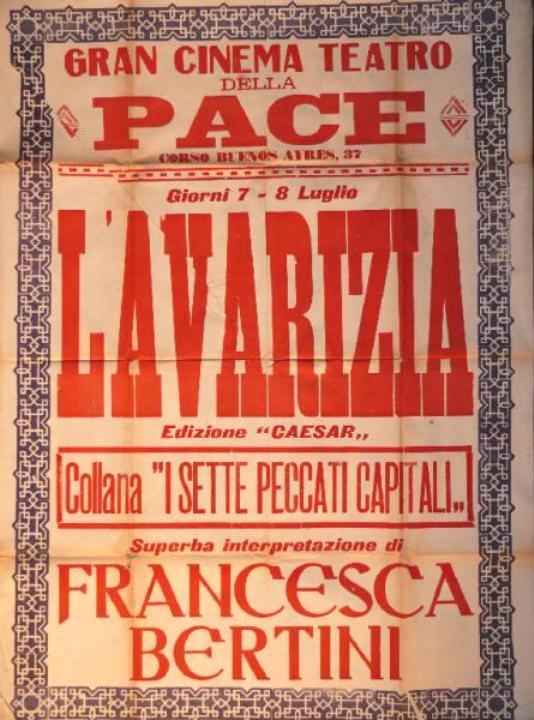
Watch the first reel flicker and you can almost sniff the tallow candles that gutter in Giuseppe Paolo Pacchierotti’s cramped interior sets—an odor of poverty that no Gilded-Age perfume can mask. The director, better known as a librettist, treats the frame like a proscenium arch: every doorway is a curtain, every shadow a velvet drop. Maria enters through one such threshold, her skirt skimming the volcanic stone like a brushfire. Francesca Bertini doesn’t merely act; she detonates stillness. The tilt of her clavicles when she refuses a diamond bracelet carries more class fury than ten manifestos. Meanwhile Alberto Albertini’s Luigi is all kinetic desperation, a man who twists his cap as if wringing last hope out of the universe.
The pivotal forgery arrives on parchment the color of spoiled cream. Its ink smells—yes, smells—of gardenias, the flower of bourgeois funerals. A hired scribe has mimicked Maria’s looping hand, claiming she has sold herself to a steamer headed for Marseilles brothels. The camera lingers on the suitor’s gloved fingers as he slips the page beneath Luigi’s garret door. No intertitle is needed; the glove’s stitching says privilege. In 1918 audiences gasped at the close-up: a solitary tear salting Luigi’s stubble. That tear is the silent era’s equivalent of a scream track; it reverberates through the next reels, corroding every promise.
Enter the industrialist Gennaro—played by Gustavo Serena with the porcelain grin of a carnival mask—who collects wives like railway bonds. When Maria, half-mad with resentment, agrees to the marriage, Pacchierotti cuts to an overhead shot: a ballroom floor tessellated like a chessboard, the dancers pawns. The wedding gown is a blizzard of tulle, yet the camera’s iris closes until the lace looks like iron filings. It’s one of the earliest on-screen critiques of transactional wedlock, predating von Stroheim’s Greed by five years and echoing the factory gears you see in America Preparing.
Maria’s pistol is a petite thing, mother-of-pearl grip glimmering like moonlit bone. When she fires—at her husband’s prized Renaissance Madonna—the bullet passes through the canvas and into his thorax. The canvas rips in slow-motion (achieved by cranking the camera to 12 fps then back to 18), so the painted Virgin seems to bleed first. Censors howled; the Catholic press demanded the negative be burned. But the shot foretells every post-war Italian crime saga from Without Honor to Thrown to the Lions: here is the moment when woman-as-victim becomes woman-as-perpetrator, and the camera refuses to judge.
After the trial—rendered via expressionistic silhouettes that anticipate Murnau—Maria is condemned to the bassi, those subterranean warrens where humidity drips like guilty conscience. Cinematographer Alfredo Bracci smears petroleum jelly on the lens edges so lamplight blooms into Caravaggio gloom. Children with malaria sing jump-roope songs about her crime; their voices are the chorus of a tragic opera. The film stock itself, silver nitrate, decomposes in places, turning the frame into a rash of fungi—history’s own rot mirroring Maria’s fall. Only El último malón would again wallow so luxuriously in squalor.
Years collapse in a single dissolve: Luigi, now blind in one eye from factory chemicals, strums a battered mandolin outside a tavern whose sign reads Cuore Napolitano. The tune is ‘O surdato ‘nnammurato, but he alters the key to minor, turning triumph into lament. Enter Maria—hair matted, cheek scarred, yet still radiating the erotic magnetism that once made duchesses jealous. The reunion shot is a contrapuntal miracle: two profiles in chiaroscuro, half the screen lava-orange from the tavern hearth, half moon-cobalt from the alley. They do not embrace. Instead, the camera dollies back until both are engulfed by shadows, love’s residue flickering like a faulty carbon arc.
Throughout, money is never just coin; it is semen, it is milk, it is the very light that caresses Bertini’s collarbone. When she strips off her wedding ring and tries to barter it for a crust of bread, the jeweler bites the metal as though testing virginity. Conversely, her body becomes legal tender in the slums—yet the film withholds the titillating postcard shots that American viewers of The Painted Lie consumed. Pacchierotti’s reticence makes the economic critique sharper: the transaction is implied, not displayed, forcing the spectator to implicate their own gaze.
Most Italian silents of the era used flowery intertitles; Pacchierotti prefers street idioms. One card reads: “The Madonna of the rich is painted in gold leaf; ours is eaten by woodworm.” Another: “Love stinks of sulfur when it passes the factory.” These phrases feel whispered by a grandmother on a tenement staircase, preserving oral culture inside a modern medium. It’s a stratagem later borrowed by Rossellini and even Fellini—think of the seaside proverb in Land o’ Lizards.
Just as Luigi reaches toward Maria—whether for a caress or a strangulation, we cannot tell—Pacchierotti freezes the image, the celluloid itself cracking like drought-parched earth. The projector’s beam lingers on that rictus of indecision for six seconds, an eternity in 1918. No Fin intertitle follows. The audience is left in darkness, the carbon rods hissing out. Contemporary critics raged: “We pay for catharsis and receive a wound!” Yet that wound is the film’s genius. It denies the comfort of moral closure, insisting history itself is stuck on that cracked frame.
Bertini’s acting style predates method realism; it is a form of corporeal hieroglyphics. Watch her spine arch when she hears the forged letter—each vertebra seems to sign its own denial. In the slums she develops a twitch in the left eye, a micro-expression that returns whenever children mention the Madonna. Critics compared her to Eleonora Duse, but Duse never had to contend with the camera’s merciless proximity. The lens catches the tremor of a nostril, the pearl of sweat that slips into the Cupid’s bow—details that would evaporate on a theatrical stage.
Modern restorations commissioned by Cineteca di Bologna added a score by Stefano Maccarelli: pizzicato strings mimic dripping water in the bassi, while a lone oboe quotes the lovers’ mandolin motif. Yet even without accompaniment, the film vibrates with implied noise: the rustle of taffeta, the cocking of a pistol, the communal gasp of a courtroom. It is a masterclass in synaesthetic cinema, rivaled only by the factory clangor evoked in The Rescue.
Shot in early 1918 while Naples starved under Allied blockade, L’avarizia was initially dismissed as “a harlot’s melodrama.” But its DNA infects post-war Italian cinema: De Sica’s piazza thieves, Visconti’s decaying aristocrats, even the abrasive femininity of Anna Magnani. The film’s title translates to “avarice,” yet it’s not the love of money but the love of possession—of bodies, of reputations—that corrodes every relationship. In that sense it forms a diptych with Toys of Fate, where destiny itself is a miser dolting out cruelties by the gram.
In an age where algorithms monetize attention, L’avarizia reminds us that narrative can still be a public interrogation of power. It stages class warfare inside a love triangle, genders the street, sexualizes the ledger book. Most crucially, it withholds redemption, arguing that capitalism’s original sin is not accumulation but the commodification of intimacy. Every time we swipe on a dating app, we echo Maria’s ring sliding across the pawnbroker’s counter.
If you can, stream the 4K restoration on a projector rather than a phone; the silver particles glimmer like fish scales, and you’ll notice that Bertini’s pupils dilate exactly two frames before she pulls the trigger—an anticipatory flourish you’ll miss on a five-inch OLED. Turn off motion-smoothing; the variable frame rate is intentional, a heartbeat racing toward cardiac arrest.
L’avarizia is not a relic; it is a raw nerve. It fuses the sentimental torque of The Truth About Helen with the socio-economic bite of El amor que huye, yet remains irreducibly itself—a Neapolitan fever dream where love and capital copulate in brackish alleyways. Watch it, then walk outside: every city street will smell faintly of gardenias, gunpowder, and unpaid rent.
IMDb 6.5
1936
Community
Log in to comment.