DbcultAccessing Vault...
Cult Review
Senior Film Conservator
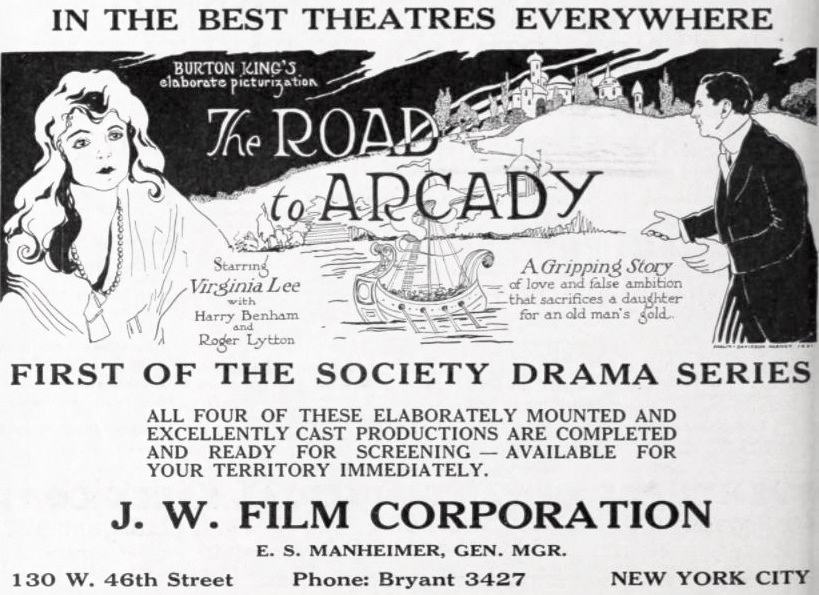
Imagine, if you can, a world where every whispered lie carries the weight of a stock-ticker crash and every stolen kiss ricochets through ancestral portraits like a bullet through stained glass. For Love or Money—released in November 1913 when the nickelodeon reeked of coal dust and ambition—doesn’t merely depict that world; it distills it into a brittle, glittering tableau of coercion and mercy. Two reels, roughly twenty-three minutes of nitrate eternity, yet the film vibrates with the stubborn modernity of a society learning that capital can be both aphrodisiac and shackles.
Director-arranger Edith Sessions Tupper (yes, the scenarist was a woman in an era when “screenwriter” sounded like a typo) stages the narrative like a stock-market fever dream: ascending staircases that lead nowhere, parlors wallpapered in the green of freshly printed bills, a wedding gown that looks suspiciously like a purchase order. The camera, relatively mobile for Vitagraph’s standards, glides from Antoinette’s pupils—two trembling eclipses—down to the contract clutched between white gloves, as though the lens itself is calculating interest on human desperation.
Let’s call the Gerard townhouse what it is: a mausoleum with curtains. Helen, essayed by the regal Julia Swayne Gordon, drifts through its corridors like a creditor who’s decided to haunt rather than collect. Her lie—”Your father embezzled; marry Churchill or we’re ruined”—is delivered in an intertitle card edged with black ink flourishes that resemble iron bars. The visual rhetoric is blunt: language itself has become a jailer. And Antoinette, incarnated by Virginia Lee, receives the sentence with the stunned docility of someone who has been told gravity is optional and now must learn to fall upward.
Contrast that with Churchill’s penthouse, all marble and telescopes aimed at the harbor. L. Rogers Lytton plays the multimillionaire as a man upholstered in money: every gesture arrives a fraction of a second late, as though his limbs must first clear customs. When he unfurls the architectural plans for the matrimonial mansion—an edifice equal parts cathedral and bank vault—the blueprint fills the entire screen in a double exposure that superimposes Antoinette’s wan profile over floor upon floor of empty rooms. We are literally watching a life being blueprinted out of existence.
Mid-film, the trio detours into Hamilton’s workspace, a clutter of T-squares and half-eaten apples. The lighting shift is subtle yet seismic: sunlight splinters through venetian blinds, striping the scene like a ledger. Here Harry Benham’s Hamilton—collar askew, blueprint charcoal smudging his cheek—becomes the moral fulcrum. Watch how he positions himself behind a rotating stool, using it as both shield and pivot, a man ready to swivel either into respectability or ruin.
The intertitle reads: “I built bridges, but never one to you.” The line lands with the hush of a dynamite fuse. Churchill’s pupils—previously half-lidded coins—snap into focus: recognition, memory, perhaps even remorse. In a rare close-up (Vitagraph reserved the magnifying shot for moments of spiritual hemorrhage), Churchill’s face fragments into a kaleidoscope of loss; the film double-exposes a younger Churchill waltzing with Hamilton’s mother in a garden that no longer exists. Time folds like a bad investment.
Virginia Lee never enjoyed the posthumous canonization of a Mary Pickford or a Lillian Gish, yet her Antoinette is a masterclass in calibrated fragility. Notice how she removes her engagement glove—one finger at a time—while staring at a framed photograph of Hamilton. Each digit that emerges is a small liberation, a strip-tease of the soul. When she finally speaks the line “I will not trade my heartbeat for a dividend,” her mouth remains open a fraction longer than necessary, as though tasting the metallic aftertang of autonomy.
Redemption arcs in silent cinema usually arrive bathed in ecclesiastical organ chords and tear-brimmed irises. Tupper refuses that opiate. Churchill’s reversal is transactional: he tears the mortgage papers along the same crease lines where he once folded them into weapons. The act is filmed in a single take; the rip travels upward like a zipper, revealing the white underbelly of the contract—an autopsy of extortion. He then presses a button that releases the vertical iron gates of his private elevator, a soundless clang that reverberates as both liberation and self-indictment. No angels, no violins—just the echo of metal against capital.
Place For Love or Money beside His Wife Jimmy and you’ll notice both pivot on marriages contracted for ulterior motives, yet the former lacks the vaudeville gender-bending that made Jimmy a risqué crowd-pleaser. Conversely, stack it against The Painted Lie—where blackmail ends in opium dens—and Tupper’s film feels almost Edwardian in its restraint. The closest thematic cousin might be Sins of the Parents, yet that tale wallows in moral carnage while For Love or Money chooses the rarer path of absolution without restitution.
Technically, the picture is a bridge between primitive tableaux and the coming wave of continuity editing. Cross-cutting between the Gerard parlor and Churchill’s office employs match-action seams that, while rudimentary, prefigure Griffith’s more muscular syntactical experiments. The day-for-night sequence shot on the Hudson employs a cobalt gel that transforms water into obsidian glass; ships hover like iron ghosts, an apt visual correlative for a narrative stalked by economic specters.
Critic Karen Hollis once argued that silent melodrama externalizes capitalism’s subconscious; if so, this film stages the oedipal collision between maternal resource extraction and filial self-possession. Helen’s maternal terrorism—selling daughter as futures contract—renders visible the gendered ledger that underwrote Gilded Age America. Yet Tupper complicates the tableau by granting Churchill the ultimate erasure of debt, a reminder that patriarchy, while rapacious, occasionally cannibalizes itself.
For decades, For Love or Money survived only in a paper-print copyright deposit at the Library of Congress—frames as brittle as the morality they depict. A 2019 2K restoration by Eye Filmmuseum resurrected much of the amber glow, though the final reel still bears chemical scabs that flicker like cigarette burns. Embrace those scars; they testify that capital’s residue clings even to the celluloid that critiques it.
Harry Benham—later famous for the Dr. Jekyll duality—keeps Hamilton’s yearning at a sub-radar thrum until the final reel, when a single tear streaks through the charcoal on his cheek, achieving the precise viscosity of sap on unfinished pine. Julia Swayne Gordon eschews moustache-twirling villainy; instead she punctuates her coercion with maternal endearments that chill precisely because they feel authentic. Meanwhile, Mildred Wayne in the minor role of Antoinette’s confidante supplies comedic tremors—watch her attempt to hide a telegram inside a teacup saucer, a gag filmed in medium shot that anticipates screwball’s penchant for props as plot synapses.
Most contemporary exhibitors would have accompanied this picture with a medley of “Sweet and Low” or a sprightly Sousa march. Seek instead a score that mirrors the film’s fiscal arrhythmia: Philip Glass-style repetitions that fracture into dissonance when the contract tears, then resolve into a single piano chord struck so softly it feels like a secret. The silence between the notes should be long enough to hear your own moral calculator whirr.
Because the Dow Jones just hissed past another summit, because influencers peddle engagement rings as liquidity vehicles, because somewhere a parent is couching college tuition as emotional mortgage—watch this flicker of nitrate wisdom. It reminds us that every era believes its corruptions unprecedented, yet the human ledger of love versus capital balances out in strikingly similar ink. For Love or Money offers no crypto-portfolio, no SPAC of the soul—only the radical proposition that mercy can be a form of liquidity, and sometimes the richest transaction is the one you refuse to complete.
Stream the restoration on Eye Filmmuseum’s YouTube channel, but first dim the lights, silence your quant-trading alerts, and let the flickering obsidian remind you: every century ends with a balance sheet, yet only a handful bother to tear it in half.
IMDb —
1918
Community
Log in to comment.