DbcultAccessing Vault...
Cult Review
Senior Film Conservator
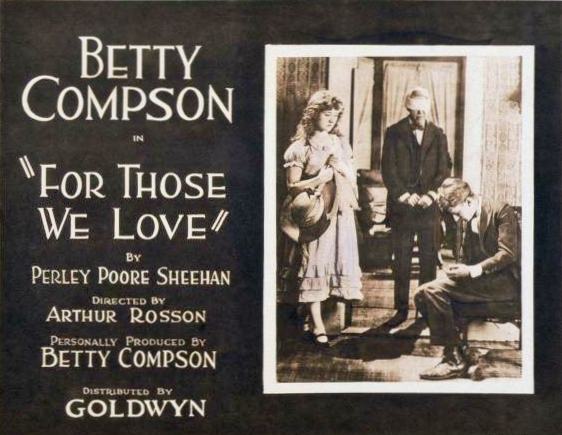
The silent era of cinema often functioned as a crucible for the American moral psyche, and For Those We Love (1921) stands as a particularly jagged shard of that historical mirror. Directed with a surprising degree of atmospheric tension by Arthur Rosson, the film navigates the murky intersection between social respectability and the subterranean world of high-stakes gambling. It is a work that refuses to offer easy absolution, choosing instead to dwell in the uncomfortable spaces where love necessitates duplicity. Much like the thematic undercurrents found in Going Straight, the film interrogates the possibility of redemption for those who have already crossed the threshold into the illicit.
At the epicenter of this narrative storm is Betty Compson, whose portrayal of Bernice Arnold provides the film with its emotional ballast. Compson possesses a singular ability to convey internal fracture through subtle shifts in her gaze—a necessity in an era where the intertitle was the only substitute for the spoken word. Her Bernice is not merely a damsel in distress; she is a woman caught between the rigid expectations of her small-town upbringing and a burgeoning awareness of the complexities inherent in human nature. When she is rescued from drowning by Trix Ulner (Camille Astor), the rescue is not just physical; it is an initiation into a world of moral ambiguity that her sweetheart, Johnny Fletcher, is fundamentally unequipped to understand.
The casting of Lon Chaney as Frank, the proprietor of the gambling resort, elevates the production from a standard melodrama to a study in menacing charisma. While Chaney is frequently remembered for his more grotesque transformations, his performance here is a masterclass in understated villainy. Frank is not a mustache-twirling caricature; he is a man of business, a predatory architect of misfortune who operates within the fringes of the law. His presence looms over the Arnold family like a pall, representing the encroaching decadence that threatens to dissolve their middle-class facade. Chaney’s interactions with Richard Rosson’s Jimmy Arnold are particularly harrowing, as he expertly manipulates the youth’s desperation, much like the manipulative forces seen in The Woman Under Oath.
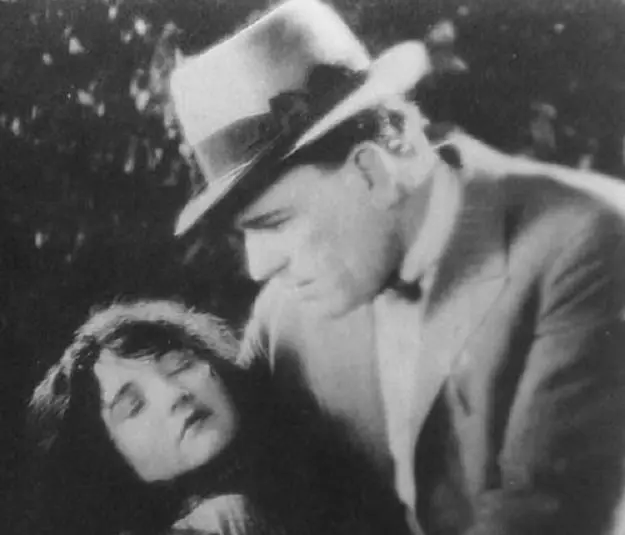
Jimmy Arnold serves as the film’s tragic pivot. His descent into theft—stealing from his own father to fund his gambling addiction—is portrayed with a frantic energy that mirrors the kinetic pace of the gambling den itself. The gambling resort, Frank’s domain, is filmed with a sense of claustrophobic opulence. The smoke-filled rooms and the rhythmic dealing of cards create a hypnotic environment that contrasts sharply with the austere, almost sterile Arnold household. This dichotomy is central to the film’s visual language, utilizing light and shadow to delineate the boundaries between the 'safe' world of the daylight and the 'dangerous' world of the nocturnal poker game.
The middle act of For Those We Love introduces a literal fire that serves as a profound metaphor for the characters' internal states. When Jimmy is hidden in the home of Vida Brown, and the structure is subsequently engulfed in flames, the fire acts as a cleansing agent that paradoxically forces the truth into the light while simultaneously destroying the evidence of the past. The sequence is staged with a visceral intensity that was a hallmark of the early 1920s, utilizing practical effects that still carry a terrifying weight today. The transition from the burning ruins to the Arnold house, where all the characters find temporary shelter, creates a pressure-cooker environment where social masks begin to slip.
It is in this second half that the film’s lexical diversity of emotion truly shines. We see the interplay of guilt, fear, and a warped sense of loyalty. Bernice’s attempts to convince her father that the money was merely mislaid—rather than stolen by his own son—is a poignant commentary on the lengths to which individuals will go to preserve the sanctity of the family unit. This theme of domestic preservation at any cost is a recurring motif in silent cinema, often explored in films like Just a Wife, yet here it is rendered with a darker, more cynical edge.
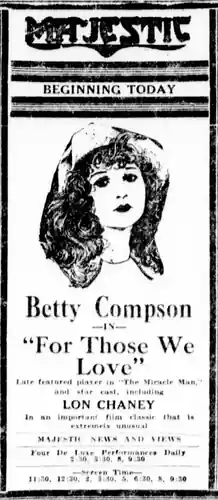
The resolution of the film is both shocking and deeply cynical. The botched robbery of Frank’s house, intended to reclaim the stolen money, results in the tragic death of Jimmy at Frank’s hand. The cinematic choice to have Frank shoot Jimmy—the very boy he had previously exploited—brings the cycle of victimization to a bloody close. However, the film takes a narrative detour into the realm of social engineering. When Trix Ulner threatens to expose Frank’s culpability, Frank orchestrates a grand deception: he swears the boy died a hero, attempting to capture burglars. This lie is the final 'gambling' move of the film, and it pays off.
The final image of Bernice wedding Johnny Fletcher is not one of unalloyed joy, but rather one of somber resignation. The union is built upon the corpse of her brother and the foundation of a lie. The audience is left to ponder if the 'respectability' Bernice has secured is worth the price of the truth. This ending reminds one of the moral complexities in Alias Mrs. Jessop, where identity and morality are traded like currency. The film suggests that in the game of life, much like in the poker games at Frank’s resort, the house always wins, and the players must often settle for a hollow victory.
Technically, For Those We Love is a testament to the sophistication of early 1920s cinematography. The use of tinting—sepias for the daytime, deep blues for the night scenes, and vibrant oranges for the fire sequence—adds a layer of psychological depth that transcends the limitations of black and white film. The camera work by Arthur Rosson’s team is fluid, utilizing close-ups to capture the micro-expressions of the cast, particularly Lon Chaney, whose eyes often tell a story far more complex than the intertitles suggest. The pacing is deliberate, allowing the tension to simmer before boiling over in the final act.
When compared to other contemporary works such as The Single Track or the more fantastical elements of Snow White, this film remains grounded in a gritty realism. It deals with the mundane horrors of debt, addiction, and social stigma. The writing by Perley Poore Sheehan and Chester L. Roberts is lean and effective, avoiding the overly florid prose that sometimes plagued silent scripts. Instead, they focus on the causal chain of events, showing how a single act of kindness—Trix saving Bernice—can inadvertently lead to a cascade of ruin.
In summary, 'For Those We Love' is a haunting artifact of the silent era that deserves a modern reassessment. It challenges the viewer to look beyond the surface of its melodramatic plot and see the profound social critique lying beneath. It is a film about the cost of love, the weight of secrets, and the enduring power of the lie. For fans of Lon Chaney or those interested in the evolution of the crime drama, this is an essential viewing experience that resonates with a timeless, albeit dark, human truth.
IMDb —
1925
Community
Log in to comment.