DbcultAccessing Vault...
Cult Review
Senior Film Conservator
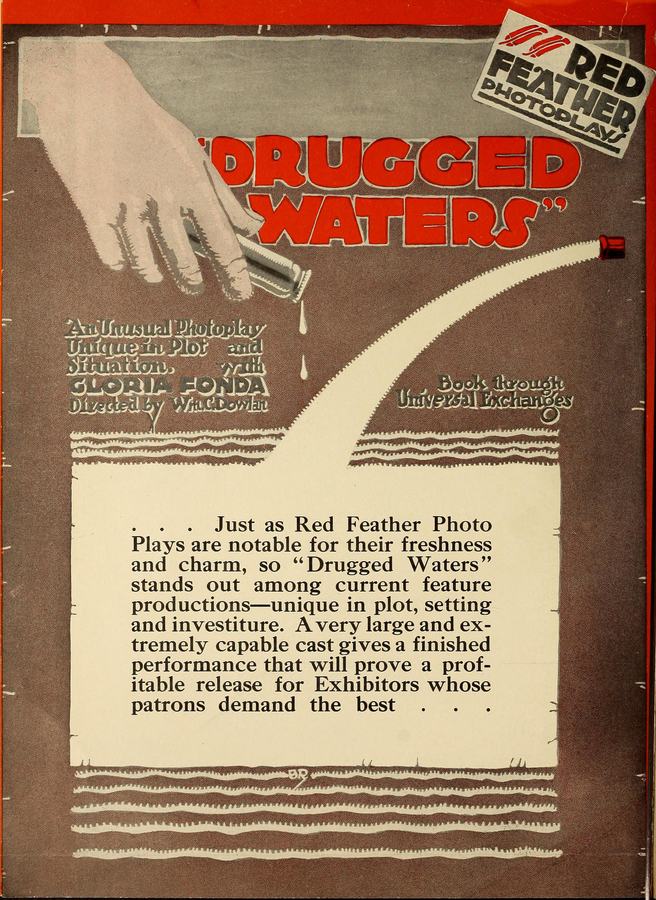
In the annals of cinematic history, few narratives capture the intricate dance between human credulity and calculated avarice quite like Drugged Waters. This compelling, albeit often overlooked, drama unfurls a tapestry of deceit woven around the ostensibly therapeutic High Bluff Mineral Springs, a place where the promise of rejuvenation is, in fact, a meticulously crafted illusion. At its heart lies Clarence Webb, the spring’s cunning manager, a man whose entrepreneurial spirit is tragically untethered from ethical moorings. Webb’s grand scheme involves the systematic adulteration of the spring’s pristine flow with a mélange of inert substances – lithia, sulfur, and other concoctions – designed not to heal, but to entice. His target? A clientele of the wealthy and the self-diagnosed, individuals eager to believe in the curative powers of a well-marketed myth, imagining maladies where only idleness and luxury reside.
The brilliance of Drugged Waters lies not just in its central deception, but in the intricate web of complicity that allows it to flourish. Dr. Perkins, the county health officer, embodies the tragic figure of compromised authority. Fully cognizant of Webb’s fraudulent practices, his silence is purchased on multiple fronts: the tangible economic benefits that a thriving resort brings to the county, and, more intimately, his growing attraction to Cornelia Wrigley. Cornelia, a character of formidable pragmatism, serves as the spring’s unofficial matriarch and guardian of her niece Gladys Saunders's inheritance. She, too, is privy to the deception, yet rationalizes it as a necessary evil, a means to secure Gladys’s financial future, seeing the "end justifies the means" with a disarming conviction. Her interactions with Dr. Perkins, a delicate balance of flattery and manipulation, highlight her shrewd understanding of human nature and her unwavering commitment to her niece's well-being. This complex interplay of motives — greed, civic duty, affection, and familial loyalty — paints a vivid portrait of an ecosystem where truth is a negotiable commodity, much like the "healing" waters themselves. One might draw a parallel to the intricate machinations of power and survival seen in The Fighting Hope, where characters navigate treacherous moral landscapes in pursuit of their goals, albeit with very different stakes.
Into this meticulously constructed world of artifice steps Gladys Saunders, fresh from the ivory towers of academia, her innocence a stark contrast to the ethical ambiguities surrounding her. Unaware of the true nature of her inheritance, Gladys grapples with the recent loss of her father and the lingering expectation that she marry Clarence Webb, a wish her father had expressed without understanding the depths of Webb’s duplicity. Her emotional vulnerability and initial detachment from the business affairs render her a perfect foil for the narrative’s unfolding drama. The arrival of Mr. Harron, a retired capitalist, and his daughter Selma, accompanied by the astute Dr. Sherwood, marks the true turning point. Dr. Sherwood, a man of profound medical integrity and a refreshingly modern approach to health, immediately presents a challenge to Webb’s established order. His burgeoning attachment to Gladys, blossoming amidst the artificiality of the springs, is a narrative engine that sparks both romance and virulent jealousy, particularly from Selma, who harbors her own possessive affections for Sherwood, and, naturally, from Clarence, whose control over Gladys and the springs begins to slip.
The escalating tension between Clarence and Dr. Sherwood culminates in a series of dramatic revelations. Clarence, desperate to maintain his grip on Gladys and the lucrative operation, pressures her into marriage. When she steadfastly refuses, he unveils the spring’s dark secret, claiming her dependence on him and the fraud as the sole pillars of her prosperity. Gladys's horrified reaction signals her nascent awakening to the moral quagmire she inhabits. Her refusal, however, only fuels Clarence’s vindictiveness, leading him to threaten Cornelia with public exposure. This emotional blackmail forces Cornelia into a desperate attempt to sway Gladys, highlighting the tragic binds that deception creates. The narrative’s climax begins when Dr. Sherwood, through careful observation, catches Clarence in the act of adulterating the water. The ensuing confrontation is more than a mere accusation; it is a clash of worldviews. Clarence, ever the pragmatist, argues that Gladys would lose everything without his "expertise" in maintaining the fraud. Dr. Sherwood, however, articulates a vision of genuine wellness, advocating for the potent, yet simple, remedies of diet, exercise, and pure, unadulterated spring water. His conviction that true cures can be effected without deception resonates deeply, particularly with Gladys, who, having entered unobserved, pledges her unwavering support for his honest, revolutionary approach. This moment of alignment, a shared commitment to integrity, serves as the emotional bedrock for their burgeoning relationship and the narrative’s moral core.
Clarence, his schemes thoroughly exposed and his ego bruised, retaliates with a vengeful public disclosure, revealing the springs' true nature to the assembled guests. Panic ensues, and the wealthy patrons, feeling defrauded and foolish, prepare for an immediate exodus. Here, the film takes a thrilling, almost farcical turn. Dr. Sherwood, determined to salvage his vision of honest healing and retain his patients, devises an audacious plan: a quarantine. In a stroke of desperate genius, he orchestrates Clarence’s confinement in an old ice-house, fabricating a story of smallpox contagion, thereby compelling the guests to remain. Guards are stationed, doors and windows sealed, and the resort transforms into a high-stakes, involuntary wellness retreat. The ensuing difficulties, replete with the eccentricities and complaints of his unwitting patients, provide a rich vein of comedic relief, tempering the underlying drama. The narrative skillfully balances moments of genuine peril with lighthearted absurdity, a testament to the film’s narrative dexterity. This blend of tension and humor reminds one of the adventurous spirit and unpredictable turns found in In Search of the Castaways, where protagonists must employ cunning and improvisation to overcome seemingly insurmountable obstacles.
The delicate balance of Dr. Sherwood’s quarantine is, predictably, shattered by the venomous jealousy of Selma. Discovering Clarence’s lack of actual illness, she orchestrates his release, bribing a guard to summon the health officer and constable. Clarence, once free, wastes no time in exposing the "false" quarantine, expecting a triumphant return to his former status. However, a crucial shift has occurred. During their forced confinement, the guests, initially outraged, have begun to genuinely benefit from Dr. Sherwood’s regimen of pure water, healthful diet, and physical activity. Their perceived ailments, once psychosomatic, have genuinely receded under his care. When Sherwood confronts them, offering a choice between his honest, effective methods and the man who would perpetuate their imagined invalidism, their allegiance overwhelmingly shifts. This collective vindication of integrity over deception is a powerful thematic statement. The film expertly avoids a heavy-handed moralizing, instead allowing the characters' improved health to speak volumes. The resolution of the legal ramifications is equally nuanced: Clarence's years of demonstrable fraud are sufficient deterrence for any arrest, sparing him legal consequences but condemning him to professional ruin. Yet, in a final, darkly comedic twist, the sole individual apprehended is "Weary," a hapless tramp who, in a state of disarray and hunger, had been hiding within the quarantined premises, dodging detection until his inevitable capture. His disgusted retort to the constable – "You couldn't find anyone else to arrest, so you arrested me" – provides a poignant, if absurd, commentary on the arbitrary nature of justice and the often-overlooked vulnerabilities of society’s fringes. It's a moment that resonates with the unexpected turns of fate often explored in films like The Eternal Question, where moral quandaries meet the harsh realities of life.
Drugged Waters, while a product of its time, offers surprisingly enduring thematic relevance. It serves as a potent satire of medical quackery and the human inclination to seek easy, often illusory, solutions to complex problems. The film brilliantly dissects the psychology of both the deceiver and the deceived, exploring how fear, insecurity, and the allure of wealth can corrupt individuals and institutions. The transformation of Gladys, from a grieving ingénue to a woman of conviction, is particularly compelling, mirroring the journey of self-discovery often seen in narratives like A Change of Heart. Her partnership with Dr. Sherwood is not merely romantic; it signifies a union of integrity and purpose, laying the foundation for a business built on honesty and genuine care. The film champions a holistic approach to health, emphasizing the fundamental importance of natural remedies and lifestyle choices over artificial panaceas. The cast, particularly Gloria Fonda as Gladys and William Quinn as Dr. Sherwood, imbues their roles with a sincerity that anchors the more melodramatic elements of the plot. Doc Crane as Clarence Webb masterfully portrays the slippery slope of ambition turning to desperation. Even minor characters, like Cornelia Wrigley and Selma Harron, contribute significantly to the narrative's texture, providing layers of moral complexity and human frailty. The pacing, though perhaps deliberate by modern standards, allows for a thorough exploration of character motivations and the unfolding ethical dilemmas. The film’s eventual triumph of virtue, while perhaps idealistic, offers a comforting resolution, suggesting that authenticity, even when hard-won, ultimately prevails. It’s a narrative that, despite its specific setting, speaks to universal truths about human nature, ambition, and the pursuit of well-being, echoing the grand scale of societal commentary found in epics like The Last Days of Pompeii, albeit on a more intimate, localized stage. The ultimate success of the High Bluff Mineral Springs under Dr. Sherwood and Gladys’s ethical stewardship is not just a happy ending for the lovers, but a powerful affirmation of the enduring value of truth in an often-deceptive world.
In conclusion, Drugged Waters is far more than a simple melodrama; it is a shrewd social commentary wrapped in a compelling narrative of romance and redemption. It asks profound questions about trust, responsibility, and the true meaning of health, all while delivering a thoroughly engaging story. The journey from a fraudulent enterprise to a beacon of genuine wellness is a testament to the power of individual integrity to effect systemic change. It’s a cinematic experience that, despite its age, remains remarkably fresh in its critique of human foibles and its celebration of genuine virtue. The path of true love, as it appears smooth for Gladys and Dr. Sherwood, is inextricably linked to the purity of their intentions and the waters they now oversee. This film is a potent reminder that while appearances can deceive, the truth, like pure spring water, will always find a way to rise to the surface.

IMDb 6
1933
Community
Log in to comment.