DbcultAccessing Vault...
Cult Review
Senior Film Conservator
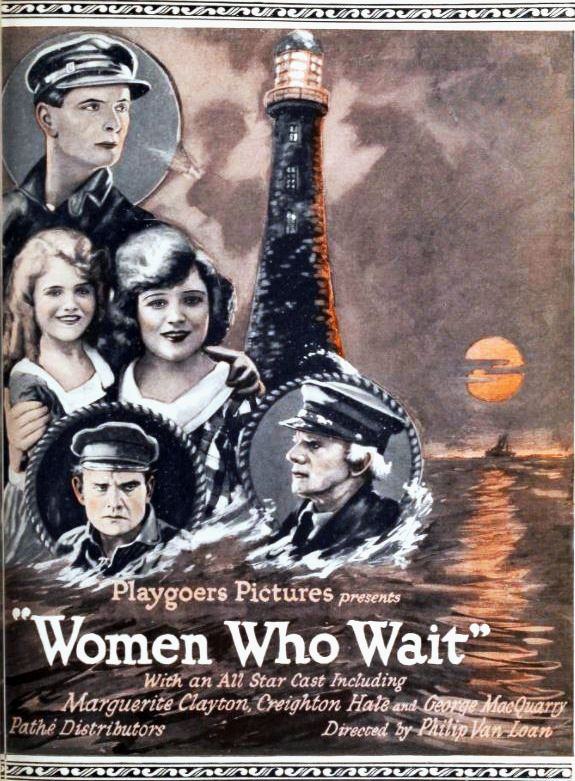
In the pantheon of early American cinema, few narratives capture the agonizing friction of sibling rivalry with the raw, atmospheric intensity found in Forbidden Love. This 1921 gem, directed and written by Edward Russell, transcends the typical melodramatic tropes of its era by anchoring its emotional stakes in the rugged, salt-caked reality of New England fishing life. The film operates as a psychological study of two diametrically opposed spirits: Harold, the gentle soul played with nuanced vulnerability by Creighton Hale, and Peter, the embodiment of bitter entitlement. Unlike the grand historical sweeps of The Life Story of David Lloyd George, Russell focuses his lens on the claustrophobia of the domestic sphere, where a single lie can fester for half a decade.
The narrative brilliance of Forbidden Love lies in its patient pacing. We are introduced to the Van Zandt brothers not as archetypes, but as products of their environment. The sea, often a character in itself in such tales—reminiscent of the nautical themes explored in The Lipton Cup: Introducing Sir Thomas Lipton—serves here as both a provider and a punisher. When Peter convinces Eileen Arden that Harold is the architect of her social ruin, the betrayal feels deeply personal because it is rooted in the very fabric of their small-town survival. Peter’s manipulation is not merely a plot device; it is a manifestation of a deep-seated inferiority complex that mirrors the socio-economic pressures of the time.
The six-year jump in the timeline is handled with a sophistication that rivals the dramatic tension found in The Romance of Elaine. Harold’s return to the coast, now as a lighthouse keeper, shifts the visual language of the film from the horizontal expanse of the docks to the vertical isolation of the tower. This change in setting signifies Harold’s transition from a victim of circumstance to a guardian of light, a metaphorical beacon that Peter’s darkness cannot abide.
Creighton Hale’s performance is a revelation of restraint. In an era where silent acting often leaned toward the hyperbolic, Hale provides a grounded center to the film. His Harold is a man of quiet fortitude, whose return to help his ailing father, John Van Zandt (George MacQuarrie), is played with a soulful exhaustion. This contrasts sharply with the kinetic, almost predatory energy of Peter. The chemistry between the cast members, including the luminous Marguerite Clayton as Eileen, creates a triangle of tension that feels as precarious as a ship in a gale. One might draw parallels to the high-stakes emotionality of The Virgin of Stamboul, though Forbidden Love trades exoticism for a gritty, localized realism.
The inclusion of Baby Ivy Ward as Anne, Peter’s daughter, introduces a layer of Victorian tragedy that remains profoundly affecting. The "weak heart" trope was a common narrative shorthand in early 20th-century literature and film, yet here it serves a specific psychological purpose. Anne’s death is the direct result of Peter’s moral decay; his drunken rage is the catalyst for her physical collapse. It is a moment of stark, unvarnished grief that elevates the film from a simple romance to a cautionary tale about the collateral damage of envy. While films like The Little Dutch Girl might explore innocence through a more whimsical lens, Forbidden Love uses the death of a child to shatter the protagonist's delusions, forcing a final confrontation that is both inevitable and devastating.
The cinematography in Forbidden Love utilizes the natural light of the coast to exceptional effect. The lighthouse sequences, in particular, are masterclasses in shadows and silhouette. The tower becomes a purgatorial space where the past and present collide. The struggle between the brothers atop the lighthouse is staged with a visceral physicality that predates the more polished stunt work seen in Hands Up. There is a raw, unchoreographed quality to the violence that makes the final plunge of Peter Van Zandt feel like a genuine moment of cosmic justice.
Edward Russell’s writing avoids the sentimentality that often plagued contemporary works like The Racing Strain or Boots and Saddles. Instead, he leans into the fatalism of the setting. The sea does not care for the schemes of men, and the lighthouse, while providing safety for ships, cannot protect the brothers from the wreckage of their own making. This thematic depth is what keeps the film relevant a century later. It explores the concept of the "forbidden" not just in terms of love, but in terms of the forbidden impulses we harbor for those closest to us.
When analyzing the moral arc of Peter Van Zandt, one can see reflections of the darker human impulses explored in L'accidia or the hidden secrets of Blind Man's Holiday. Peter is a man trapped by his own slothful morality and his inability to envision a life where he is not the victim. His eventual fall is not just a physical descent from a lighthouse, but a symbolic descent into the abyss he created for himself. In contrast, Harold’s journey mirrors the resilience found in The Undertow, where characters must fight against the literal and metaphorical currents of their past to find solid ground.
Even when compared to the grand scale of The Last Days of Pompeii, the stakes in Forbidden Love feel equally monumental because they are personal. The destruction of a family unit is as catastrophic as the eruption of a volcano when viewed through the intimate lens of the camera. The film shares a certain domestic claustrophobia with Il marito in campagna, though it swaps the comedic undertones for a somber, almost gothic intensity.
As the credits roll—or rather, as the final title cards fade—the viewer is left with a profound sense of the cyclical nature of grief. The film’s resolution offers a bittersweet catharsis. Harold and Eileen are finally free to pursue their union, but it is a union forged in the fires of loss. This nuanced ending is far more sophisticated than the simple happy endings of Non Skid Love or the straightforward resolution of The Captive. Russell understands that while love might be the ultimate goal, the scars of the journey remain permanent.
Forbidden Love remains a vital piece of cinema history because it refuses to look away from the ugliness of the human heart. It uses the lighthouse—a symbol of safety—as the site of the ultimate betrayal and the ultimate sacrifice. The film challenges the audience to consider the weight of our words and the long shadow cast by our insecurities. In the vast ocean of silent cinema, this film stands as a sturdy, well-weathered vessel, capable of weathering any critical storm. It is a testament to the power of visual storytelling and a haunting reminder that the most dangerous storms are often those that brew within the family home.
A haunting, expertly crafted drama that proves the silent era was capable of profound psychological depth. Forbidden Love is a must-watch for any serious student of film history.

IMDb —
1924
Community
Log in to comment.