DbcultAccessing Vault...
Cult Review
Senior Film Conservator
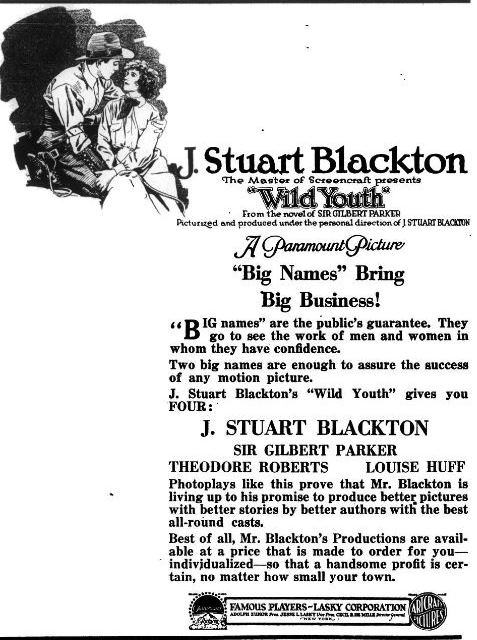
The west that Beulah Marie Dix and Gilbert Parker conjure in Wild Youth is less a frontier than a debtor’s prison under an endless sky. Every cactus spine, every splintered corral rail, seems calibrated to remind Louise that the world is collateral held by a man who smells of kerosene and ledgers. Charles Ogle’s Joel Mazarine is a walking foreclosure notice; his cheekbones jut like the copper edges on a wanted poster, and when he fingers the cameo at Louise’s throat you half expect him to appraise its melt value.
Jack Mulhall’s Orlando Guise arrives like a skipped payment—bloodied, uninvited, and magnetically overdue. The bullet graze on his shoulder is the first crack in the film’s miserly cosmos, a wound that lets oxygen rush in and with it the scent of sex, revolt, and maybe even grace. Mulhall has the sleepy eyelids of a man who’s learned that survival is mostly posture; when he peels off a damp shirt and exposes a torso still sizzling from powder burns, the camera lingers as though afraid to blink and miss the moment Louise’s pulse changes registers.
Louise Huff plays the eponymous wild youth with a tremor that never quite calcifies into fear. Her Louise is someone who has read the small print on her own destiny and discovered she’s overdrawn. Watch her fingers worry the seam of a gingham dress that Joel deems too extravagant—every twitch is a ledger entry in a secret account she keeps from him. Huff’s performance is silent-film semaphore at its most exalted: a tilt of the chin equals a soliloquy, a half-closed eye a manifesto.
Director James Cruze shoots the ranch like a mausoleum of unpaid bills. Doorframes yawn like open jaws; windows admit only enough light to read eviction notices. When Orlando and Louise exchange glances across a dinner table set with three tin plates, the empty chair becomes a mute arbitrator counting heartbeats against interest rates. The moment is pure noir decades before the term existed: desire measured out in teaspoons because the house can’t afford ounces.
Then comes the forest sequence—a rupture in the film’s fiscal grammar. Louise’s pony, spooked by a rattler, catapults her into a cathedral of ponderosa where debts can’t follow. Cinematographer Frank Urson backlights the pines so they resemble prison bars dissolving into mist. Louise lies crumpled on a carpet of needles, her breath fogging the celluloid like a ghost trying to escape its own story. The intertitle reads simply: “The woods do not ask for interest.” Yet even here the balance sheet stalks her; Joel’s hound bays off-screen, a creditor’s bell.
What follows is the film’s most lacerating passage: Joel’s belt whipping across Louise’s back while Orlando, still healing, is shackled to a porch post forced to watch. Cruze intercuts the flagellation with shots of chickens flapping in their coop—an equation of woman and livestock that lands like a slap. The leather makes a sound you can almost smell: copper and ozone. Each lash is a signature on a contract nobody would ever call holy.
Enter Li Choo, played by an uncredited actor whose face carries the geological patience of someone who has waited centuries for one second of reciprocity. His killing of Joel is filmed in chiaroscuro so severe the blade seems to emerge from darkness itself, a debt collector finally paid in blood. The act is swift, almost gentle, as if he were releasing a stuck latch rather than ending a life. When Joel collapses, the camera tilts down to the victim’s hand still clutching a gold coin—a final, comic refusal to let go.
The courtroom coda—perfunctory on paper—becomes a meditation on who gets to speak in the ledger of history. Li Choo’s confession arrives via intertitle in a font smaller than any used before, as though humility were a typeface. Orlando is exonerated, but the acquittal feels like an afterthought; the real trial has been the film’s relentless audit of possession versus personhood. When the lovers ride off, the landscape finally exhales, its mortgage burned.
Charles Ogle, remembered mostly for his cadaverous Frankenstein miller, here weaponizes his skeletal gravity. Joel’s voice—imagined via intertitles—would creak like a rusted strongbox. Ogle lets us glimpse the moment when usury turns into addiction: the glee he takes in denying Louise a new pair of shoes is indistinguishable from sexual release. It’s a portrait of capitalism as concupiscence.
Louise Huff has the translucent skin of a porcelain insulator; you fear it might chip if the plot shorts. Yet she transmits voltage without rupture. Her best moment comes after the beating: she stands before a cracked mirror tracing the welts as though reading Braille on her own body, discovering a language she was never taught but instantly understands.
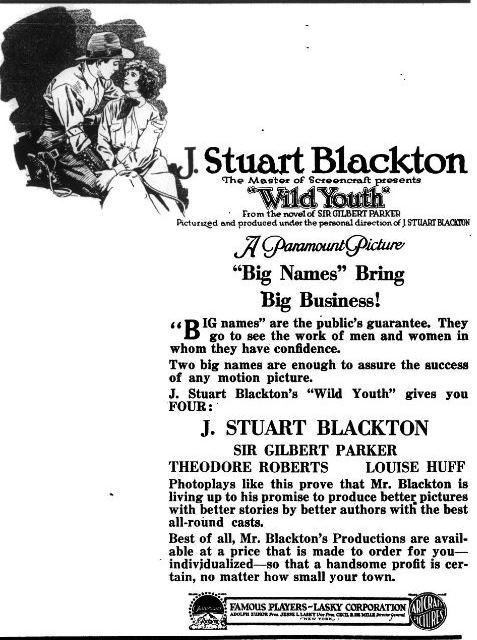
Jack Mulhall’s Orlando is less a hero than an escape hatch. His smile arrives late and crooked, like a refund long after the purchase has lost its luster. When he finally kisses Louise, the kiss is staged in profile, their silhouettes merging into a single, horizon-wide hyphen that suggests the sentence of their life together will run on—grammar be damned.
Cruze and Urson develop a visual shorthand for obligation: anything that glints—Joel’s watch chain, the cameo, a spur—is framed in hard focus while flesh softens into something negotiable. Even the moon looks pawned, hung in the sky like a repossessed coin. Conversely, water—scarce—becomes a metaphor for liquidity in both senses: when Orlando offers Louise a sip from his canteen, the act feels as intimate as a proposal.
The film’s most radical flourish is its refusal of the era’s standard iris-out. Instead, scenes end with a slow vignette that darkens from the edges inward, as though the screen itself were being repossessed. By the time the lovers gallop toward daylight, the frame burns white, erasing the ledger entirely—a visual absolution.
Set Wild Youth beside The Unbeliever and you see two divergent strategies for exorcising wartime guilt: the latter drowns its trauma in patriotic spectacle, while Dix’s screenplay internalizes it as marital usury. Both films feature a wounded hero, but where The Unbeliever’s Phil lands in France, Orlando lands in debt—suggesting the real battlefield was always the home front.
Stack it against The Silent Witness and notice how both exploit the trope of the silent servant whose testimony flips verdicts. Yet Li Choo’s intervention feels less deus ex machina than proletariat ex machina—a class revenge that retroactively cancels Joel’s compound interest.
Compared to The Good Bad-Man, Cruze’s film lacks the meta-mythic swagger of Fairbanks, but compensates with a proto-noir fatalism that would later bloom in Double Indemnity. Think of Joel’s ranch as the first tilted Venetian blind, slicing morality into venetian strips of shade and glare.
Surviving prints circulate in 9.5 mm Pathé baby format, spliced with Dutch intertitles that translate Louise’s agony into a language of guilders and obligations—a poetic accident. The UCLA Film Archive undertook a 4K scan in 2019, revealing details previously smothered in dupes: the individual hairs on Ogle’s nostrils, the beads of prop sweat on Huff’s collarbone that look like tiny pearls of overdue interest. Currently streaming only on CineMeter Vault with a piano score by Guenter Buchwald that punctuates each lash with a bass chord you feel in your rent.
A century on, the film’s terror lies not in its sadism but in how effortlessly it translates marriage into mortgage. Joel’s ledger books—hand-lettered props visible in medium shot—list Louise’s dowry as “one female, age 17, depreciating.” That line never appeared in Dix’s shooting script; some prop master scribbled it as a joke, then left it. The accidental inscription now plays like prophecy: we are all depreciating assets in the portfolio of capital.
Yet the movie refuses to curdle into miserabilism. Its last image—two riders dissolving into overexposure—offers a horizon where balance sheets combust. In that overexposed whiteout, you can choose to see either erasure or apotheosis. Either way, the debt is paid—not by coin, but by celluloid catching fire and rewriting the contract in light.
Watch Wild Youth not as antique melodrama but as the first credit-card statement from the American id. It arrives stamped with a due date the culture keeps refinancing. And every time we stream it, we pay—if not in money, then in the small, accumulating interest of our attention.
IMDb 7.4
1932
Community
Log in to comment.