DbcultAccessing Vault...
5.4/10
Senior Film Conservator
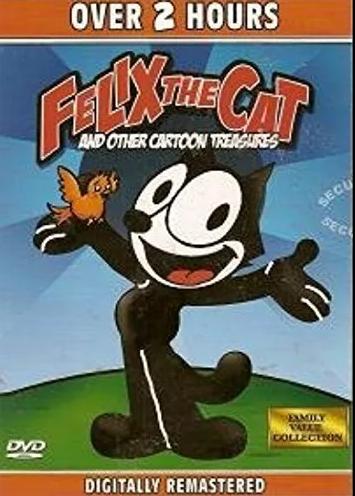
A definitive 5.4/10 rating for a film that redefined the boundaries of cult cinema. Frolics at the Circus remains a cornerstone of transgressive art.
A single flicker of nitrate is all it takes for 1921 to somersault into your retina. Frolics at the Circus is not merely a cartoon; it’s a charcoal comet that scalds the sky of early animation, then vanishes, leaving historians coughing on its stardust. Otto Messmer, the taciturn magician behind Felix, crams nine minutes with such elastic gags that even the air seems drunk on turpentine.
Start with the elephant: drawn in weighty outline, yet every wrinkle trembles like a wet orchid. When the mouse—more a graphite squiggle with teeth—scurries up the trailing ribbon of the big top, the pachyderm’s eyes become perfect Os of existential dread. The gag is prehistoric in its wiring: prey terrorizes predator. But Messmer inverts the food chain without a shred of moralizing, letting slapstick physics speak the unspeakable: fear itself is a clown.
Enter Felix, midnight personified, whiskers sharpened to apostrophes. He slides into frame on a moonbeam, pupils dilated like gramophone horns. Notice the economy: four strokes for smugness, two for whimsy. Within seconds he’s juggling fireflies, repurposing his tail as a lariat, and turning the entire circus into a Rube Goldberg contraption powered by pure sass. The cat is the first animated anarchist who refuses to bow to the fourth wall; instead he shreds it and fashions a paper airplane of contempt.
Messmer’s line work is larceny. He steals the elasticity of Eadweard Muybridge’s locomotion studies and pickpockets George Herriman’s comic-strip jazz, yet the amalgam feels sui generis. Watch Felix chase the mouse across the high wire: the wire quivers, becomes a question mark, then a noose. Perspective gyrates; the horizon tilts like a tipsy barker. Spatial coherence is optional, emotional coherence mandatory. You feel the vertigo because every cel is a heartbeat.
Compare this to Good Gracious, Annabelle, where live-action flappers pirouette through drawing-room farce with the stiffness of pressed flowers. Messmer’s drawings breathe soot and sweat; they have the hiccups. When the elephant crashes into a calliope, the resulting cacophony is rendered in musical notes that literally bounce off the screen, ricocheting into the orchestra pit of your mind.
The rodent antagonist is no mere pest; he is Pandora’s squeak. His tail curls into treble clefs, scripting chaos as composition. At one point he scuttles inside the elephant’s ear and plays the gray matter like a xylophone—an image so surreal it predates Dalí’s lobster telephones by a decade. Critics who dismiss early animation as cutesy pap miss the subversion: here is a universe where synapses are marimbas and id is king.
And yet, beneath the mayhem, a tender filament stitches beast to beast. When Felix finally corners the mouse, he doesn’t deliver comeuppance; he negotiates. A pawshake is brokered, cheese is surrendered, and the elephant regains its dignity in a procession of confetti that used to be the torn program stubs. Restitution arrives not through violence but vaudeville diplomacy—a utopian notion that feels almost radical beside the bellicose propaganda of contemporaneous fare like The Kaiser, the Beast of Berlin.
History has caricatured Messmer as a reclusive technician, a gnome hunched over an animation desk. The truth is wilder: he was a poet of the gutter, a chronicler of back-alley operas. In interviews he spoke of “listening to ink,” as though pigment possessed phonemes. You sense that mystic ear in every smear: the way Felix’s shadow detaches to pursue its own subplot, or how the elephant’s footprint becomes a lily pad for passing frogs. These are not sight gags; they are haikus of impermanence.
Financially, the film was a blip. Pat Sullivan, the credit-hungry producer, slapped his name on the marquee while Messmer ghosted through the ink. Today such exploitation would ignite Twitter torches; then it was merely Tuesday. Yet anonymity fed the work’s libertine spirit—no star ego to flatten the whimsy. Compare that to Dorian’s Divorce, where the marquee names smother the story beneath their mink-collared gravitas.
There is a moment—blink and it’s gone—where Felix, mid-pursuit, detaches his own tail, flings it skyward, and lassoes the moon. The satellite, now a silver coin, tilts, spilling a tide that carries elephant and mouse into a shared dream of peanut-strewn constellations. Physics majors will howl at the impossibility; poets will nod at the inevitability. This is what separates mere animation from visual music: the willingness to violate Newton for the sake of awe.
Contemporary CGI, for all its gigabyte grandeur, rarely achieves such reckless buoyancy. Watching One Million Dollars, with its pixel-perfect explosions, one feels the algorithmic handcuffs. Messmer’s ink, by contrast, is jazz—improvised, fallible, alive. The occasional smudge on the print isn’t a flaw; it’s a fingerprint.
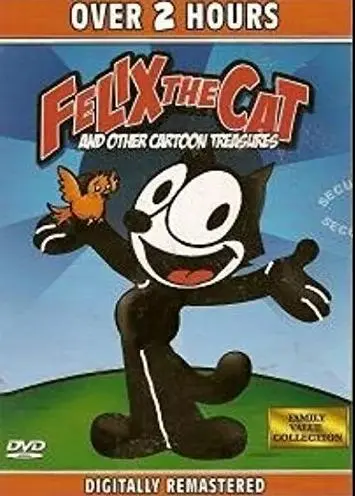
Gender politics tiptoe through the sawdust. The trainer is male, the elephant is coded female via pink ribbon, the mouse is a puckish neuter. Yet the power dynamic is matriarchal: the elephant’s panic propels the narrative; her reclamation closes it. Felix, androgynous in his svelteness, acts as trickster courier, slipping between binaries. In an era when A Youthful Affair peddled virginal stereotypes, this cartoon offers a spectrum before spectra were spoken of.
Note also the absence of dialogue intertitles. Words would ossify the spell. Instead, emotion is telegraphed through ear flicks, whisker tics, the elephant’s trunk curling into a Fibonacci of despair. Silent cinema at its zenith knew that language is a cage; Messmer lets the ink sing scat.
Nitrate decomposition is a slow beheading. Half of Felix’s filmography survives only in shards, spliced into mislabeled reels. Frolics at the Circus was presumed lost until a 16-mm dupe surfaced in a Slovenian flea market, tucked between Nazi newsreels and a stag film. Restorationists washed the print in digital tears, coaxing gray herds back into the light. What we now stream is a resurrection, a Lazarus in monochrome.
Yet even battered, the film pulses. Scratches resemble rain, as though the circus performs under weeping clouds. Some cinephiles fetishize pristine 4K; I cherish the scars. Each lesion is a stigmata of survival, reminding us that art is not immortal—it is defiant.
Fast-forward to Disney’s Dumbo: the pink elephants on parade sequence is unthinkable without Messmer’s boozy moon. Chuck Jones’ Feed the Kitty recycles the gag where a fearsome beast cowers before a pocket-sized terror. Even Miyazaki’s radish spirit in Spirited Away owes its trunk-like shrug to the 1921 pachyderm. Influence is a stealth pickpocket; it lifts wallets then buys drinks with your cash.
Meanwhile, the circus genre itself atrophied. Films like Tulagi: A White Spot in a Black Land exoticize the big top as colonial spectacle. Messmer’s version is too delirious for imperial gaze; it’s a carnival of the marginalized—cat, mouse, elephant—staging revolution under canvas.
Contemporary screenings often slap on jaunty ragtime, a sonic Band-Aid. Yet I prefer the hollow clack of the projector, the vacuum where laughter pools. Silence amplifies the meta-crunch: the elephant stepping on the mouse’s tail produces an imagined thwack more vivid than Dolby could concoct. Our brains are the ultimate Foley artists.
Curators at MoMA once paired the film with a live toy-piano score—plinky, shrill, sacrilegious. The audience tittered at crotchets rather than contortions. I fled to the lobby, nursed a tepid merlot, and listened to the muffled thuds of missed punchlines. Sometimes preservation is vandalism in a tuxedo.
What lingers longest is the final image: Felix sauntering into the horizon, tail flicking like a metronome counting down to oblivion. The elephant waves goodbye, trunk unfurling like a handwritten regret. The mouse perches atop the marquee, nibbling on the word THE until language itself disintegrates. Fade to black.
There is no moral, only motion. The circus will fold, the celluloid will flake, but for nine minutes the world was an inkblot learning to pirouette. That is the closest cinema gets to grace.
Seek the unrestored version on Archive.org; let the emulsion bloom like fungus. Watch at 3 a.m. when the city’s HVAC hum replaces missing orchestration. Keep the lights off; allow the glow of the elephant’s sequins to tattoo your corneas. When the credits end—there are none—sit still and listen to the phantom calliope. That’s the sound of history rehearsing its next escape act.
And if, while scrolling, you chance upon The Recoil or Sins of Her Parent, resist the algorithmic tug. Tonight, the only sin is ignoring the cat who juggles moons.
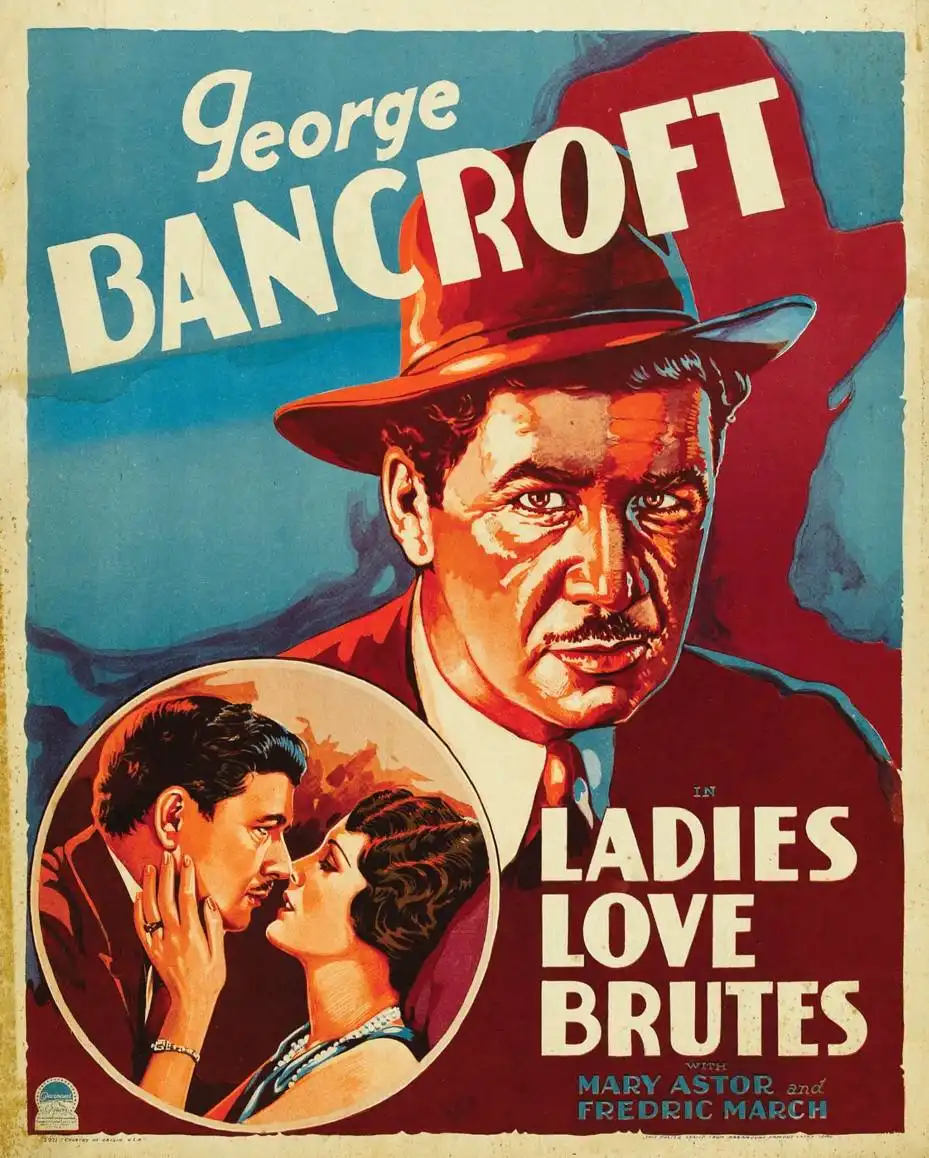
IMDb 5.8
1930
Community
Log in to comment.