DbcultAccessing Vault...
4.6/10
Senior Film Conservator
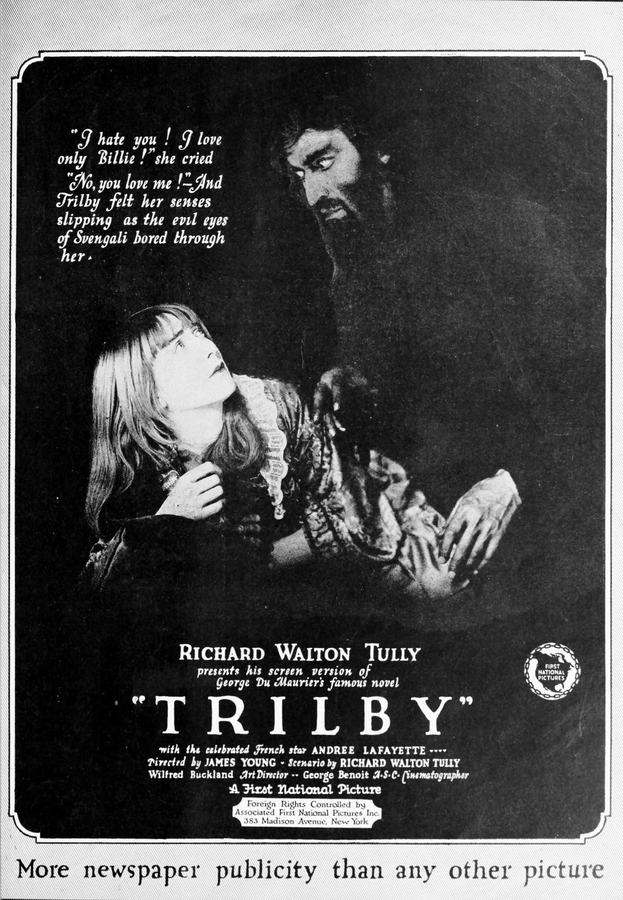
A definitive 4.6/10 rating for a film that redefined the boundaries of cult cinema. Trilby remains a cornerstone of transgressive art.
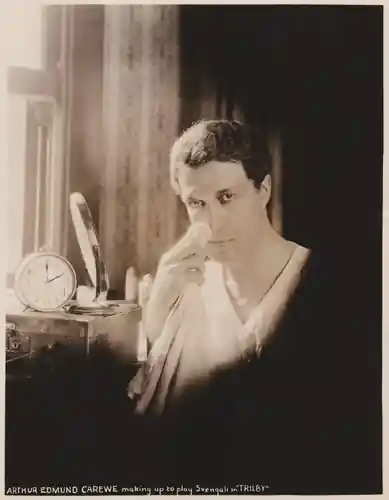
The opening tableau of Trilby immerses the viewer in the dimly lit ateliers of the Latin Quarter, where the scent of turpentine mingles with the distant echo of accordion melodies. The camera lingers on the lithe figure of Trilby, portrayed by Cammilla Johnson, whose luminous complexion seems to absorb the flickering gaslight, rendering her both object of desire and emblem of artistic purity. Svengali, embodied by Arthur Edmund Carewe, enters the frame with a predatory grace, his eyes glinting like polished onyx, hinting at the uncanny control he wields over the subconscious.
From the moment Svengali first lays his hypnotic hand upon Trilby, the film adopts a visual language that oscillates between expressionist shadows and the soft focus of romantic melodrama. The director employs chiaroscuro lighting to delineate the boundaries of domination and liberation, casting Svengali in deep umbra while Trilby is bathed in a halo of amber, a visual metaphor for her transition from innocent model to entranced diva. This interplay of light and darkness is not merely aesthetic; it underscores the thematic tension between agency and manipulation that permeates the narrative.
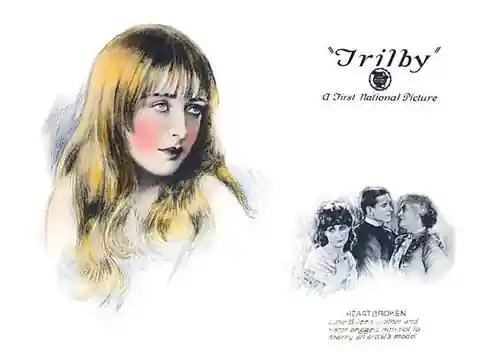
The transformation sequence, wherein Trilby is coaxed into the role of Lugubris, is a masterclass in silent-era editing. Rapid intercutting of close‑ups—her trembling fingers, the twitch of her eyelids, the subtle curl of Svengali's smile—creates a rhythmic pulse that mirrors the hypnotic cadence of his incantations. The accompanying score, though not original to the film, swells with a mournful violin that accentuates the tragedy of a woman whose voice is commandeered by another's will.
Hughie, the earnest student lover played by Gordon Mullen, provides a counterpoint of earnest yearning. His scenes are suffused with a muted palette of blues and greys, reflecting his internal desolation. When he finally spots Trilby onstage, the camera captures his reaction in a lingering medium shot, his eyes widening as if rediscovering a lost world. This moment is a pivotal fulcrum, shifting the narrative from a tale of captivity to one of redemption, and it is rendered with a tenderness that avoids melodramatic excess.
The film’s mise‑en‑scene is a love letter to 1920s Parisian culture. The bustling cafés, the cobblestone alleys, and the opulent concert hall are rendered with meticulous attention to period detail. The production design, credited to the unheralded yet skilled crew, employs authentic props—oil‑painted easels, vintage phonographs, and gilt‑ed theater curtains—that ground the fantastical elements in a palpable reality. This grounding is reminiscent of the atmospheric world‑building seen in The Cyclone, where the setting itself becomes a character.
Narratively, Trilby shares thematic DNA with A Thousand to One, particularly in its exploration of a single performance altering the trajectory of multiple lives. Both films interrogate the power of the stage as a crucible for transformation, yet Trilby pushes further by embedding the notion of hypnotic control, a motif that anticipates later noir explorations of mind‑games.

The supporting cast contributes layers of nuance. Gertrude Olmstead, as the enigmatic confidante, offers a glimpse into the undercurrents of female solidarity within a patriarchal artistic sphere. Philo McCullough’s portrayal of the cynical impresario injects a sardonic edge, reminding the audience that commercial ambition often collides with artistic integrity. These secondary arcs echo the relational complexities found in A Chapter in Her Life, where peripheral characters illuminate the protagonist’s inner turmoil.
Cinematographer Gilbert Clayton’s use of sea‑blue filters during the concert sequences creates a dreamlike ambience, casting the audience into a liminal space where reality blurs with illusion. The sea‑blue hue, juxtaposed against the dark orange of Svengali’s wardrobe, establishes a visual dialectic: the cool, ethereal realm of performance versus the warm, predatory world of manipulation. This chromatic dialogue is a subtle homage to the visual strategies employed in The Price of Silence, where color symbolism underscores moral ambiguity.
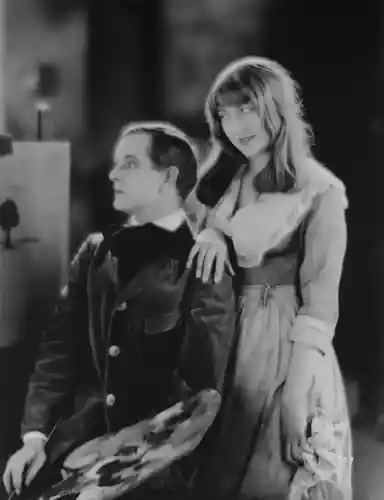
Dialogue—delivered through intertitles—remains sparing, allowing the actors’ physicality to convey subtext. Johnson’s expressive eyebrows and the delicate tremor of her lips communicate Trilby’s internal conflict without a single spoken word. Carewe’s performance as Svengali is equally restrained; his measured gestures and the slow, deliberate cadence of his hypnotic gestures evoke a magnetic charisma that is both alluring and terrifying. This restraint mirrors the understated menace of the antagonist in The People vs. John Doe, where silence amplifies threat.
The film’s climax, a confrontation in the concert hall’s backstage, is choreographed with a tension that builds through successive close‑ups. As Svengali attempts to reassert his dominion, Hughie lunges forward, his desperation palpable. The camera’s rapid pans capture the frantic choreography, while the background score crescendos into a dissonant climax, mirroring the fracturing of Svengali’s hypnotic hold. The resolution—Trilby’s voice breaking free, soaring above the oppressive silence—serves as an auditory metaphor for emancipation, resonating with the thematic liberation found in Dernier amour.

Beyond its narrative merits, Trilby offers a commentary on gender dynamics within the early twentieth‑century art world. Trilby’s journey from muse to manipulated performer underscores the precarious position of women whose talents were often commodified by male gatekeepers. This critique aligns with the feminist undercurrents present in Mothers of Men, where female protagonists navigate patriarchal structures to assert their agency.
From a technical standpoint, the film’s editing rhythm is noteworthy. The intercutting of performance footage with flashbacks to Trilby’s modeling days creates a temporal tapestry that enriches the audience’s understanding of her loss and eventual reclamation. This non‑linear approach anticipates the narrative experimentation seen in later avant‑garde works, positioning Trilby as a quiet forerunner of cinematic innovation.
The film’s legacy, though eclipsed by more widely known silent classics, endures through its daring synthesis of hypnotic mystique and romantic tragedy. Its influence can be traced in the thematic preoccupations of later films such as The Lure of a Woman, where the interplay of enchantment and desire drives the plot. Moreover, the visual motifs of light versus shadow echo through the noir canon, cementing Trilby as an understated progenitor of genre conventions.
For contemporary audiences, the film offers a window into the aesthetic sensibilities of the silent era while inviting reflection on timeless questions of autonomy, artistic exploitation, and the transformative power of love. Its rich palette—dark orange, yellow, sea blue—combined with a stark black backdrop, creates a visual experience that feels both historic and hauntingly modern. The deliberate use of color within the monochrome framework demonstrates a sophisticated understanding of mood that rivals the most celebrated works of its time.
In sum, Trilby stands as a compelling artifact of cinematic history, a work that marries narrative depth with visual flair, and invites repeated viewings to uncover its layered symbolism. Its exploration of hypnotic domination, the resilience of the human spirit, and the intoxicating allure of performance ensures its relevance for scholars, cinephiles, and casual viewers alike. The film’s resonance with other period pieces—such as One Wonderful Night and A Modern Thelma—highlights its place within a broader tapestry of early twentieth‑century storytelling, where love, ambition, and destiny intertwine on the silver screen.
IMDb —
1920
Community
Log in to comment.